Reviewed · SEMINYAK TOURS
Bali Canggu Silver Jewelry Making Experience
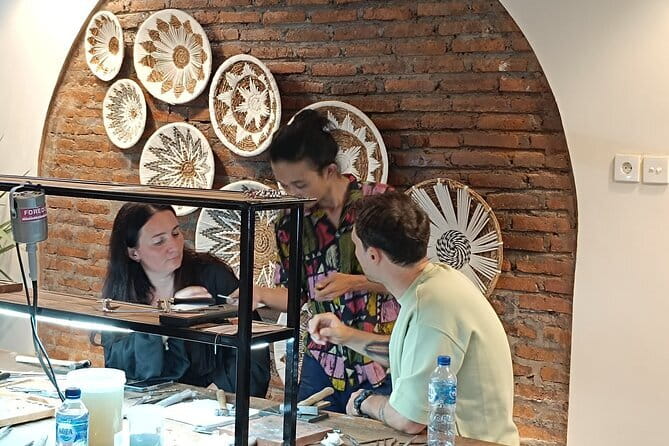
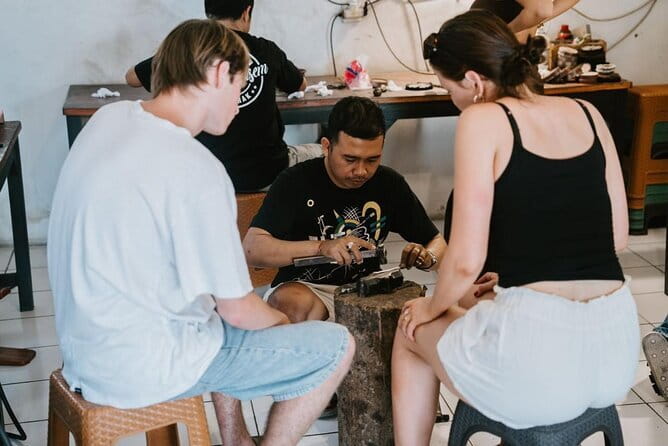
The best part of this Canggu workshop is that you do not simply buy a Bali souvenir, you make one. Under the guidance of a local silversmith, you shape 1 to 6 grams of silver into a ring or another jewelry design, then work through filing, stamping, hammering, and polishing.
I like the hands-on process, since you handle the tools instead of watching a demonstration from the sidelines. I also like the practical result: several people made rings they could actually wear, giving the activity more value than a quick craft class.
The main drawback is the setting. The studio is not wheelchair accessible, and stairs can make the physical work harder. The two-hour class also gives you enough time for one design, not a full jewelry collection.
In This Review
- Key points about the Canggu jewelry class
- Making a Bali souvenir instead of buying one
- Arriving at Big Tree Jewelry Classes in Canggu
- A small class with room for individual help
- From raw silver to your first design
- Why the polishing stage matters
- Choosing a ring, texture, or gold finish
- Is $46.43 a fair price?
- Who will enjoy this workshop most?
- Planning the class into your Bali day
- Cancellation and booking points to know
- My verdict on the Canggu silver class
- FAQ
- Where does the silver jewelry class take place?
- How long does the workshop last?
- How much silver is included?
- Can I make more than one jewelry piece?
- Is gold plating included?
- Are transportation and meals included?
- Is the workshop wheelchair accessible?
- What is the maximum group size?
- Can I cancel for a full refund?
Key points about the Canggu jewelry class
- You make one personal piece: Your material allowance covers one silver design using 1 to 6 grams of silver.
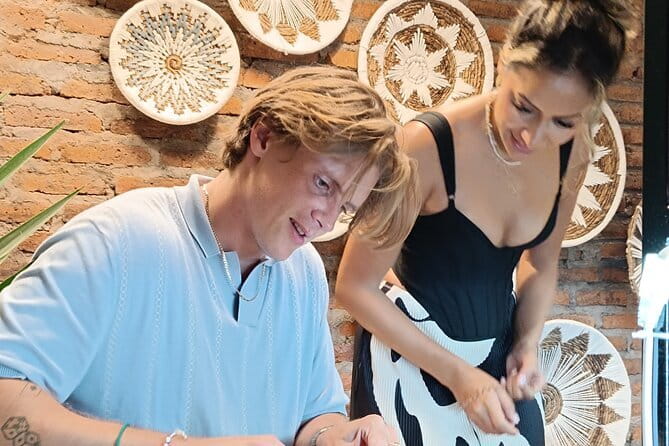
- The class uses real jewelry tools: Expect grinding wheels, jeweler’s saws, files, and tools for stamping and hammering.
- The group is limited to 15 people: That keeps the class smaller than a large craft demonstration, though it is not a private lesson.
- Gold plating is optional: You can pay an additional charge to add a gold finish to your silver piece.
- The workshop lasts about two hours: The session covers the process from your first idea through final polishing.
- Small comforts are included: You receive bottled water and access to free Wi-Fi, but transportation and meals are not included.
Making a Bali souvenir instead of buying one
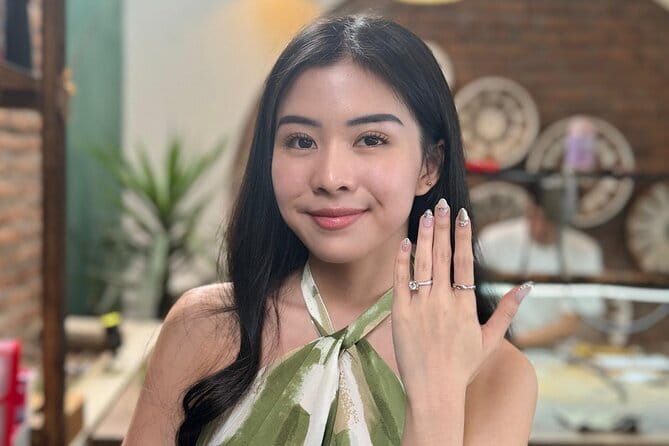
Canggu has no shortage of shops selling bracelets, rings, and other souvenirs. This class offers a different kind of keepsake. You leave with an object connected to your own time in Bali, including the marks, choices, and small imperfections that make handmade jewelry feel personal.
The class is built around one finished design. You receive between 1 and 6 grams of silver, depending on the piece you create and the amount used. That allowance is enough for a modest item such as a ring or another small jewelry design, but you should not expect to produce a heavy statement piece.
I see this as a good choice if you want an activity with a clear result. You are not only learning a craft for an hour and then walking away empty-handed. You take the finished silver work home, making the price easier to assess than it would be for a class with only a demonstration.
Other Seminyak days people book alongside this one:
- Bali Full-Day Traditional Village Sightseeing Trip All Inclusive
★ 5.0 · 3,069 reviews - Experts Bali Driver : Best Bali Private Driver for Tour in Bali
★ 5.0 · 1,339 reviews - Bali Hai Sunset Dinner Cruise
★ 5.0 · 1,173 reviews
Arriving at Big Tree Jewelry Classes in Canggu
The meeting point is Big Tree Jewelry Classes, at Jl. Raya Padonan no. 57, Tibubeneng, Canggu, in North Kuta, Bali. You make your own way there because private transportation is not included. The location is near public transportation, but the provided details do not include hotel pickup or a transfer service.
Plan your route before leaving. Canggu traffic can take time, and a hands-on class is not the sort of appointment you want to reach at the last second. Your booking confirmation arrives at the time of booking, so check it for the session details and allow room for delays.
On arrival, you check in at the studio. You can wait in the reception area with a complimentary bottle of water and use the free Wi-Fi if you need to contact someone or check your next plan. These are small touches, but they help if you are fitting the class between other Bali activities.
The experience ends back at the same meeting point. You do not need to arrange a second location, though you will still need your own transport afterward.
A small class with room for individual help
The workshop has a maximum of 15 people. That is small enough to feel more personal than a large tourist class, but it does not guarantee one-to-one attention every minute. Your instructor needs to keep an eye on several pieces at different stages.
The strongest feedback about the class focuses on the staff’s patience, friendliness, and attention. One couple enjoyed the instructor’s professional help throughout the process. Another participant particularly valued the patient instruction while making a ring. That matters here because silver work is practical and tool-based. Clear guidance can save you from bending the metal too far, cutting the wrong section, or rushing the finish.
You should expect instruction from a silversmith rather than a formal art-school lecture. The focus is on getting you through the work safely and helping you produce a finished item. If you already make jewelry, you may find the class fairly basic. If you are new to the tools, that simplicity is useful.
From raw silver to your first design

The class begins with instructions from the silversmith. You learn the basic steps before working on your own piece, moving from the first concept to the finished polish.
The design stage is important because the silver allowance is limited. Think about the type of jewelry you want before cutting or shaping the material. A simple design gives you a better chance of finishing neatly within two hours. An ambitious shape may use more silver and require more time at the saw, file, or grinding wheel.
You then work with the supplied silver and the tools needed to shape it. The process can include a jeweler’s saw for cutting, files for smoothing edges, and a grinding wheel for refining the form. These are not decorative props. You use them to change the metal step by step.
The class also introduces stamping and hammering. These techniques can add texture or a personal mark to an otherwise plain item. They are especially useful if you want a simple ring or pendant to look less like a basic band. The instructor helps you understand how much pressure to use and how the tools affect the metal.
Do not expect every piece to look factory-perfect. That is part of the appeal, but it also means you need to take your time. A ring can be wearable and attractive while still showing that it was made by hand.
Same island, a completely different day out:
- Private Arrival Transfer: Bali Airport to Hotel
★ 4.5 · 739 reviews - Ubud Hot Springs and Waterfall Private Guided Tour
★ 5.0 · 719 reviews - Bali Secret Waterfall Tour – Private and All-Inclusive
★ 5.0 · 688 reviews - Bali Instagram Tour: The Most Scenic Spots
★ 5.0 · 634 reviews
Why the polishing stage matters
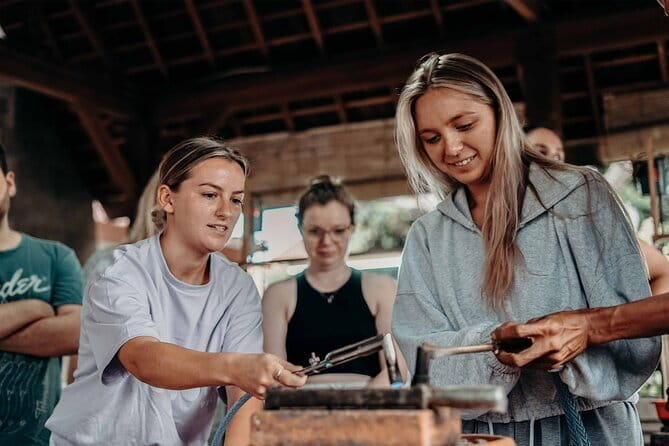
The last stage is polishing. This is where the rough work begins to look like jewelry rather than a piece of shaped metal.
Polishing can improve the surface and soften the look of small tool marks. It also helps reveal whether your edges, curves, and stamped details have been finished well. A patient approach pays off here. If you rush through the earlier filing and shaping, the final polish cannot hide every uneven section.
The class takes you through the full process rather than handing the unfinished item to staff. That makes the final stage satisfying, but it also places some responsibility on you. Your finished piece depends on the care you give each step.
Feedback about the finished rings is positive but measured. One participant described the ring as decent quality and another said the final ring looked nice. That is the right expectation: you can make a solid, wearable souvenir, but this is a short class, not a professional goldsmithing apprenticeship.
Choosing a ring, texture, or gold finish
A ring appears to be one of the most natural choices for this class because it is compact, personal, and useful after the trip. You can also create another single jewelry design within the 1 to 6 gram silver allowance.
A simple piece may be the wisest choice if you want to wear it often. You can focus on clean shaping and a smooth finish instead of spending the whole class trying to solve a complicated design. Stamping and hammering give you ways to add character without requiring a large amount of silver.
Gold plating is available as an optional upgrade for an extra charge. The base activity uses silver, so you should treat plating as a finish choice rather than part of the standard price. Ask about the additional cost when booking or checking in if the gold look matters to you.
The gold-plating option may suit someone who wants a warmer color or a more polished gift. If you prefer the look of silver and want to keep the cost predictable, skip the upgrade. The core experience remains making the piece yourself.
Is $46.43 a fair price?
At $46.43 per person, this is not the cheapest souvenir activity in Bali. The value comes from the combination of instruction, materials, tool use, and a finished piece you take home.
The price makes more sense if you compare it with a standard paid activity that lasts about two hours and leaves you with only photographs or memories. Here, you receive 1 to 6 grams of silver and learn enough of the process to shape and finish one design. You also get water and Wi-Fi, though those are useful extras rather than the main reason to book.
The limit is that your material covers one design only. If you want several pieces, a large ring, or gold plating, your final spending will rise. Meals and transportation are also outside the price.
I would call it good value for someone who wants a creative activity and a wearable souvenir. It is less convincing for someone who only wants inexpensive jewelry, since buying a ready-made item may cost less and take less time.
The class is booked an average of 13 days ahead, which suggests you should not leave it until the last morning if it is important to your schedule. The maximum group size is 15, so popular dates may fill.
Who will enjoy this workshop most?
This activity fits couples particularly well. You can each make a piece, compare designs, and leave with a pair of souvenirs linked to the same day. One couple found the instructor attentive and professional, which is useful when both people need help at once.
It also suits solo visitors who want a break from sightseeing. You have a practical task to focus on, and the finished jewelry gives you a small reminder of Bali that is more personal than a shop purchase.
Families may find it appealing, but the supplied details do not specify a minimum age. The class involves stairs and physical work with jewelry tools, so you should consider each participant’s ability before booking.
You may want a different activity if you dislike precise handwork or become frustrated when a first attempt is not perfect. Silver jewelry making rewards patience. The process includes repeated filing, shaping, and polishing, not just a quick creative flourish.
The workshop is also not wheelchair accessible. Stairs make the physical activity challenging, so contact the provider before booking if you need accessibility support. The available information does not promise an alternative arrangement.
Planning the class into your Bali day
Set aside about two hours for the workshop itself. Since you must reach the studio independently and the class ends at the same point, allow extra time around the session for transport.
The class works well as a planned Canggu activity rather than something squeezed between distant parts of Bali. You may want to avoid pairing it with a tightly timed airport transfer or another appointment across the island. The exact start times are not provided here, so use your confirmation to build the day.
Wear something that lets you work comfortably. The activity includes tools, grinding, filing, stamping, and hammering, so you will be using your hands for much of the session. The provided information does not state a clothing requirement, but practical clothes make more sense than anything precious or restrictive.
You do not need to plan a meal as part of the experience. Food is not included, so arrange lunch or dinner separately if the class falls near mealtime.
Cancellation and booking points to know
You receive confirmation when you book. The activity accepts up to 15 people, and most bookings are made around 13 days ahead.
Free cancellation is available if you cancel at least 24 hours before the scheduled start time. That gives you some flexibility if your Bali plans change, but cancellations made within 24 hours are not refunded. Changes inside that same 24-hour window are also not accepted.
The cut-off uses local time in Bali. Check the exact start time carefully, especially if you are booking while in another time zone.
My verdict on the Canggu silver class
I would book this class if you want a hands-on Bali activity that ends with a useful souvenir. The best reasons are clear instruction, a manageable two-hour format, a group limit of 15, and the chance to make a ring or another piece that reflects your own choices.
The class is not for you if you want a luxury jewelry lesson, a private silversmith, or a large finished piece. The silver allowance is modest, gold plating costs extra, and the studio requires stairs. You also need to arrange your own transport and food.
For couples, creative solo visitors, and anyone tired of buying the same souvenirs, this is a sensible choice. Keep your design simple, leave enough time for filing and polishing, and you should come away with a small piece of Bali that you had a hand in making.
FAQ
Where does the silver jewelry class take place?
The class takes place at Big Tree Jewelry Classes, at Jl. Raya Padonan no. 57, Tibubeneng, Canggu, Kec. Kuta Utara, Kabupaten Badung, Bali 80361, Indonesia.
How long does the workshop last?
The experience lasts approximately two hours.
How much silver is included?
You receive 1 to 6 grams of silver for one jewelry design.
Can I make more than one jewelry piece?
The included material covers one jewelry design. The provided details do not state whether extra silver can be purchased for additional pieces.
Is gold plating included?
No. Gold plating is an optional upgrade available for an additional charge.
Are transportation and meals included?
No. Private transportation and meals are not included. You need to make your own way to the studio.
Is the workshop wheelchair accessible?
No. The location is not wheelchair accessible, and stairs can make the physical activity challenging.
What is the maximum group size?
The workshop accepts a maximum of 15 participants.
Can I cancel for a full refund?
Yes, if you cancel at least 24 hours before the experience start time. Cancellations made less than 24 hours before the start time are not refunded, and changes within that period are not accepted.
Just added around Seminyak
- Ubud Private Tour★ 5.0 · 36 reviews
- Kuta Seminyak Scooter Lessons★ 5.0 · 40 reviews
- Bali Airport Transfers | Bali Airport Welcome pick up | Bali Airport Taxi★ 4.0 · 27 reviews
- Surf lesson | Energy surfschool krui★ 5.0 · 3 reviews
- Wonderful Bali In 3 Days Private Tour★ 5.0 · 56 reviews
- Zero Gravity Flotation Therapy in Canggu Bali by Solace Float★ 5.0 · 36 reviews
- Ubud Tubing Adventure Holy Spring Temple Private Guided Tour★ 5.0 · 49 reviews
- Best of North Bali: Banyumala Waterfall, Handara Gate and Temple★ 5.0 · 4 reviews
Seminyak Tours, compared.

Bali Full-Day Traditional Village Sightseeing Trip All Inclusive
Read our review →


Ubud Hot Springs and Waterfall Private Guided Tour
Read our review →
Bali Secret Waterfall Tour – Private and All-Inclusive
Read our review →

Uluwatu Sunset Tour: Kecak and Fire Dance with Jimbaran Dinner
Read our review →