Reviewed · KUTA TOURS
Balinese Village Experience
The most meaningful part of this day is the visit to a real family compound in Pacung Sangeh village, where Wayan Eric introduces you to the customs that shape daily Balinese life. This is not a quick photo stop. You sit, eat, make offerings, and learn how faith fits into ordinary routines.
I like the hands-on format. Making canang sari gives you something to do while explaining why offerings matter. I also like the mix of home life, food, and a holy water temple, rather than spending the whole day at one attraction. The main consideration is timing: with pickup at 8:30 am and about seven hours on the road, this is a full day, not a short cultural visit.
In This Review
- Key points at a glance
- A village day that puts daily life first
- Entering Wayan Eric’s family compound
- Making canang sari by hand
- Understanding Balinese Hindu practice
- Lunch at a scenic warung
- Holy water, caves, and the blessing ritual
- Pickup from Kuta and the value of $70
- Who will get the most from this experience
- Practical advice before you go
- Should you book the Balinese Village Experience?
- FAQ
- Where does the Balinese Village Experience take place?
- What time does the experience start?
- How long does the experience last?
- Is hotel pickup available?
- Who leads the village visit?
- What food is included?
- Is this activity suitable for children?
- How many people can join the tour?
Key points at a glance
- Meet a local family: Enter a Balinese home compound and learn from host Wayan Eric, who grew up in the village.
- Make canang sari: Try your hand at the small daily offerings used in Balinese Hindu practice.
- Take part in a blessing ritual: Visit a sacred water temple with caves and a waterfall setting.
- Taste local food: Start with Balinese cakes, coffee, and morning tea, then eat lunch at a scenic warung.
- Keep transport simple: Pickup and drop-off are offered at most south Bali hotels.
- Expect a small group: The activity is limited to a maximum of 10 people.
A village day that puts daily life first
Bali is easy to admire from a resort pool, a temple gate, or a busy beach road. It takes more effort to understand how people live beyond those familiar stops. This experience makes that effort manageable by bringing you into Pacung Sangeh with a local host and a clear set of activities.
You begin with pickup at about 8:30 am from most south Bali hotels. A professional driver takes you to the meeting point, where you meet your guide. The published tour time is about seven hours, while the village portion is listed at roughly four hours. In practical terms, allow most of the day once transfers are included.
The group can have up to 10 people. That is small enough for questions and personal attention, though it is not a private tour. If you want a quiet family visit with no other participants, check the booking details carefully before paying.
The host is referred to as Eric in the feedback, and as Wayan Eric in the tour details. He welcomes you into his family setting and explains Balinese traditions through things you can see and handle. That approach works well for families, couples, and anyone who prefers a cultural activity with real participation.
Other Kuta days people book alongside this one:
- Nusa Penida day trip: boat, 4 snorkeling, Manta rays & Land tour
★ 5.0 · 2,033 reviews - Bali Nusa Penida West Private All-Inclusive Tour
★ 5.0 · 1,277 reviews - Mount Batur Sunrise Trekking Private Tour with Breakfast and Hotel Transfer
★ 5.0 · 885 reviews
Entering Wayan Eric’s family compound
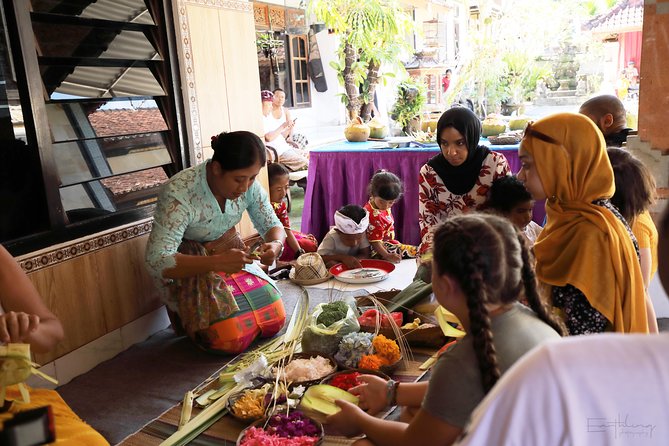
The first major stop is a family compound in Pacung Sangeh. A Balinese compound is more than one house. It is a shared family space, and the visit gives you a chance to see how domestic life and religion meet in the same place.
You begin with Balinese morning tea, cakes, and coffee. This simple welcome matters. Food slows the pace and gives you time to meet the family before the formal activities begin. The cakes also offer a small taste of local cooking without turning the morning into a large meal.
Eric explains the role of the home, family customs, and religious practice. You can ask questions as you go rather than trying to absorb a long lecture. That makes the information easier to remember, especially when the subject is unfamiliar.
I find this part more useful than a staged cultural show. You are not simply watching a performance designed for an audience. You are entering a family space and listening to someone who grew up there. The setting gives the discussion a personal scale.
Still, keep your expectations sensible. The available details do not promise a full tour of every part of the compound or a long conversation with every family member. The strength is the welcome and the explanation, not a detailed architectural visit.
Making canang sari by hand
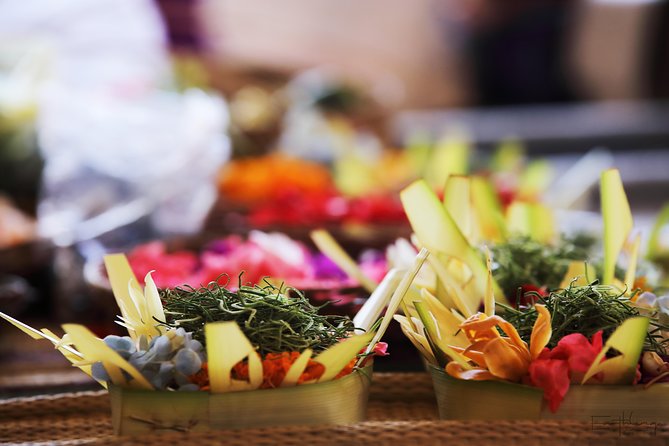
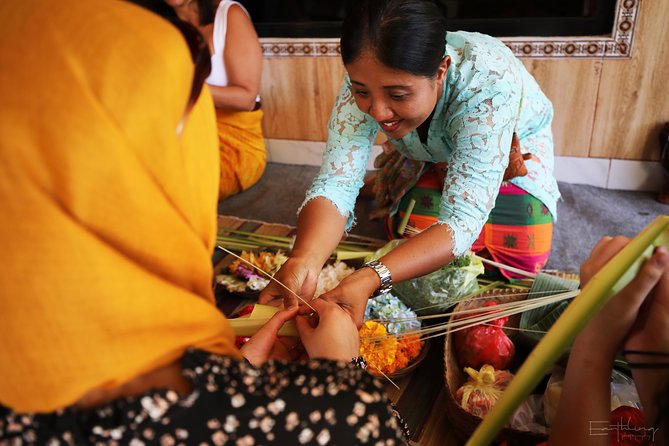
One of the day’s best activities is learning to make canang sari. These small offerings are part of daily Balinese Hindu practice. They are placed as expressions of gratitude and devotion, and they appear in homes, temples, and other places throughout Bali.
You do not just hear about them. You make one yourself. That practical step turns an abstract idea into something you can understand with your hands. You see the care involved and gain a better sense of how repeated daily rituals become part of a household’s routine.
The activity suits children as well as adults. A family with children aged six and eight found the day manageable, and Eric was praised for being patient while explaining home life and tradition. That is useful information if you are planning a cultural day with younger children.
The pace may feel slow if you are looking for constant sightseeing. Canang sari is small and detailed, and the point is not speed. I would treat this as a quiet craft activity with a religious purpose, not as a souvenir-making workshop.
Respect is important here. The offering is not merely a decorative object. Listen carefully to the explanation and follow the host’s guidance about how it is handled. You do not need prior knowledge of Balinese Hinduism, but you should arrive ready to participate thoughtfully.
Understanding Balinese Hindu practice
The tour connects household customs with the wider religious life of the village. Balinese Hinduism shapes how many people mark the day, care for sacred places, and take part in ceremonies. You learn about that connection through food, offerings, the family compound, and the later temple visit.
This is one reason the experience has more value than a standard sightseeing circuit. You are not only collecting facts about Bali. You are seeing how belief appears in ordinary actions. The lesson is practical: a small offering, a shared meal, or a cleansing ritual can carry meaning beyond what you see at first glance.
The guide’s role is central. Eric is described as patient and clear, including with children. That matters because the quality of a village experience depends less on the number of stops than on how well the host explains them.
You should also remember that a one-day visit offers an introduction, not a full study of Balinese religion. The experience gives you useful context, but it cannot cover every tradition, ceremony, or regional difference. Think of it as a personal doorway into village life rather than a complete cultural course.
Same island, a completely different day out:
- Individual Bali Day Trip with Private Driver and Free WiFi
★ 5.0 · 755 reviews - Waterbom Bali Tickets – Single Day Pass
★ 4.5 · 620 reviews - Private Tour Mount Batur Sunrise Trekking and Natural Hot Spring
★ 5.0 · 431 reviews - Private Tour Bali Beaches and Uluwatu Temple with Dinner
★ 5.0 · 363 reviews
Lunch at a scenic warung
Lunch is included and takes place at a scenic warung. In Bali, a warung is a small local eating place, often informal and family run. This stop gives the day a welcome break after the morning activities and lets you try a typical meal in a relaxed setting.
The food is described as delicious, but the exact dishes are not specified. That is worth noting if you have allergies, dietary restrictions, or strong food preferences. Ask about the meal when you book or before eating, since the available details do not confirm vegetarian, vegan, halal, or allergy-specific arrangements.
The warung stop also helps the day feel connected to normal village life. You are not eating at a large resort restaurant or a polished tourist venue. The point is the local setting and the chance to share a meal as part of the day.
I like that lunch is built into the schedule rather than left to chance. A seven-hour outing needs a proper pause, and an included meal makes the $70 price easier to assess. You avoid the time and uncertainty of finding lunch while moving between stops.
Do not expect a food tour. The meal supports the cultural visit rather than serving as the main event. If you want a detailed tasting of regional Balinese cooking, this activity may feel limited. If you want a straightforward local lunch in a scenic place, it fits well.
Holy water, caves, and the blessing ritual
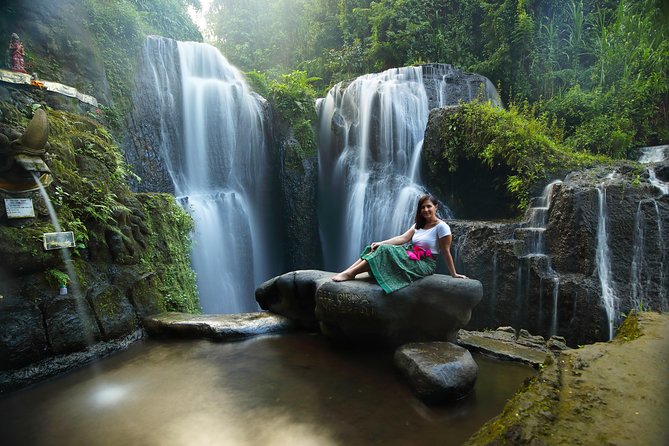
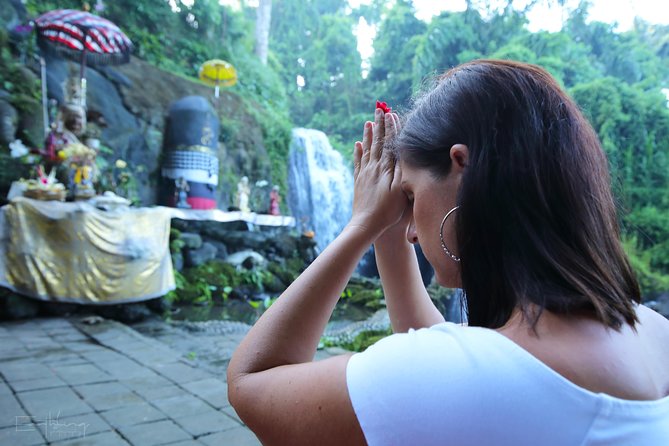
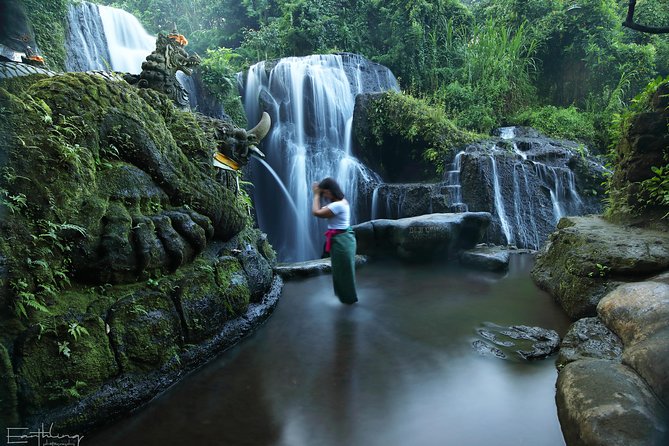
After lunch, you visit a sacred water temple for a blessing ritual. The setting includes a beautiful waterfall and caves, according to the tour details and firsthand descriptions of the day. This is likely to be the most visually memorable part of the outing, but the religious purpose comes first.
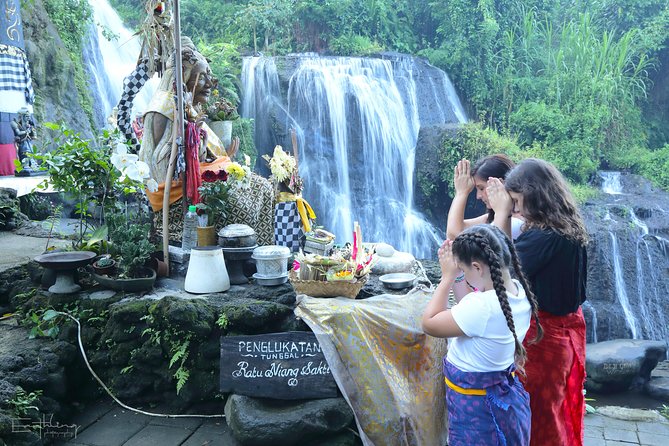
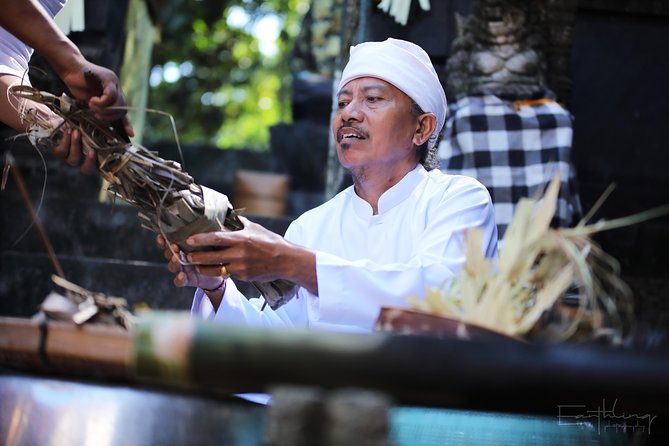
The cleansing ceremony gives you another chance to take part rather than stand at the edge with a camera. Eric guides you through the ritual, which is especially helpful if you have never visited a Balinese temple or taken part in a water blessing.
You should follow instructions closely and approach the temple with care. Sacred places are not ordinary sightseeing stops. The value of this visit comes from understanding the ritual and its meaning, not from treating the water, caves, or waterfall as a backdrop for photographs.
The available information does not specify every clothing requirement, changing arrangement, or swimming detail. Do not assume the activity is a casual waterfall swim. Ask the provider what to wear and what the blessing involves before departure, especially if you want to prepare properly.
The temple visit also gives the day a natural progression. You begin with family life, learn about offerings, share food, and then see religious practice in a sacred setting. The sequence helps you connect the small daily acts with the larger spiritual world around them.
Pickup from Kuta and the value of $70
At $70, this is not the cheapest way to spend a day in Bali. It is also not simply an entrance ticket. The price includes pickup and drop-off at most south Bali hotels, a guide, the family visit, morning refreshments, lunch, and the temple experience.
Transport has real value in Bali. Roads can be slow, routes can be confusing, and arranging separate rides to a village, warung, and temple can consume much of your day. Direct hotel transfers reduce that hassle, especially if you are staying in Kuta or another south Bali area.
The price makes the most sense for you if you want a planned cultural day with meals and transport included. It is less appealing if you already have a driver, prefer to set your own schedule, or want to spend the day visiting several major sights.
The small group limit also helps. With no more than 10 participants, the host has a better chance to answer questions and guide people through the offering and blessing activities. It is not a guaranteed private experience, but it should feel more personal than a large coach excursion.
The tour requires a minimum number of participants. If that number is not reached and the activity is canceled, you are offered another date or experience, or a full refund. Your own cancellation terms are strict: the booking is non-refundable and cannot be changed for any reason. That makes travel insurance or a firm schedule worth considering before you pay.
Who will get the most from this experience
This is a strong choice for families. The hands-on offering activity gives children something concrete to do, and Eric’s patient style has been especially useful for younger participants. The day also adds a meaningful cultural contrast to a resort stay.
Couples and solo visitors who want personal contact with local life should also find a good fit here. The family compound and shared meal provide more human connection than a quick stop at a temple gate. You get time to ask questions and understand what you are seeing.
It suits first-time visitors to Bali who want a gentle introduction to Hindu customs. You do not need to know the vocabulary or rituals in advance. The guide explains the steps as you go.
I would be more cautious if you dislike scheduled activities, long transfer days, or participation in religious ceremonies. The day has a set start time, a structured route, and a spiritual component. You should be comfortable taking part respectfully rather than simply observing from a distance.
Most people can participate, and service animals are allowed. The supplied information does not list detailed mobility guidance, so contact Bali Buddies if you need specific help with transport, the compound, or the temple grounds.
Practical advice before you go
Start by confirming pickup coverage for your hotel. The service is offered to most south Bali hotels, but the exact pickup area matters. The stated start time is 8:30 am, so have your room location and phone details ready.
Wear clothing suitable for a village visit and temple setting. The details do not specify a formal dress code, but modest clothing is a sensible choice for any sacred site. Ask Bali Buddies about the blessing ritual and any clothing or preparation requirements.
Bring a way to protect yourself from the sun and keep valuables secure. The tour includes outdoor village and temple settings, though the supplied details do not state how much walking is involved. Comfortable footwear is a practical choice.
If you have children, explain that the temple visit is a religious ceremony, not only a waterfall stop. That small bit of preparation can help them understand why they may need to listen quietly and follow instructions.
Finally, leave room in your schedule. The activity is listed at about seven hours, and Bali traffic can affect transfer times. Do not book a tight airport connection or another fixed appointment immediately afterward.
Should you book the Balinese Village Experience?
Book it if you want to see how Balinese family life, food, craft, and religion connect in one day. The strongest features are the welcome at Wayan Eric’s family compound, the chance to make canang sari, and the guided blessing at a sacred water temple.
The $70 price is fair when you value hotel transfers, two meals or refreshments, a small group, and a local guide. It is less convincing for independent visitors who already have transport and prefer to explore without a fixed schedule.
My main advice is to treat this as a respectful cultural exchange, not a checklist of attractions. If that sounds appealing, this is a thoughtful way to step beyond Bali’s resort belt and spend several hours learning directly from village life.
FAQ
Where does the Balinese Village Experience take place?
The main village visit takes place in Pacung Sangeh village, in Bali. The experience also includes a sacred water temple and a warung for lunch.
What time does the experience start?
Pickup begins at about 8:30 am.
How long does the experience last?
The full experience lasts approximately seven hours. The village tour portion is listed at about four hours, with the remaining time connected to transfers and other activities.
Is hotel pickup available?
Yes. Pickup and drop-off are offered at most hotels in south Bali, including the Kuta area. Confirm your exact hotel location when booking.
Who leads the village visit?
The local host is identified as Wayan Eric. He grew up in the village and guides the family compound visit, offering activity, and cleansing ceremony.
What food is included?
You receive Balinese morning tea with cakes and coffee, plus lunch at a scenic warung. The exact lunch dishes are not specified.
Is this activity suitable for children?
Most people can participate, and the experience has been suitable for children aged six and eight. Eric is described as patient when explaining the traditions and guiding the cleansing ceremony.
How many people can join the tour?
The maximum group size is 10 participants.
Just added around Kuta
- Your Fragrance Selection: Bali Perfume Workshop and Creations★ 5.0 · 3 reviews
- Nusa Penida 4 Spot Snorkeling with Manta and Island Tour★ 4.5 · 11 reviews
- Premium White Water Rafting and Jungle Buggies in Bali★ 4.0 · 15 reviews
- Ubud Highlights Rice Terraces, Temple, Waterfall & Monkeys forest★ 5.0 · 23 reviews
- Experience West Nusa Penida Private Tour★ 4.5 · 14 reviews
- Indonesia: Waterbom Bali Entry Ticket★ 4.5 · 6 reviews
- West Nusa Penida Day Trip★ 5.0 · 8 reviews
- Waterbom Bali Tickets – Single Day Pass★ 5.0 · 5 reviews
Kuta Tours, compared.

Nusa Penida day trip: boat, 4 snorkeling, Manta rays & Land tour
Read our review →
Bali Nusa Penida West Private All-Inclusive Tour
Read our review →
Individual Bali Day Trip with Private Driver and Free WiFi
Read our review →

Private Tour Mount Batur Sunrise Trekking and Natural Hot Spring
Read our review →

Private Tour Bali Beaches and Uluwatu Temple with Dinner
Read our review →