
Reviewed · CYCLING TOURS
Kotagede Royal Route – Cycling Tour
Kota Gede is best understood from a bicycle seat. This three-hour ride takes you through old royal streets, narrow lanes, markets, temples, and the tombs of the Mataram Kingdom, with enough stops to notice the ordinary life around you.
I like the mix of history and daily life, and I like that your spending supports a local community donation and sustainability fund. The main caution is simple: this is real urban cycling, not a gentle park ride. Traffic, cobblestones, narrow footpaths, and a 12 to 15-kilometer route call for medium cycling skill and steady confidence.
In This Review
- Key points to know before booking
- Why Kota Gede works so well by bicycle
- Starting at MOANA Hub Prawirotaman
- Riding through Kota Gede’s narrow lanes
- Seeing the old buildings, temples, and street art
- Entering the Mataram royal tombs
- Stopping at a traditional market for local food
- What the guide adds to the ride
- Is $57 a fair price?
- Who should book this cycling tour?
- Practical details before you reserve
- Should you book the Kotagede Royal Route?
- FAQ
- How long is the Kotagede Royal Route cycling tour?
- How far do you cycle?
- What time does the tour start?
- Where does the tour begin?
- Where does the tour end?
- What type of bicycle is provided?
- Is a helmet included?
- Is the tour suitable for children?
- How many people can join the tour?
- What is included in the price?
Key points to know before booking
- Kota Gede beyond the main sights: Ride through old neighborhoods, traditional markets, temples, and side streets that many city tours skip.
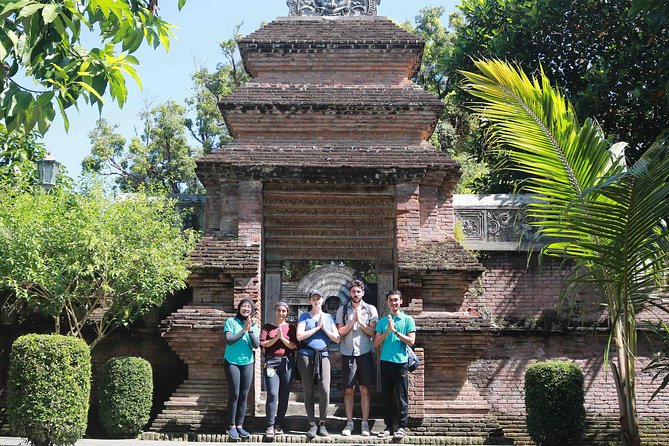
- Royal tomb visit: Wear traditional Javanese clothing before entering the Mataram royal tomb area and meeting the sultan’s servants.
- Two useful start times: Choose 7:00 to 10:00 in the morning or 14:30 to 17:30 in the afternoon.
- Local food along the way: The tour includes refreshing drinks and local snacks or Indonesian food at a traditional market.
- Moderate physical demand: Expect 12 to 15 kilometers, mixed roads, alleyways, cobblestones, and some main streets.
- Small-scale, lower-impact travel: The group is limited to 10 people, with bike transport, a community donation, and a sustainability action fund.
Why Kota Gede works so well by bicycle
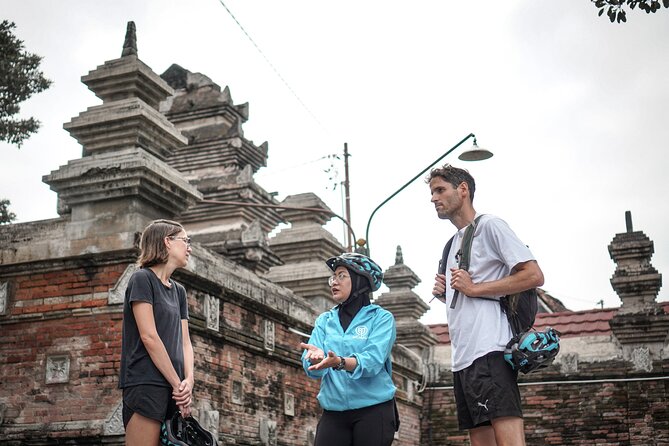
Yogyakarta has famous temples and palaces, but Kota Gede offers a different kind of history. This old town was tied to the Mataram Kingdom, and its character survives in royal tombs, old buildings, temples, markets, and residential lanes.
A bicycle lets you move at the right speed. You cover more ground than you would on foot, but you are still close enough to hear street life, smell food being prepared, and exchange greetings with people along the way. A car would carry you past these details. Walking would take too long to connect the separate parts of Kota Gede.
The route covers about 12 to 15 kilometers in three hours. That sounds modest until you account for stops, narrow lanes, uneven surfaces, and city traffic. You are not racing from monument to monument. The value comes from seeing how the old royal quarter fits into present-day Yogyakarta.
I especially like the way the tour joins major cultural sites with less formal stops. You may pass traditional homes, street art, old architecture, and working markets before reaching the royal tombs. That gives you a better sense of Kota Gede as a lived-in district, rather than a museum area arranged for sightseeing.
A few more Yogyakarta trips to weigh up
- Menoreh Village Cycling
★ 5.0 · 611 reviews - Jogja Hidden Gems – Cycling Tour
★ 5.0 · 158 reviews - ATV Quad Bike Through Tunnel and Waterfall in Bali
★ 5.0 · 2,098 reviews
Starting at MOANA Hub Prawirotaman
The tour begins and ends at MOANA Hub Prawirotaman, at Jl. Gerilya No. 646 in Brontokusuman, Mergangsan. The meeting point is near public transportation, but transport to the starting point is not included, so you need to arrange your own way there.
You can choose between a morning departure from 7:00 to 10:00 or an afternoon departure from 14:30 to 17:30. I would choose the morning if you want the most comfortable version of the ride. An early start also suits the character of a market visit and gives you the rest of the day afterward.
The afternoon departure may work better if your morning is already committed to another Yogyakarta sight. It also gives you a later look at neighborhood life, though you should plan around the fixed three-hour window.
Mountain bikes and city bikes are available. The information does not specify how bikes are assigned, so you should tell the operator what type suits you when booking if you have a clear preference. Helmets are available if desired.
Riding through Kota Gede’s narrow lanes
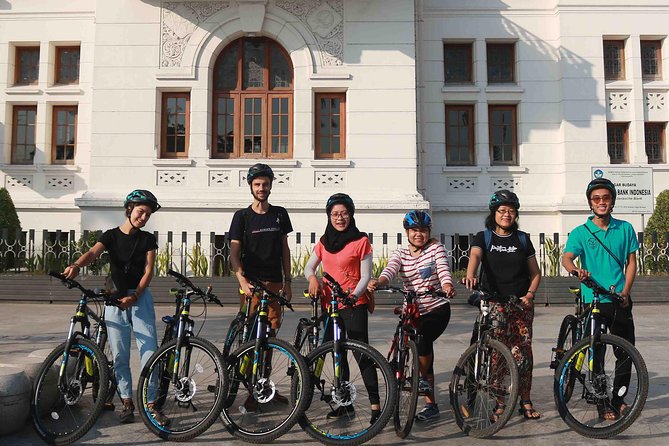
The route is built around a maze of streets. Some sections use quieter alleys and small lanes, while others involve main roads. That mix is part of the appeal, but it also explains why the tour requires medium cycling ability and is not suitable for children.
You need to be comfortable starting, stopping, steering, and handling changes in surface. Cobblestones and narrow footpaths can make the ride feel more demanding than the distance suggests. One useful piece of advice is to wear practical clothing and shoes that give you good control of the pedals.
The guide leads the group through the traffic, and the route includes side streets that reduce the amount of time spent on busier roads. Still, you should not book this expecting a traffic-free ride. The cycling can feel exciting and, at points, a little harrowing if you are not used to urban riding.
That is the key decision. If you already ride in cities or feel confident on a bicycle, the street setting adds energy and contact with Yogyakarta. If you are nervous on bikes, especially around traffic or uneven paving, a walking tour would be a better fit.
The group limit is 10 people. That is small enough for the guide to keep the ride together and explain stops without the impersonal feel of a large coach group. The tour is described as private guided, while the stated maximum is 10 participants, so confirm the arrangement if you are booking for a larger party or want exclusive use.
Seeing the old buildings, temples, and street art
Kota Gede’s appeal is not limited to one grand monument. The route takes you through old buildings and temples, along with street art and neighborhood streets where the architecture is mixed into ordinary city life.
You might find the most rewarding moments between formal stops. A carved doorway, a weathered wall, a small temple, or a painted lane can say as much about the district as a major sight. Your guide provides the historical and cultural context, helping you connect these details with the Mataram Kingdom and Yogyakarta’s continuing royal traditions.
The tour is also a good option if you want more than a list of dates. The stated focus includes local wisdom, culture, and neighborhoods that many people do not see. In practical terms, that means you should expect conversation about how the area functions today, not just an account of its past.
Street art adds a modern layer to the ride. It breaks up the older architecture and shows that Kota Gede is not frozen in a royal-era picture. The contrast between old temples, local homes, painted walls, and market activity gives the route its range.
Do not expect every stop to be a polished attraction. Some parts may feel rough around the edges, and that is precisely why the route gives you a stronger sense of everyday Yogyakarta. You are seeing a district where people live and work, not a stage set prepared only for a tour.
Same island, a completely different day out:
- Borobudur Sunrise from setumbu Hill , Merapi Volcano & Prambanan Full Day Tour
★ 5.0 · 1,030 reviews - Borobudur Temple Climb To The Top & Prambanan Temple – 1 day tour
★ 5.0 · 638 reviews - Yogyakarta: Borobudur Top Access & Prambanan Temple Private Tour
★ 5.0 · 390 reviews - Small-Group Walking and Food Tour by Night in Yogyakarta
★ 5.0 · 313 reviews
Entering the Mataram royal tombs
The royal tomb visit is the most formal part of the experience. The tombs belong to the Mataram Kingdom, and visiting them involves traditional Javanese clothing and a respectful approach to the site.
This is not a quick photo stop. The clothing requirement signals that the tomb area has cultural rules and ceremonial importance. You should be prepared to follow your guide’s instructions, dress appropriately, and treat the site as a place of respect rather than simply another attraction.
Meeting the sultan’s servants adds a human link to the royal tradition. The tour information does not name the individuals or promise a private audience, so think of this as an opportunity to encounter people connected with the site, not a guaranteed formal meeting with a royal family member.
The entrance fees for sites included in the program are covered when applicable. That makes the royal stop easier to manage, since you are not sorting out small payments while trying to keep up with the group.
This portion may be less appealing if you prefer completely informal sightseeing or do not want to wear traditional clothing. For most people interested in Yogyakarta’s royal culture, though, it gives the cycling route a strong center and makes the old town more meaningful.
Stopping at a traditional market for local food
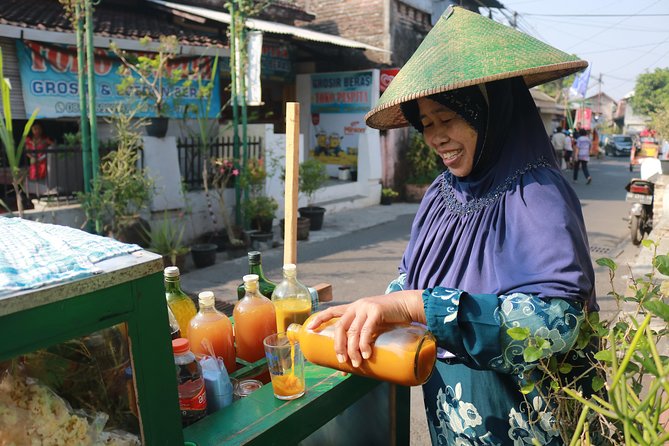
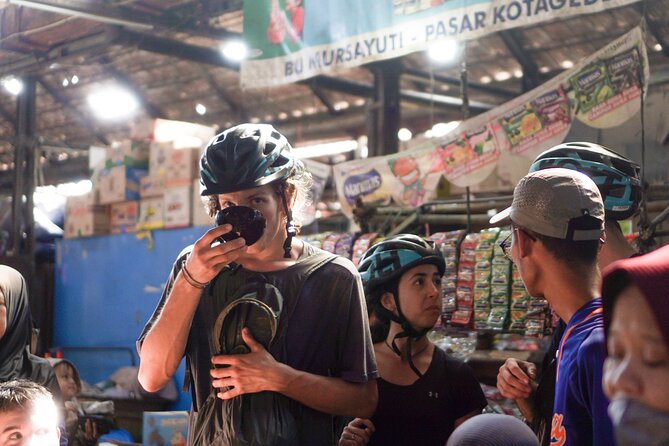
Food is one of the tour’s most useful features because it turns the market into more than a backdrop. You stop for a local snack or Indonesian food and refreshing drinks, giving you a chance to taste something connected to the neighborhood.
The exact food is not fixed in the information provided, which is normal for a market-based stop. Availability may depend on the day and what vendors are serving. That uncertainty is preferable to a staged tasting menu if you want a more direct look at local eating habits, but you should not book this expecting a specific dish.
The route may also include a visit with a traditional baker. That detail gives the food stop more character than simply buying a snack and getting back on the bikes. It suggests that the guide uses local people and small businesses to explain how food fits into daily life.
Markets can be crowded and active, and moving through one with bicycles requires care. You may need to walk the bike for short stretches rather than ride continuously. The stop is as much about the setting, smells, and conversation as it is about the food itself.
I would tell anyone with allergies or dietary restrictions to raise the issue before booking. The provided information confirms local food and drinks, but it does not specify vegetarian, vegan, halal, allergy-friendly, or other menu arrangements.
What the guide adds to the ride
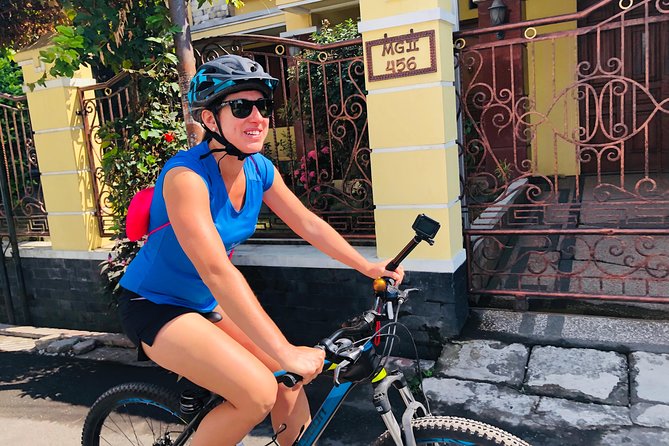
The guide is central to this experience. Without explanations, the route could still be a pleasant ride through old streets, but you might miss why a building, temple, tomb, market, or custom matters.
The guide explains local history and culture while leading the group through roads that can change quickly from broad streets to tight alleyways. That practical role matters as much as the commentary. You need someone who can keep the group moving and help you handle the city safely.
The strongest moments are likely to come through small exchanges: learning about a neighborhood, greeting people along the route, or hearing why a royal custom still shapes a particular place. The emphasis is on contact with the city rather than a nonstop lecture.
The tour provider is MOANA, which presents the outing as a sustainable cycling experience. A community donation and sustainability action fund are included, along with low-carbon transport by bicycle. These contributions will not transform the city on their own, but they give the tour a clearer local purpose than a standard sightseeing ride.
You should still judge the experience by the ride itself. Sustainability is a benefit, not a substitute for a route that matches your cycling ability.
Is $57 a fair price?
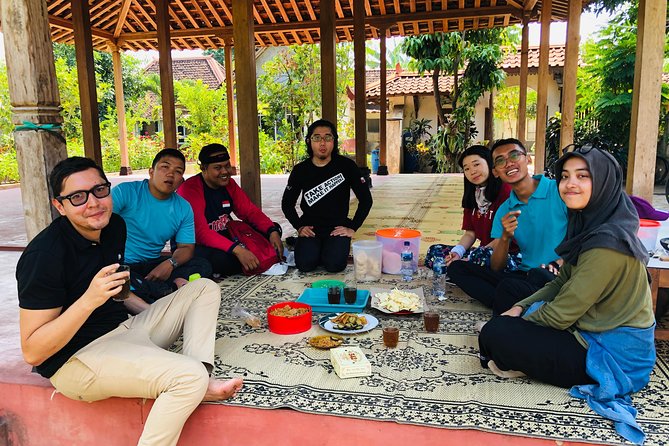
At $57, this is not the cheapest way to spend three hours in Yogyakarta. The price includes the bicycle, an experienced guide, local food and drinks, a community donation, the sustainability fund, and entrance fees for sites included in the program.
That package makes the cost easier to justify if you value a small group, cultural interpretation, and a planned route through areas that can be hard to navigate alone. You are paying for more than bike hire. You are paying for the guide’s route planning, local connections, site access, and the convenience of having food and cultural stops built in.
The value is weaker if you already know Kota Gede well, own a suitable bicycle, and are comfortable finding the royal tombs and markets independently. It is also less attractive if you mainly want exercise, since the frequent stops and explanations reduce the amount of uninterrupted riding.
For a first visit to Yogyakarta, I think the price is reasonable when you want one compact experience that combines history, food, neighborhoods, and cycling. Group discounts may improve the deal for several people booking together.
Who should book this cycling tour?
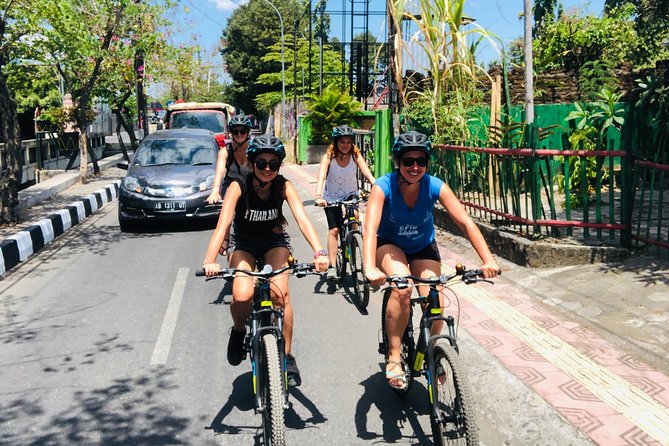
I would choose this tour if you want to see Yogyakarta at street level and are comfortable riding in a city. It suits adults and confident cyclists who enjoy a little unpredictability and want cultural context without spending the entire day inside formal attractions.
It is a strong match for you if:
- You want to explore Kota Gede beyond its headline sights.
- You enjoy markets, local snacks, street art, and neighborhood life.
- You have medium cycling skill and can manage 12 to 15 kilometers.
- You are interested in Mataram royal history and willing to wear traditional Javanese clothing at the tombs.
- You prefer a group of no more than 10 people.
- You like the idea of using low-carbon transport and supporting a community fund.
I would skip it if you are uncomfortable in traffic, have trouble with cobblestones, or are looking for a relaxed ride suitable for young children. The tour is specifically not for kids, and the urban route requires attention.
The early morning option is my practical choice. It fits the market setting, gives you more of the day afterward, and may feel easier for anyone concerned about heat or traffic. The afternoon ride remains useful if your schedule is tight.
Practical details before you reserve
Confirmation is received at booking, and mobile tickets are supported. The tour returns to the same MOANA Hub Prawirotaman meeting point, so you do not need to arrange a separate pickup at the end.
Transport to the meeting point is not included. Plan that part before the start time, especially for the 7:00 departure.
Free cancellation is available if you cancel at least 24 hours before the local start time. A cancellation or change made less than 24 hours before departure is not refunded or accepted, including problems caused by a delayed flight, so leave a proper buffer in your schedule.
The overall rating is 4.9 from 207 ratings, with 100 percent recommendation shown in the supplied tour information. That strong record fits the tour’s main strengths: the guides, the local history, the market stop, and the chance to see Yogyakarta from quiet lanes instead of only major roads.
Should you book the Kotagede Royal Route?
Book it if you want a close-up view of Yogyakarta that combines royal history with ordinary city life. The tombs, traditional clothing, market food, temples, and old streets give the three-hour ride real variety, while the small group and guide make the route manageable.
Just be honest about your cycling ability. This is not a sightseeing ride on a smooth path. You will share roads, handle cobblestones, and pass through narrow lanes. If that sounds like part of the fun, $57 buys a well-rounded introduction to Kota Gede and supports a lower-impact local operation. If it sounds stressful, choose a walking or vehicle-based tour instead.
FAQ
How long is the Kotagede Royal Route cycling tour?
The tour lasts approximately three hours.
How far do you cycle?
The route covers about 12 to 15 kilometers.
What time does the tour start?
You can choose a morning tour from 7:00 to 10:00 or an afternoon tour from 14:30 to 17:30.
Where does the tour begin?
It starts at MOANA Hub Prawirotaman, Jl. Gerilya No. 646, Brontokusuman, Mergangsan, Yogyakarta.
Where does the tour end?
The activity ends back at the same meeting point.
What type of bicycle is provided?
You can use a mountain bike or a city bike.
Is a helmet included?
A helmet is available if desired.
Is the tour suitable for children?
No. The tour is not suitable for children and requires medium cycling skill.
How many people can join the tour?
The maximum group size is 10 people.
What is included in the price?
The price includes bike rental, an experienced guide, local food and drinks, a community donation, a sustainability action fund, and entrance fees for sites included in the program when applicable.
Just added around Yogyakarta
- Borobudur: Village Tour with Pottery and Tofu Making★ 5.0 · 34 reviews
- Private Borobudur Village Trip By Volkswagen Safari★ 5.0 · 3 reviews
- Chicken Church at Karangrejo Village Admission Ticket★ 4.5 · 3 reviews
- Borobudur Private Tour From Semarang Port★ 4.5 · 12 reviews
- Chicken Church Local Attraction Near Of Borobudur Temple★ 3.5 · 18 reviews
- Yogyakarta: Borobudur Temple Climb Up and Prambanan Temple Tour★ 5.0 · 53 reviews
- Borobudur Temple Combined Ticket Admissions★ 5.0 · 7 reviews
- From Yogyakarta: Borobudur &Prambanan-Bromo-Waterfall-Ijen 6 Days★ 5.0 · 9 reviews
Cycling Tours, compared.
ATV Quad Bike Through Tunnel and Waterfall in Bali
Read our review →
ATV Quad Bike Bali with Waterfall Gorilla Cave and Lunch
Read our review →
Electric Cycling Tour of Ubud with Free Hotel Transfer and Lunch
Read our review →

Bali ATV Quad Bike Through Tunnel, Waterfall, White Water Rafting
Read our review →
Downhill Cycling with Volcano, Rice Terraces and Meal
Read our review →
Browse the lists this tour appears in