Reviewed · KUTA TOURS
PADI Open Water Course
Bali’s PADI Open Water Course packs the full beginner program into three days: classroom work, pool practice, and four open-water sessions at Padang Bai and Tulamben. That gives you more than a quick taste of scuba. You work toward an internationally recognized certificate and a maximum depth of 18 meters.
I like the practical setup, with hotel pickup, an air-conditioned minivan, lunch, drinks, and snacks included. I also like the small maximum group size of three people, which matters when you are learning skills that require close attention and plenty of calm instruction.
The main consideration is time. Three days is efficient, but the schedule may feel full if you need extra practice or find the first pool session stressful. You also need to avoid flying within 18 hours after the course and complete a health questionnaire before entering the water.
In This Review
- Key points at a glance
- What your $530 pays for in Bali
- Day one: theory before the sea
- Day two: pool skills without the pressure
- Padang Bai: the first sea sessions
- Tulamben: four sessions and a real sense of progress
- The Neptune Scuba Diving setup
- Who should book this course?
- Timing, health, and practical planning
- Should you book the Neptune PADI course?
- FAQ
- How long does the PADI Open Water Course take?
- Where does the course start and finish?
- What locations are included?
- What is the maximum depth after certification?
- What is the minimum age?
- Can I fly soon after completing the course?
Key points at a glance
- Three stages in three days: Study the essential theory, practice skills in a pool, then complete four sea sessions.
- Two well-known Bali sites: Padang Bai and Tulamben give you different settings for building underwater confidence.
- Small groups: The maximum group size is three people, allowing closer supervision than a large class.
- Beginner-friendly instruction: Instructors such as Gede, Muli, Sia, Agus, and Julian are noted for patience and clear explanations.
- Useful transport and meals: Hotel pickup and return, an air-conditioned minivan, lunch, bottled water, coffee, tea, and snacks are included.
- Certification to 18 meters: The course is designed to leave you able to scuba independently within the PADI Open Water limits.
What your $530 pays for in Bali
At $530 per person, this is not a cheap sightseeing outing. It is a full entry-level certification course, so the fair comparison is with the cost of separate lessons, equipment arrangements, local transport, and food.
The package includes taxes, fees, a professional guide, a driver or guide, hotel pickup and return, and transport in an air-conditioned minivan. Lunch, bottled water, coffee or tea, and snacks are also covered. Those details matter in Bali, where a trip to Padang Bai or Tulamben can take much of a day and where arranging transport on your own would add both cost and effort.
You should still treat the price as the beginning of your budget, not necessarily the end. Souvenir photos are not included and can be purchased separately. The supplied information does not list personal equipment purchases or other optional expenses, so ask Neptune Scuba Diving what is included in your confirmation before you arrive.
The strongest value comes from the structure. You are not simply being taken to a scenic site for one brief underwater session. You receive the theory, confined-water practice, and four open-water sessions needed for the certification. If you already know you want to continue with scuba after Bali, the certificate can make later trips easier to arrange.
Other Kuta days people book alongside this one:
- Nusa Penida day trip: boat, 4 snorkeling, Manta rays & Land tour
★ 5.0 · 2,033 reviews - Bali Nusa Penida West Private All-Inclusive Tour
★ 5.0 · 1,277 reviews - Mount Batur Sunrise Trekking Private Tour with Breakfast and Hotel Transfer
★ 5.0 · 885 reviews
Day one: theory before the sea
The first phase is Knowledge Development. This is the part many beginners are tempted to rush, but it is the foundation for everything that follows. You learn the principles behind safe scuba use, equipment, pressure, breathing, and the decisions you must make before and during an underwater session.
The supplied details do not specify the exact classroom timetable or whether all theory is completed in person. One published account indicates that PADI theory can be completed online before arrival, which may free more time during your Bali visit. If you choose that route, confirm the arrangement with Neptune Scuba Diving before booking your flights.
A good beginner course should make the theory useful rather than treating it as a box to tick. Pay attention to the safety rules, especially the guidance about flying after scuba. You should not plan a flight within 18 hours after finishing the course, and you should tell the operator about any health concern before the first session.
The course is open to participants from age 10. Age alone does not guarantee suitability, however. You must complete a health questionnaire, and conditions involving the respiratory or circulatory systems, asthma, heart problems, epilepsy, a current cold, or congestion may prevent participation. If you have a medical concern, consult your doctor before you book.
Day two: pool skills without the pressure
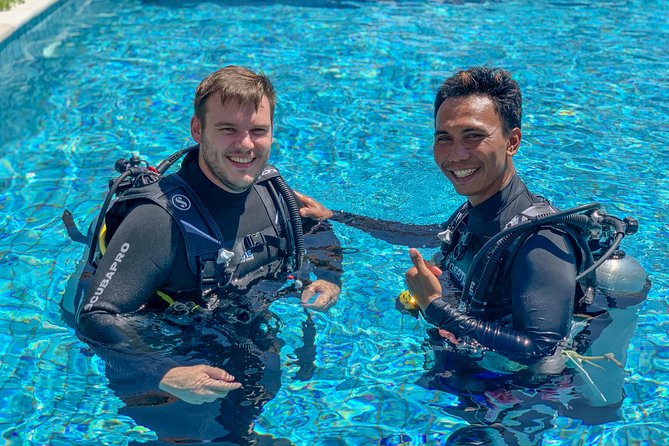
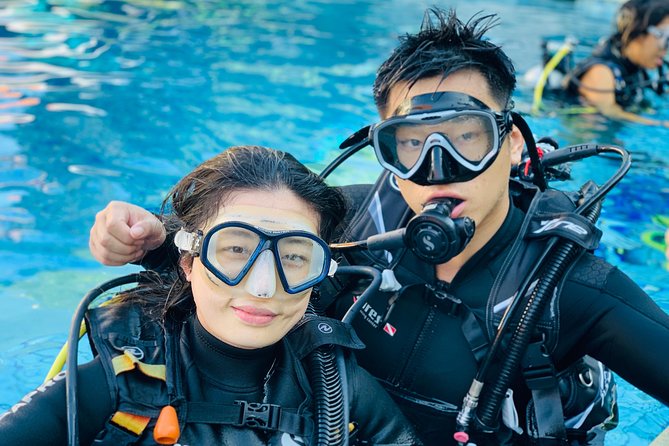
Pool Training is where the course becomes physical. You learn how the equipment feels, how to breathe through it, and how to manage basic situations in a controlled setting before heading into the sea.
This phase is especially valuable if you are new to scuba or not a strong swimmer. Several accounts describe instructors taking time with nervous beginners, including a 15-year-old student and adults who were unsure of their swimming ability. Muli is praised for helping with buoyancy control, while Gede is described as patient and thorough with first-time students.
Those names are useful when you contact the operator, but do not assume you will be assigned a particular instructor. Staffing depends on the date and group. The wider teaching team includes Sia, Agus, Julian, Gede, and Muli in the supplied accounts, with repeated praise for calm explanations and personal attention.
Pool work may be the most important part of the three days. In the sea, you have current, changing visibility, and the distraction of a new setting. In a pool, you can concentrate on the basic tasks. If you struggle with clearing your mask, controlling your buoyancy, or staying relaxed, tell your instructor early. A small group of no more than three makes it easier to ask for another explanation or another attempt.
Do not judge the course by how polished you feel at the end of pool training. The point is not to look graceful. The point is to build habits that remain useful when you are tired, distracted, or unsure of yourself.
Padang Bai: the first sea sessions
The open-water portion takes place at Padang Bai and Tulamben. Padang Bai is one of Bali’s main coastal gateways, and here it serves as one of the practical settings for applying your pool skills in the sea.
The exact order of the sites is not stated, so your instructor will set the schedule. In a typical course structure, you can expect the early sea sessions to focus on transferring pool skills to natural conditions. You may need to manage your breathing, position, equipment, and communication while adjusting to the feel of the open sea.
That change is significant. Even a confident pool student can find the first natural-water session more demanding. You might notice movement in the water, less predictable visibility, or the simple mental effort of being somewhere unfamiliar. Your instructor’s job is to keep the pace controlled and make sure the required skills are completed safely.
Padang Bai also adds a taste of Bali beyond the busy southern resorts. The transfer from the meeting point in Sanur to the east coast is part of the day, and the included minivan transport saves you from arranging a separate driver. Lunch, drinks, and snacks help make the long training day more manageable.
Expect an early start. The meeting point at Neptune Scuba Diving Bali is on Jl. Suka Merta in Sanur Kauh, Denpasar Selatan, and the listed operating hours begin at 7:00 AM. Hotel pickup is offered, so confirm your pickup time and location rather than simply going to the shop without notice.
Same island, a completely different day out:
- Individual Bali Day Trip with Private Driver and Free WiFi
★ 5.0 · 755 reviews - Waterbom Bali Tickets – Single Day Pass
★ 4.5 · 620 reviews - Private Tour Mount Batur Sunrise Trekking and Natural Hot Spring
★ 5.0 · 431 reviews - Private Tour Bali Beaches and Uluwatu Temple with Dinner
★ 5.0 · 363 reviews
Tulamben: four sessions and a real sense of progress
Tulamben provides the other main setting for the sea portion. The course includes four open-water sessions in total across Padang Bai and Tulamben, giving you repeated chances to practice instead of relying on one brief excursion.
Repetition is where the value of certification training becomes clear. On an early session, you may focus on staying calm and keeping your breathing steady. Later, you can pay more attention to buoyancy, trim, communication, and the environment around you. Each session helps turn a new task into a familiar routine.
The information supplied does not promise a particular wreck, reef, marine animal, or visibility level at Tulamben, so you should not book this course for one specific underwater attraction. The site is part of the training plan, not a guaranteed sightseeing program. Conditions can affect the feel of the day, and the instructor decides how to conduct the sessions safely.
The four-session format is still a strong point. You have time to identify weak spots and ask for help. One account describes an instructor correcting buoyancy control, while others emphasize patience with students who were new to scuba or uncertain in the water. That kind of correction is more useful than a guide who simply leads you around and moves on.
By the end, the aim is certification as a PADI Open Water Diver, allowing you to scuba to a maximum depth of 18 meters within the course limits. That does not mean you should treat yourself as an expert. It means you have completed the beginner training needed to continue building experience safely.
The Neptune Scuba Diving setup
Neptune Scuba Diving is based in Sanur, but the course takes you to the east coast for the sea sessions. The included transport is a practical benefit, especially if you are staying outside Sanur or do not want to navigate Bali’s roads before a demanding day in the water.
The vehicle is an air-conditioned minivan, which is welcome after time in the sun and humidity. Hotel pickup and drop-off are included, and the activity ends back at the meeting point. Confirm the exact pickup arrangement when you book, since the listed starting point is the Neptune shop even though hotel collection is offered.
The maximum group size of three is one of the most appealing details here. It does not make the course private, but it should give you more instructor contact than a crowded class. That can be particularly helpful during pool drills and the first sea session, when small misunderstandings can quickly become stressful.
The published experience holds a 5 rating from 16 ratings and a 100 percent recommendation record. More important than the numbers is the consistent pattern in the teaching feedback: patience, personal support, smooth transport arrangements, and encouragement for beginners. The praise is not a guarantee of your exact instructor or conditions, but it points to the areas Neptune appears to handle best.
Who should book this course?
This course suits you if you want a recognized beginner certificate and have three consecutive days available in Bali. It is also a good fit if you prefer a guided program with transport and meals arranged rather than piecing together separate lessons and coastal trips.
First-time scuba participants are clearly part of the intended audience. You do not need to arrive with extensive experience, and the course can suit someone who feels nervous in the water, provided you meet the health requirements and are willing to practice.
Families should note the minimum age of 10. For anyone under 18, confirm the operator’s current participation requirements before booking, since the supplied information gives the minimum age but no further details about youth supervision or consent.
This is less suitable if you have only one spare day, need a flexible schedule, or mainly want a relaxed sightseeing outing. The course involves study, skills, and four required sea sessions. It is rewarding, but it is training rather than a casual half-day activity.
Timing, health, and practical planning
Plan your flights carefully. The guidance says scuba within 18 hours of flying is not recommended, so leave at least that buffer after the course before boarding a plane. If you are arriving in Bali by air, avoid scheduling the first session too close to your arrival if you might be tired or delayed.
You also need to be in suitable health. Do not participate if you have a current cold or congestion, are under the influence of alcohol or drugs, or have a serious medical issue that has not been cleared. Respiratory and circulatory health, along with normal body air spaces, are essential for safe pressure changes.
Confirmation is provided at booking, and the activity is listed as available daily from 7:00 AM to 6:00 PM during the stated operating period. The course is mobile-ticket enabled, which is convenient, but you should still keep the booking details accessible on your phone.
Free cancellation is available if you cancel at least 24 hours before the experience start time. Changes or cancellations inside that period are not accepted for a refund, and the cutoff follows local Bali time.
Should you book the Neptune PADI course?
Book it if you want to leave Bali with a proper PADI Open Water certification, value close instruction, and can give the course three full days. The combination of a three-person maximum, four sea sessions, included transfers, and repeated reports of patient teaching gives the $530 price a reasonable case.
I would be especially comfortable recommending it to a nervous beginner who wants encouragement rather than a rushed class. Ask about your instructor, the online theory option, pickup time, equipment details, and the exact flight interval before you commit.
Skip it if you want only one scenic underwater outing or cannot protect the 18-hour post-course flight window. For the right person, though, this is a structured way to learn a lifelong skill while seeing two of Bali’s established scuba locations.
FAQ
How long does the PADI Open Water Course take?
The course lasts approximately three days. It includes Knowledge Development, Pool Training, and four open-water sessions.
Where does the course start and finish?
The listed meeting point is Neptune Scuba Diving Bali on Jl. Suka Merta, Sanur Kauh, Denpasar Selatan, Bali. The activity ends back at the meeting point, and hotel pickup and drop-off are offered.
What locations are included?
The four open-water sessions take place at Padang Bai and Tulamben. The exact order and timing are arranged by the operator.
What is the maximum depth after certification?
Once certified as a PADI Open Water Diver, you can scuba safely to a maximum depth of 18 meters within the course limits.
What is the minimum age?
The minimum age is 10 years.
Can I fly soon after completing the course?
Scuba within 18 hours of flying is not recommended. Plan your flight with at least that interval after the course, and ask the operator if you need clarification about your schedule.
Just added around Kuta
- Your Fragrance Selection: Bali Perfume Workshop and Creations★ 5.0 · 3 reviews
- Nusa Penida 4 Spot Snorkeling with Manta and Island Tour★ 4.5 · 11 reviews
- Premium White Water Rafting and Jungle Buggies in Bali★ 4.0 · 15 reviews
- Ubud Highlights Rice Terraces, Temple, Waterfall & Monkeys forest★ 5.0 · 23 reviews
- Experience West Nusa Penida Private Tour★ 4.5 · 14 reviews
- Indonesia: Waterbom Bali Entry Ticket★ 4.5 · 6 reviews
- West Nusa Penida Day Trip★ 5.0 · 8 reviews
- Waterbom Bali Tickets – Single Day Pass★ 5.0 · 5 reviews
Kuta Tours, compared.
Nusa Penida day trip: boat, 4 snorkeling, Manta rays & Land tour
Read our review →
Bali Nusa Penida West Private All-Inclusive Tour
Read our review →
Individual Bali Day Trip with Private Driver and Free WiFi
Read our review →

Private Tour Mount Batur Sunrise Trekking and Natural Hot Spring
Read our review →

Private Tour Bali Beaches and Uluwatu Temple with Dinner
Read our review →