
Reviewed · HIKING & TREKKING
Sidemen Trekking: A Walk from a Different Perspective
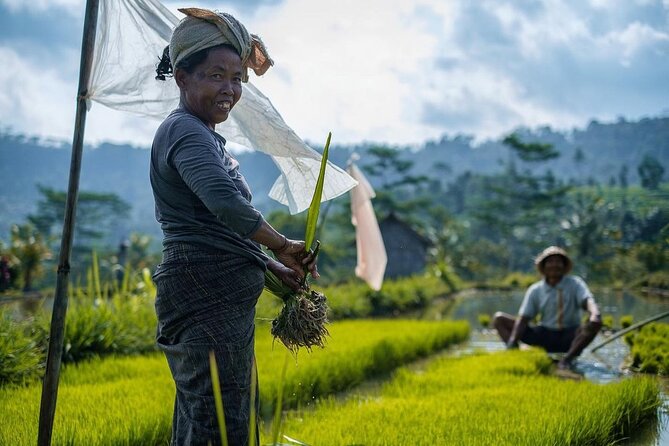
Sidemen is Bali at walking speed: rice terraces, village lanes, irrigation channels, temples, and Mount Agung hanging over the whole scene. This is not a hard hike, but it does take you onto the small paths that farmers use, places you would be unlikely to find on your own.
I especially like the local focus and the guides’ easy way with stories. Adi, Darya, Adidas, and Wayan are praised for explaining rice farming, food crops, religion, and daily village life without turning the walk into a lecture. I also like the low price, just $13.75 per person, though you should know that some paths are narrow, muddy, or slippery and demand steady footing.
In This Review
- Key points to know before you book
- Why Sidemen feels different on foot
- Starting at Sidemen Traditional Market
- Following irrigation channels into the rice fields
- Crossing the wooden bridge and village lanes
- The views of Mount Agung and the rice terraces
- How hard is this two-hour trek?
- What the guides add to the walk
- Price, group size, and what you receive
- Finishing at Warung Ume Anyar
- Who should book this Sidemen walk?
- Should you book it?
- FAQ
- Where does the Sidemen trek start?
- Where does the trek finish?
- How long does the walk take?
- Is hotel pickup included?
- What should I bring?
- Can I cancel for a full refund?
Key points to know before you book
- Walk from Pasar Sidemen to Ogang Village: The route starts at Sidemen Traditional Market and finishes at Warung Ume Anyar, about two hours later.
- See rice farming from the working paths: You follow irrigation channels and small tracks through rice and other crop fields, not just paved roads beside them.
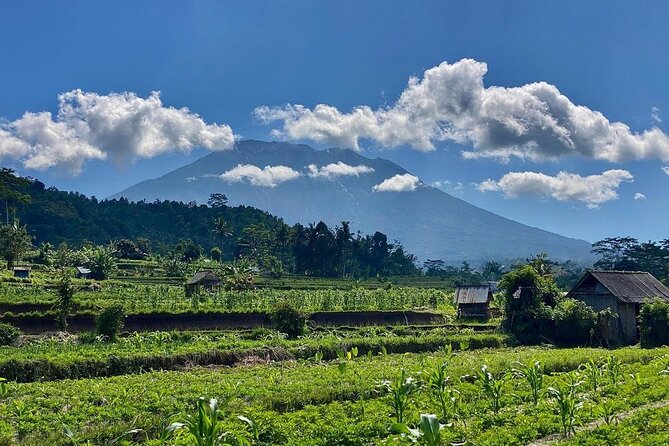
- Mount Agung provides the backdrop: Clear viewpoints open across the terraces toward Bali’s famous volcano.
- Expect an easy walk, not a serious hike: The pace is relaxed, with photo stops, but balance matters on narrow raised paths.
- Local guides add the real value: Adi, Darya, Adidas, and Wayan explain farming, village customs, Balinese Hindu practice, and local food crops.
- Arrange your ride home before you start: Grab operates in the area, but cars are limited and may ask for extra or offline payment.
Why Sidemen feels different on foot
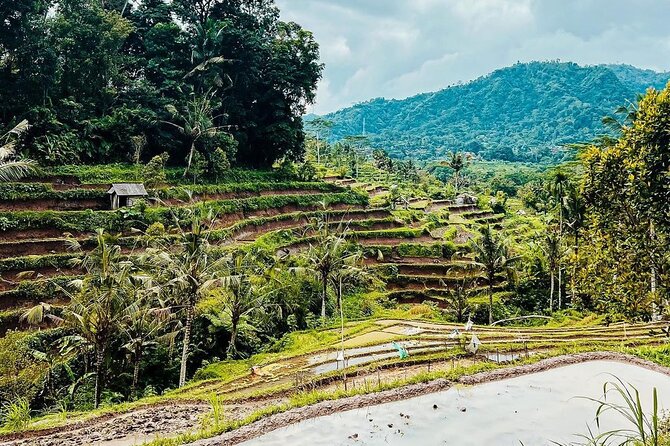
Sidemen sits in eastern Bali, away from the dense resort strips around Kuta, Legian, and Seminyak. Its appeal is not one grand sight. It is the way ordinary pieces of village life fit together: a market opening early, a farmer tending a field, offerings placed near a temple, and water moving through channels that keep the paddies alive.
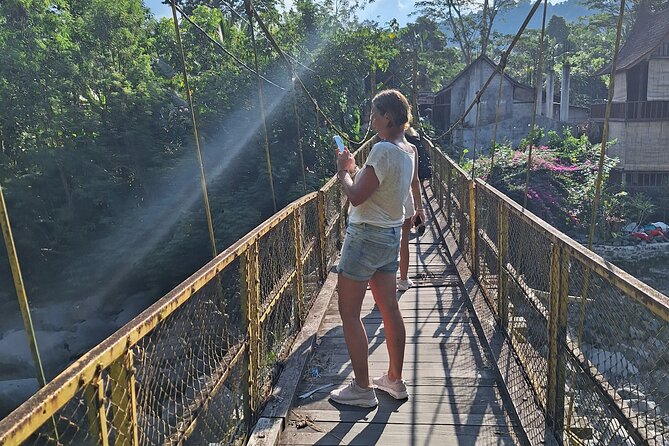
A car can take you through Sidemen, but it cannot show you the narrow paths between fields. This walk gives you a closer view of how the area works. You follow the route of the irrigation water, cross a hanging wooden bridge used by both people and motorbikes, and move between village streets and farmland.
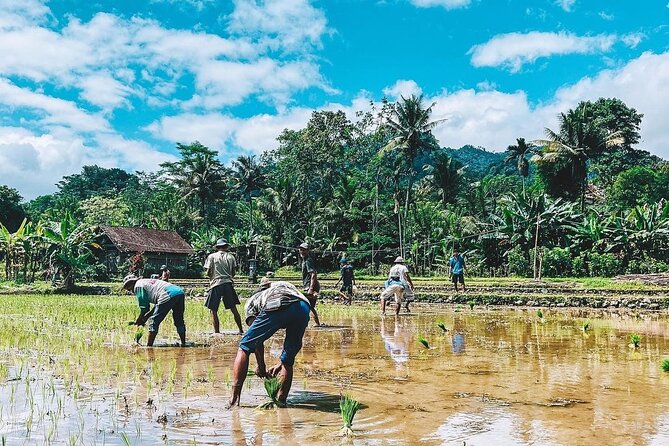
That practical connection makes the experience more useful than a simple photo stop. You see rice as a crop that needs careful timing and water management, not just as a green surface beneath a palm tree. Guides explain how rice is grown, processed, and used in local life. Depending on the season, you may see harvested paddies or other crops being planted, including chili and pepper plants.
A few more Ubud trips to weigh up
- Mount Batur Sunrise Hike and Natural Hot Spring Option
★ 5.0 · 1,927 reviews - Mount Batur Sunrise Hike with Breakfast
★ 5.0 · 1,757 reviews - Mount Batur Sunrise Trekking Private All Inclusive
★ 5.0 · 906 reviews
Starting at Sidemen Traditional Market
The walk begins at Pasar Sidemen, the traditional market on Jl. Sidemen. Your exact meeting point is the shop marked Upa Boga, so allow a few minutes to find the sign rather than waiting anywhere in the general market area.
If you can choose your start time, a morning session gives you the option of visiting the market before the walk. Pasar Sidemen is open from 5:00 AM to 10:00 AM. That makes an early booking useful if you want to see local trade before heading into the fields, though the market visit is optional and separate from the main walk.
The market is also a sensible place to get your bearings. From there, the route moves toward the village and then up toward the rice paddies. The change is gradual. You begin among buildings and local activity, then reach quieter lanes and field paths.
One practical point matters here: transport to the start is not included. If you are staying in Sidemen, arrange a ride through your hotel. The local guidance specifically warns against relying on Grab for hotel pickup, since some hotels allow Grab for drop-off but not pickup.
Following irrigation channels into the rice fields
Once you leave the market area, the route heads toward the paddies with Mount Agung as a guide. The path follows the irrigation system, so you are walking beside the water channels that serve the fields.
There is no polished trail with clear steps throughout. That is part of the appeal, but it also explains why shoes matter. You may walk on narrow field edges, uneven ground, and small tracks used by farmers. The walk is generally easy in terms of effort, yet it asks more from your balance than from your stamina.
This is where the guide makes a real difference. A local leader knows which small paths connect the fields and can explain what you are seeing along the way. Several guides are associated with the experience, including Adi, Darya, Adidas, and Wayan. Their style is described as friendly, relaxed, funny, and willing to answer questions.
The best guides do more than point out crops. They connect agriculture with everyday life. You may learn how seasonal planting changes the view, how crops relate to local cooking, and how work in the fields fits into village routines. In December, for example, some rice may already have been harvested while other crops are being planted.
Do not expect a formal agricultural course. The information comes through conversation as you walk. That makes the pace feel natural, especially if you are curious about how Balinese villages function beyond the resort areas.
Crossing the wooden bridge and village lanes
The hanging wooden bridge is one of the route’s memorable details. It is built for both motorbikes and people, which tells you something about how practical village infrastructure can be. It is not presented as an adventure obstacle, but you should cross carefully and follow your guide’s lead.
After the bridge, the route continues through the village and past a temple used by local residents for prayer. This section gives the walk a cultural layer that a standard countryside stroll might miss. Balinese Hindu customs are closely tied to daily routines, farming, homes, and places of worship, and the guides explain that connection as you pass through.
You will also spend time going up and down village streets before returning to the rice fields. The route is not a straight line through one terrace. Its variety is one of its strengths: market, village, temple, street, irrigation channel, field, bridge, and more field paths.
That variety also means the walk can feel less tidy than a marked park trail. You may need to watch each step while listening to the guide. If you want a completely smooth path, this is not the right outing. If you want a closer look at rural Bali, the uneven route is part of the bargain.
Same island, a completely different day out:
- All-Inclusive Ubud Private Tour
★ 5.0 · 14,344 reviews - Best of Ubud Full-Day Tour with Jungle Swing
★ 5.0 · 8,571 reviews - Ubud: Monkey Forest, Jungle Swing, Rice Terrace, and Water Temple
★ 5.0 · 7,160 reviews - Best of Ubud 1-Day Private Tour
★ 5.0 · 4,451 reviews
The views of Mount Agung and the rice terraces
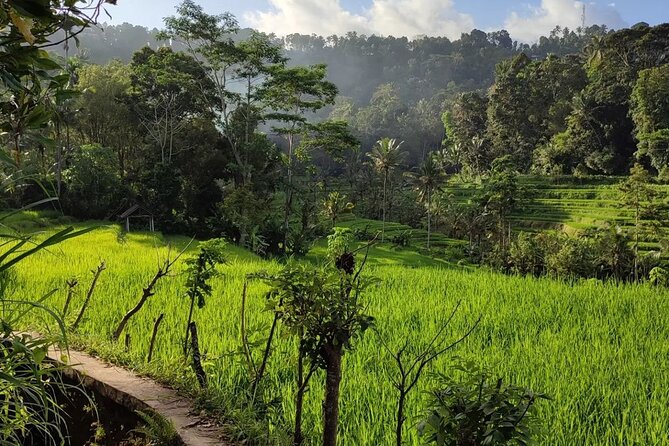
The main visual reward comes from seeing the terraces from inside the farming area rather than from one roadside lookout. From certain viewpoints, the fields open out toward Mount Agung. The volcano gives the scene a strong sense of place and helps explain why Sidemen is so popular with people seeking a quieter side of Bali.
Weather will affect the view. The experience requires good weather, and a clear day gives you the best chance of seeing Mount Agung properly. Clouds and rain can change the mood and make the paths more slippery, so keep some flexibility in your plans.
The photo opportunities come often, but the walk is not only about taking pictures. You may see farmers working, flowers used for offerings, different crops, and small details that are easy to miss from a vehicle. One unusual bit of local nature mentioned by the guide experience is the presence of very large spiders. If you are uneasy around them, keep your eyes open near vegetation.
The scenery changes with the growing cycle. Fresh green rice makes the classic image many people hope to see, but recently harvested fields offer a more honest picture of farming. You might also see chili, pepper, or other crops between rice plantings.
How hard is this two-hour trek?

The advertised duration is about two hours, though you should allow two to two and a half hours from the start when planning your day. The distance is described in one account as almost 4 kilometers, while the optional walk back to the starting area is about 3 kilometers, or 30 to 40 minutes along the main road.
The walk is often described as easy and relaxed, with plenty of time for photographs. It is not a demanding mountain hike, and anyone booking it for a serious fitness challenge may be disappointed. One guide even frames the outing as an easy walk rather than a true hike.
The catch is footing. Some rice terrace paths are narrow and raised, with a drop or waterway beside them. Wet ground can be slippery, and the route includes uneven sections without clear steps. You need reasonable balance and agility even if you do not need strong endurance.
Bring hiking shoes or sturdy walking shoes, a sun hat, sunscreen, and sunglasses. Bottled water is included, but you should still dress for sun and heat. Be prepared to get your footwear dirty. The advice to use good shoes is practical, not cosmetic.
I would be cautious about booking this for someone who has trouble balancing, even if that person can walk for two hours on a flat road. The physical issue is less about steep climbs and more about narrow surfaces, wet patches, and careful foot placement.
What the guides add to the walk
The strongest part of this experience is the human connection. Guides are described as locals who know the villages, farmers, paths, and people along the route. That local familiarity can change the walk from a pretty outing into a useful introduction to Sidemen.
Adi is praised for being funny and relaxed while explaining rice cultivation and village life. Darya is described as patient, thoughtful, and well informed about farming, culture, and the area’s communities. Adidas is noted for his humor and his explanations of traditional Balinese work, learning, and cooking. Wayan is described as considerate and easy to talk to.
Guide assignments can vary, so you should not assume you will get one particular person. Still, the common thread is clear: the guide is there to interpret the place, not merely lead you from one point to another.
The conversations may cover Balinese Hindu beliefs, offerings, local farming, cooking, village history, and changes in Bali. Some discussions also touch on the pressure of commercial growth and how local life is changing. If you prefer silence and fast walking, the frequent explanations and stops may slow you down. If you want context, they are the reason to pay for a guided route.
The cultural exchange can work both ways. Guides may ask about your own background, which helps the walk feel like a conversation rather than a one-sided presentation.
Price, group size, and what you receive

At $13.75 per person, this is a strong-value half-day add-on, especially for anyone already staying near Sidemen. The price includes the guide and bottled water, while tips and hotel transport are not included.
The group limit is 10 people. That is small enough to keep the guide close and make questions practical, though the experience may feel different with a full group than with a private couple’s walk. Some bookings have turned into private outings, but you should not count on that unless the booking terms confirm it.
The price is especially reasonable because the route would be difficult to reproduce alone. You could walk around the village without paying, but you might miss the farmer paths, irrigation route, temple context, and the best way through the fields. The guide’s local access and explanations are what give the modest fee its value.
You should budget extra for getting to Pasar Sidemen and away from Warung Ume Anyar. Tips are optional and not included. There is also no hotel pickup or drop-off.
Finishing at Warung Ume Anyar
The walk ends at Warung Ume Anyar Restaurant in Ogang Village. It is recommended as a place to sit down for a drink or meal after the walk, which makes the finish more comfortable than ending beside an anonymous road.
Arrange your onward transport before you begin. Ask your driver to meet you at the restaurant roughly two to two and a half hours after the start. Grab is available in the area, but there are only a few drivers. Some may request offline payment or an extra fee, and waiting after a warm walk is not a good way to end the morning.
If necessary, you can walk back to the start. The route along the main road is about 3 kilometers and takes roughly 30 to 40 minutes, but most people will find a prearranged ride easier.
Do not schedule a tight airport transfer, long drive, or fixed appointment immediately after the trek. The stated duration is approximate, and weather, footing, photo stops, and group pace can all affect the finish time.
Who should book this Sidemen walk?
Book it if you want a quiet countryside experience with real local context, especially if you are staying in or near Sidemen. It suits couples, small groups, and curious first-time visitors who want to understand rice farming, village life, and Balinese Hindu practice while seeing the terraces.
It also works well as a gentle morning activity. The pace is not built around speed, and the route includes many chances to stop and look around. A group discount may make it even better value for families or friends booking together.
Think twice if you want a strenuous hike, a marked trail, or a fully predictable surface. This is an easy walk with demanding footing in places. It is also less suitable for anyone who cannot safely manage narrow paths or slippery ground.
The experience has a 5 out of 5 rating from 94 ratings and a 99 percent recommendation rate, which fits its strongest qualities: scenery, local guides, and the chance to see rural Bali at close range.
Should you book it?
I would book this walk for the guide and the access to working rice-field paths, not simply for a few scenic photographs. At $13.75, it offers a lot if you value local explanation and a slower look at Bali.
Choose a morning departure if you want to visit the traditional market first. Wear shoes you trust, arrange your ride home in advance, and leave room in your schedule. If you can manage narrow, uneven paths and want something more personal than a resort-area excursion, this is a worthwhile way to see Sidemen from a different angle.
FAQ
Where does the Sidemen trek start?
It starts at Pasar Sidemen, the Sidemen Traditional Market, on Jl. Sidemen. Meet at the shop with the sign Upa Boga.
Where does the trek finish?
The walk ends at Warung Ume Anyar Restaurant in Ogang Village. You can relax there with a drink or meal after the trek.
How long does the walk take?
The walk takes approximately two hours. Allow two to two and a half hours when arranging your pickup, since the exact finish time can vary.
Is hotel pickup included?
No. Hotel pickup and drop-off are not included. If you are staying in Sidemen, arrange transport to the start through your hotel.
What should I bring?
Bring a sun hat, hiking boots or sturdy shoes, sunscreen, and sunglasses. Bottled water is included. Good footwear is important because parts of the route can be narrow, uneven, muddy, or slippery.
Can I cancel for a full refund?
Yes. You can cancel at least 24 hours before the local start time for a full refund. Cancellations or changes made less than 24 hours before the start are not refunded. If poor weather causes the activity to be canceled, you will be offered another date or a full refund.
Just added around Ubud
- Bali Airport Pick-up to Ubud (Arrival Transfer)★ 5.0 · 4 reviews
- Bali Airport: One-Way Private Transfer To/From Hotel★ 5.0 · 25 reviews
- Munduk Car Hire with English Speaking Driver★ 5.0 · 14 reviews
- Bali Airport – Arrival Transfer★ 5.0 · 5 reviews
- Bali ATV Quad Bike and White Water Rafting – All Inclusive★ 5.0 · 7 reviews
- Bali ATV Ride Ubud Jungle Track★ 4.5 · 5 reviews
- Bali All Inclusive : Tlaga Singha Infinity Pool & Atv Adventure★ 5.0 · 21 reviews
- Bali ATV Ride with Jungle Swing and Rice Terrace Tour★ 5.0 · 50 reviews
Hiking & Trekking, compared.

Mount Batur Sunrise Hike and Natural Hot Spring Option
Read our review →

Mount Batur Sunrise Trekking Private All Inclusive
Read our review →

Mount Batur Sunrise Trekking (Private Tour and Breakfast at Restaurant)
Read our review →
Private Tour Mount Batur Sunrise Trekking and Natural Hot Spring
Read our review →
Private Tour : Mount Batur Sunrise Trekking With Private Guide
Read our review →
3-Day Ethical Orangutan Jungle Trek | Bukit Lawang, Sumatra
Read our review →Browse the lists this tour appears in