
Reviewed · JAKARTA TOURS
Private Full-Day Guided Tour: Explore Jakarta’s Top Highlights
Jakarta’s story comes into focus when you move from the 132-meter Monas monument to a Confucian temple, a Dutch colonial square, and the old harbor in one day. This private tour gives you that broad sweep without asking you to work out Jakarta’s sprawling public transport system or sit behind the wheel in one of Southeast Asia’s most difficult traffic cities.
I like the separate guide and driver, since your guide can keep talking while the driver handles parking and crowded roads. I also like the cultural range: mosques, a Catholic cathedral, Chinatown, colonial Kota Tua, traditional puppetry, and wooden phinisi ships all appear in the same itinerary.
The main caution is traffic. One full-day outing can feel packed, and journeys may take longer than the sightseeing. The route also includes many stops with only 30 minutes each, so you should expect a brisk introduction rather than a slow, detailed visit everywhere.
In This Review
- Key details that shape the day
- A strong first look at a difficult city
- Monas and the story of Indonesian independence
- Istiqlal Mosque and Jakarta Cathedral
- Glodok, where the city gets close
- Dharma Bhakti Temple and Chinese Indonesian traditions
- Kota Tua and the former colonial center
- Indonesian puppetry at Makutharama
- Sunda Kelapa and the phinisi ships
- What the private format does well
- Lunch, heat, and the pace of the route
- Traffic is the main variable
- Who will get the most from this tour
- Should you book this Jakarta day tour?
- FAQ
- How long does the Jakarta private tour last?
- What sites are included in the itinerary?
- Is this a private tour?
- Is hotel pickup included?
- Can cruise passengers use this tour?
- Are entrance fees included?
- What happens if I need to cancel?
Key details that shape the day
- Monas gives you Jakarta’s clearest starting point: You see the independence monument, its historical dioramas, and possibly the city from the upper level if tickets are available.
- The mosque and cathedral sit opposite each other: Istiqlal Mosque and Jakarta Cathedral offer a useful look at Indonesia’s religious pluralism.
- Glodok is real daily Jakarta, not a polished attraction: The market brings strong smells, noise, snacks, fruit, and close contact with ordinary city life.
- Kota Tua connects Jakarta to Dutch rule: Canals and old colonial buildings give the former administrative center a very different feel from modern Jakarta.
- The separate driver saves practical time: Parking is handled while you continue with your guide, a real benefit at busy sights.
- The route works especially well from a cruise port: Port pickup and drop-off are included, and the private format allows some flexibility.
A strong first look at a difficult city
Jakarta can be hard to read on your own. It is huge, spread out, and shaped by layers of Indonesian, Dutch, Chinese, Islamic, and modern national history. The tour solves the basic orientation problem by linking places that make more sense together than they do as isolated map points.
You begin by passing through Independence Square, the center of the national government. The Presidential Palace and Arjuna Wijaya Statue appear along the way, giving you an early look at the political heart of the capital before the formal visit to Monas.
The private setup matters here. You travel in an air-conditioned vehicle with bottled water, parking fees, entrance fees, government fees, and hotel or cruise-port transportation included. You also have an English-speaking guide with you throughout the day, rather than being left to read signs and piece together the context yourself.
The price is $65 per person. For a private 7 to 8-hour tour with transport and admissions included, that is a fair price, especially for a first visit or a short stay. It becomes an even stronger value for cruise passengers, who can avoid the higher cost often attached to ship-organized city excursions.
A few more Jakarta trips to weigh up
- Jakarta Full-Day Highlights Tour with Transfer
★ 5.0 · 63 reviews - Baduy Tribal Tracker and Village in Private Tour Full Day & Lunch
★ 5.0 · 25 reviews - Full Day Private Jakarta Tour(Inc Lunch, Puppet show, & Souvenir)
★ 4.5 · 23 reviews
Monas and the story of Indonesian independence
The National Monument, usually called Monas, is the visual anchor of central Jakarta. Its tall white column and gold flame symbolize Indonesia’s independence, and the monument gives the country’s political story a physical center.
Plan on about an hour here. The basement contains 48 dioramas covering Indonesia’s past, from early periods through the independence struggle and later national development. This is one of the most useful parts of the day if you want a basic timeline before visiting the older districts.
The upper observation level can add much to the visit, since it provides a broad view of Jakarta. But do not assume that reaching the top is guaranteed. One person had to accept a lower score because tickets for the ascent had sold out, while another account describes taking the elevator all the way up.
That difference points to a practical issue: Monas access may depend on ticket availability. Ask your guide about the upper level at the start of the day. If the top is important to you, make that clear early.
The monument itself can feel formal and monumental, while the diorama museum is more explanatory. Together, they offer a good introduction to the country’s political identity.
Istiqlal Mosque and Jakarta Cathedral
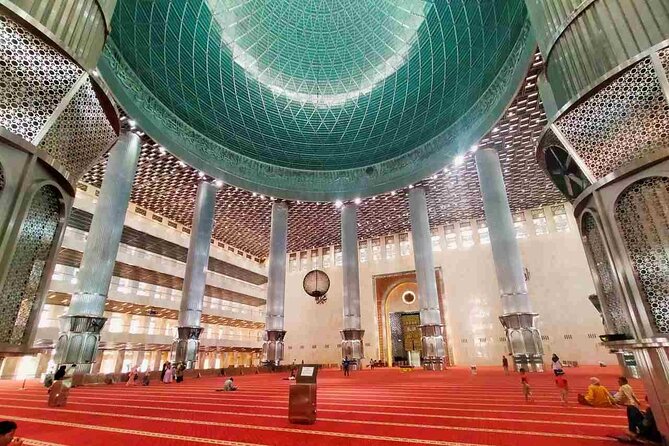
The next pair of stops gives the tour one of its most interesting contrasts. Istiqlal Mosque is the largest mosque in Southeast Asia and one of the world’s largest by worshipper capacity. Its name means independence in Arabic, a fitting choice for a national mosque located near Monas and other government buildings.
You spend about 30 minutes at Istiqlal. Donations are included, and the tour provides what is needed for respectful entry, including sarongs when appropriate. The operator also sends dress-code information before the tour, so you can prepare rather than discover the rules at the gate.
Directly opposite is Jakarta Cathedral, built in 1891 in a neo-Gothic style. Its tall towers, high windows, and stained glass create a sharp visual contrast with the mosque. The interior has three main towers, according to the supplied description, and the short visit gives you time to see the building without turning the stop into a long church tour.
I like this pairing because it says more about Jakarta than a string of monuments would. You are not simply checking off two religious buildings. You are seeing how major faith communities occupy adjacent space in the capital.
Wear clothing that covers your knees and shoulders for the mosque visit. If you are interested in religious architecture, tell the guide. The time is short, but guides such as Isabella, Gus, and Rizky have been praised for answering questions and adjusting explanations to the group.
Glodok, where the city gets close
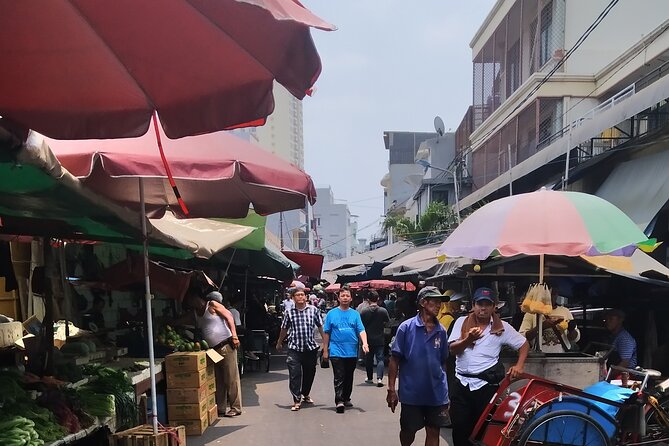
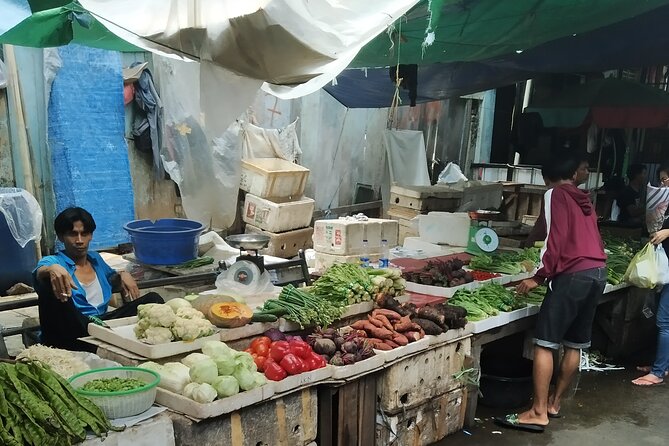
Glodok is Jakarta’s Chinatown, and the visit shifts the mood from national monuments to street-level life. The stop includes a traditional wet market, where you can watch vendors work, see local shopping routines, and sample Indonesian snacks and tropical fruit.
The scheduled time is about 30 minutes. That is enough for a first taste, but not enough for a slow market exploration. Expect sensory overload: noise, smells, narrow activity, and plenty of movement. If you prefer quiet, orderly attractions, this may be the least comfortable part of the tour.
That is not a reason to skip it. Glodok shows a side of Jakarta that a museum cannot. The Chinese Indonesian presence is part of the capital’s long commercial and cultural story, and the market makes that story immediate.
A little flexibility helps here. You may want to spend more time looking at food than taking photos, or you may find the market too intense and prefer to move on. Tell your guide. The private format means you are not tied to the pace of a bus group.
Same island, a completely different day out:
- Jakarta: Volcano, Tea/Rice Fields, Hot Spring, Local Food
★ 4.9 · 515 reviews - Active Volcano, Rice Field, Hot Spring, Fruit market, Tea Plantation with Lunch
★ 5.0 · 513 reviews - Jakarta Half-Day Guided Tour with a Private Fun Local Host
★ 5.0 · 292 reviews - Jakarta Bogor Botanical Garden, Waterfall and Rice terrace, Lunch
★ 5.0 · 157 reviews
Dharma Bhakti Temple and Chinese Indonesian traditions
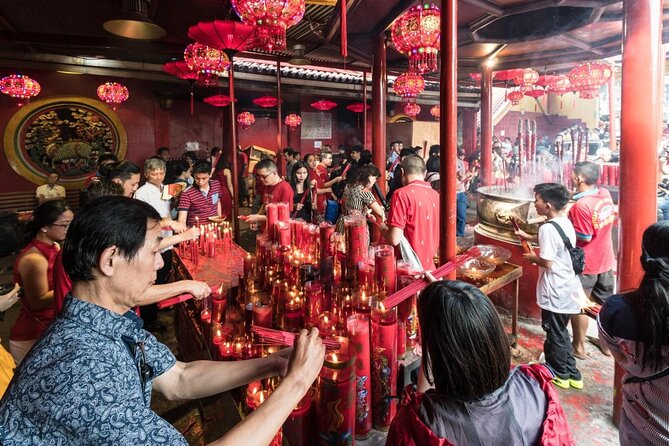
Dharma Bhakti Temple is described as Jakarta’s oldest Confucian temple. It remains active for worship, ceremonies, and the preservation of Chinese traditions, so approach it as a living religious place rather than a decorative historical stop.
The visit lasts around 30 minutes. Donations are included. You may see people carrying out rituals or attending to the temple’s religious role, so follow your guide’s instructions about where to stand, what to photograph, and how to behave.
One useful improvement would be more explanation of the rituals. If you are unfamiliar with Confucian practice, ask your guide to explain what you are seeing. The temple is more meaningful when you understand its function, not just its age.
This stop works well after Glodok. The market shows the community’s daily commercial life, while Dharma Bhakti offers a look at religious continuity. Together, they provide more context than either stop would alone.
Kota Tua and the former colonial center
Jakarta Old Town, or Kota Tua, was once the center of Dutch colonial government. Canals and old buildings in the Dutch style have led to the nickname Little Amsterdam, although the comparison should not be taken too literally.
The area is best understood as a place of layered power. The buildings recall Batavia, the colonial city, while the surrounding Jakarta life reminds you that this is not a preserved European town. It is an Indonesian district with a colonial past and a living present.
The formal stop lasts about 30 minutes and is free. That short time works for seeing the square, taking in the architecture, and hearing the basic story. If you want detailed architectural study or long museum visits, you may find the pace too fast.
The tour then enters the Jakarta History Museum, also called the Fatahillah Museum. It occupies a former Dutch colonial city hall and gets about an hour. This is the place to build a clearer understanding of Jakarta’s development, from its colonial administration to its modern identity.
The combination of outdoor Kota Tua and the museum is sensible. Outside, you see the setting. Inside, you get a structured account of the city’s past. The museum is one of the stronger stops for anyone who wants more than a photo of old buildings.
Indonesian puppetry at Makutharama
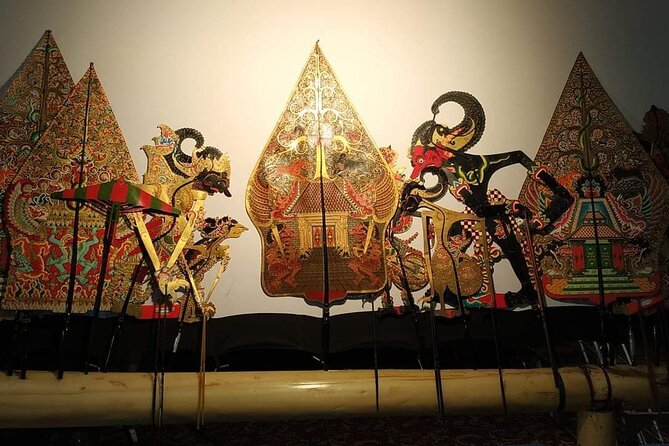
Makutharama Puppet Studio adds a hands-on cultural note to a day otherwise shaped by monuments and museums. You meet traditional puppet masters, see how puppets are made, and watch them in action.
The collection includes wayang from different regions of Indonesia. Wayang is not one single style, and the range of forms helps show how puppetry varies across the country. The studio visit lasts about 30 minutes, so the emphasis is on introduction and demonstration rather than a full performance.
This can be one of the most memorable stops because it puts craft in front of you. Instead of seeing a finished object behind glass, you get a look at the maker’s work, the raw materials, and the performance tradition.
If you enjoy folk art, ask questions about the painted surfaces, wooden masks, and regional differences. The guide can help connect the display to Indonesian culture. The stop may feel brief if puppetry is a major interest, but it is a welcome change of pace.
Sunda Kelapa and the phinisi ships
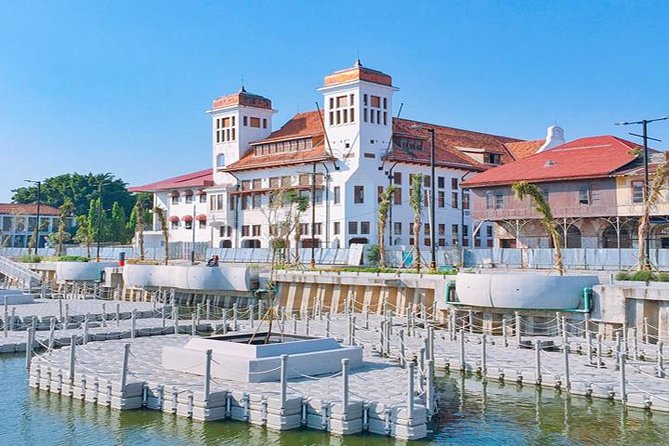
The day ends at Pelabuhan Sunda Kelapa, Jakarta’s oldest port. This harbor played a role in the period when Dutch control of the spice trade shaped the region, and it remains in use for domestic shipping.
The visual draw is the line of traditional phinisi wooden sailing ships. These vessels give the port a strong sense of place and offer a much more tangible connection to Indonesia’s maritime traditions than a modern container terminal would.
You have about 30 minutes here. That should allow time for photographs and a short explanation, though port activity and access can affect how long you remain in particular areas. The stop is not a long harbor cruise. It is a visit to an active historic port.
Ending here gives the route a good final image: Jakarta as a trading city, linked to the sea and to the old spice routes. It also balances the earlier political and religious stops.
What the private format does well
The driver and guide work as a pair. Your guide can continue explaining a site while the driver finds a legal place to stop or handles the vehicle. That sounds minor, but it saves time in a city where parking and congestion can consume a large part of the day.
The tour is private, so only your group participates. That makes it easier to ask questions, pause for photographs, request a different lunch choice, or spend more time at a place that interests you. Several guides have been singled out for these personal touches, including Thomas, Gus, Isabella, Catherine, Nanda, Bryan, Rizky, Saleh, Rafael Lim, and Mitchell.
The strongest pattern is the human side of the tour. Guides are repeatedly described as friendly, energetic, clear, attentive, and willing to explain Indonesian culture and politics in detail. Gus, in particular, is praised for humor and warmth, while Isabella is noted for answering questions and keeping the day moving.
The driver matters too. Jakarta’s roads can be tiring even when you are not driving. A dedicated driver lets you leave that problem to someone familiar with the city.
Lunch, heat, and the pace of the route
Lunch is not listed among the formal inclusions, but several accounts describe enjoyable Indonesian meals and guides who recommend local restaurants. You should confirm the lunch arrangement and payment details before departure.
The food advice appears to be one of the day’s pleasures. One guide recommended soup that met a demanding culinary standard, while other meals were described as Indonesian specialties or local restaurant fare. If you want to try regional dishes, tell your guide early.
Jakarta’s heat also deserves planning. Much of the route involves getting out of the vehicle, crossing open areas, and walking around historic districts. Bring sun protection and water, even though bottled water is supplied. An umbrella would be useful, especially around Monas and Kota Tua, where shade may be limited.
The schedule is full. Monas takes an hour, the History Museum takes an hour, and seven other stops fill the remaining time. Add traffic, meals, and transfers, and you have a day with little slack.
That is good if you want an overview in a short stay. It is less suitable if you prefer long museum visits, unhurried photography, or extended time in one neighborhood.
Traffic is the main variable
Jakarta traffic can change the character of the day. The separate driver reduces some of the frustration, but it cannot make congested roads move. One particularly difficult outing took place just before Eid al-Fitr, when roads became heavily blocked by freight traffic and holiday movement.
For cruise passengers, timing deserves special care. A route to the port can become slow, and one group had to walk the last mile to its ship because the road was completely gridlocked. That was an unusual holiday-period problem, but it shows why you should build in a generous return buffer.
Ask the operator about local events, Ramadan and Eid timing, and your expected return window. The tour includes cruise-port pickup and drop-off, but no city tour can promise normal traffic.
The best way to think about the route is as a flexible city orientation, not a timetable guaranteed to the minute. A private tour gives you more control than a group bus, but road conditions still set the limits.
Who will get the most from this tour
I would choose this experience if you have only one day in Jakarta, are arriving by cruise ship, or want historical context without arranging several separate visits. It is also a good fit if you are uneasy about using public transport across a very large city.
You will get the most from it if you enjoy asking questions. The guides are a major part of the value, and the day improves when you tell them what interests you: independence history, religion, colonial architecture, Chinese Indonesian culture, food, or traditional arts.
Families and mixed-interest groups should also find the route useful because it changes subject often. A child who loses interest in a museum may enjoy the market or puppet studio, while an adult can focus on the political and colonial story.
I would hesitate if you dislike heat, traffic, crowded markets, or full schedules. You may also prefer a shorter, neighborhood-based tour if you want to explore Kota Tua or Glodok at a slow pace.
Confirmation is provided at booking, and most people can participate. Hotel and apartment pickup and drop-off are included within Jakarta, as is cruise-port service. Pickup from CGK Airport or hotels in the airport area is not included.
Should you book this Jakarta day tour?
Book it if you want breadth, context, and private transport in one long day. At $65 per person, the combination of a private vehicle, English-speaking guide, entrance fees, parking, bottled water, and city or port transfers offers solid value.
Before paying, confirm three points: if Monas access to the top is available, if the National Museum is part of your exact route, and how lunch is handled. The tour description names the National Museum as part of Jakarta’s highlights, but the timed stop list gives a separate hour to the Jakarta History Museum and does not assign the National Museum its own stop.
I would also ask about pickup time and expected return time during Ramadan, Eid, or major holidays. The tour has a 96 percent recommendation rate and a 4.8 rating from 338 ratings, but those figures should not make you ignore the traffic warning.
You can cancel for a full refund up to 24 hours before the local start time. Inside that window, the payment is not refunded and changes are not accepted.
FAQ
How long does the Jakarta private tour last?
The experience lasts approximately 7 to 8 hours.
What sites are included in the itinerary?
The route includes Independence Square, Monas, Istiqlal Mosque, Jakarta Cathedral, Glodok Chinatown, Dharma Bhakti Temple, Jakarta Old Town, the Jakarta History Museum, Makutharama Puppet Studio, and Sunda Kelapa Harbor.
Is this a private tour?
Yes. Only your group participates in the activity.
Is hotel pickup included?
Hotel or apartment pickup and drop-off are included within the Jakarta area. Pickup and drop-off at CGK Airport or hotels in the CGK Airport area are not included.
Can cruise passengers use this tour?
Yes. Pickup and drop-off at the Jakarta Cruise Port are included.
Are entrance fees included?
Yes. The listed entrance or admission fees, parking fees, government fees, and donations at Istiqlal Mosque and the old temple are included.
What happens if I need to cancel?
You receive a full refund if you cancel at least 24 hours before the experience start time. Cancellations or changes made less than 24 hours before the start are not accepted and are not refunded.
Just added around Jakarta
- The Secret Society of Batavia – Walking Tour★ 5.0 · 4 reviews
- Soekarno Hatta International Airport by Plaza Premium Lounge★ 4.0 · 46 reviews
- Volcano and Domas Crater of Hot Stony Bubble from Jakarta Lunch★ 5.0 · 23 reviews
- Jakarta Indonesian Culture in half Day★ 5.0 · 50 reviews
- Jakarta Scooter Lessons and Motorcycle Lessons★ 5.0 · 9 reviews
- Situ Gunung Waterfall & Suspension Bridge Sukabumi start Jakarta★ 4.5 · 13 reviews
- Private Tour: Half Day Jakarta Old City Tour★ 4.0 · 4 reviews
- Batik Heritage Introduction Class with Lunch & Souvenir★ 5.0 · 8 reviews
Jakarta Tours, compared.
Volcano, Tea/Rice Fields, Hot Spring, Local Food
Read our review →
Active Volcano, Rice Field, Hot Spring, Fruit market, Tea Plantation with Lunch
Read our review →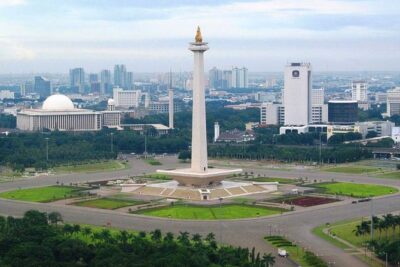
Jakarta Half-Day Guided Tour with a Private Fun Local Host
Read our review →
Jakarta Bogor Botanical Garden, Waterfall and Rice terrace, Lunch
Read our review →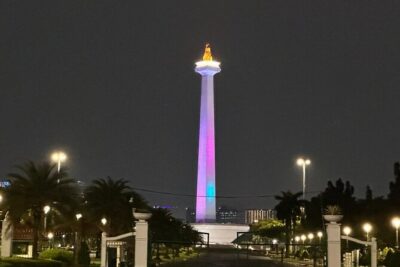
Jakarta Heritage of Old Batavia Private City Tour (Historical)
Read our review →
Jakarta Half-Day Sightseeing Tour To Modern City and Old Town
Read our review →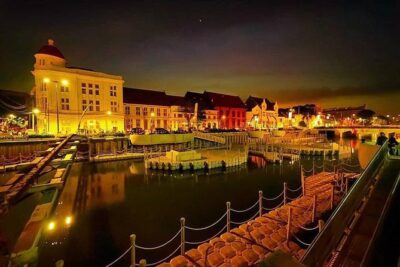
Jakarta Night Tour : Enjoyable Night time in Jakarta (Hotel Pick-up)
Read our review →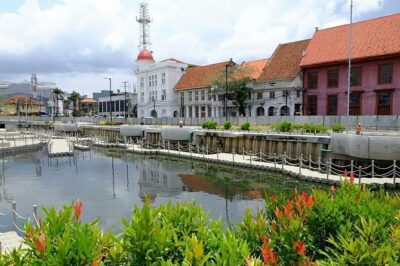
Halfday Excursion Old city Batavia with Lunch and Souvenir
Read our review →Browse the lists this tour appears in