
Reviewed · SPA & HOT SPRINGS
Jakarta: Volcano, Tea/Rice Fields, Hot Spring, Local Food
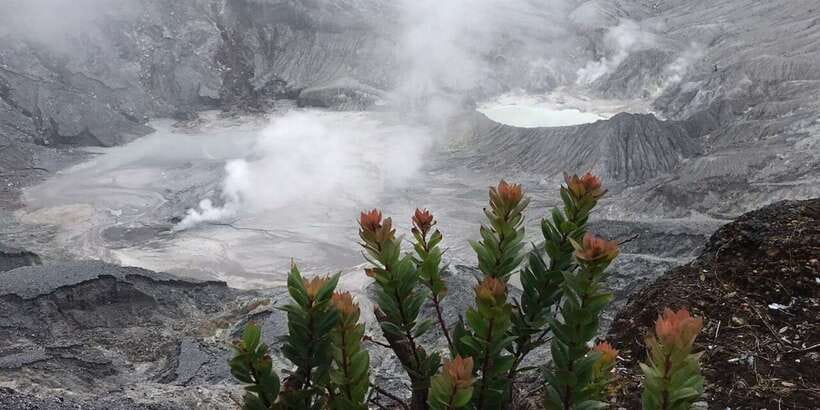
The main event is Tangkuban Parahu Volcano, where you can look into an active crater, smell sulfur, watch bubbles and smoke rise, and sometimes hear the mountain rumble. It is a powerful sight, especially when cloud and rain lift enough to reveal the crater clearly.
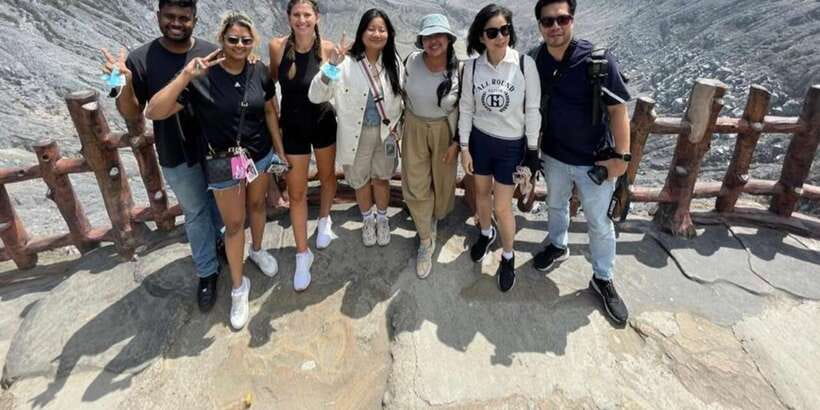
I like the tour’s range: you taste honey pineapple, mangosteen, and snakeskin fruit, then move through rice fields, tea plants, coffee growing, and hot springs. I also like the small-group format, with no more than 10 people and guides such as Rizky, Bryan, Nanda, Vincent, and Isabella praised for clear English and cheerful care.
The catch is the long road day. You may spend six hours or more in the vehicle, and the schedule can run late on weekends. The hot springs are also less impressive if you expect a deep, quiet soak, while the kopi luwak stop raises real animal-welfare concerns.
In This Review
- Key points at a glance
- From Jakarta traffic to the hills of Subang
- Fruit tasting in Subang
- Rice fields and village life
- Seeing Tangkuban Parahu’s sulfur crater
- Lunch in Lembang
- The kopi luwak stop, with an ethical warning
- Tea plants on the volcanic slopes
- Sari Ater Hot Springs and the final soak
- What the $114 price really covers
- Who will enjoy this day most
- Practical advice before you go
- Should you book this Jakarta volcano tour?
- FAQ
- How long does the Jakarta volcano tour last?
- Is hotel pickup included?
- How many people are in the group?
- Is the tour conducted in English?
- What food and fruit are included?
- What should I bring?
- Is the tour suitable for wheelchair users?
Key points at a glance
- An active crater up close: See sulfur fumes, bubbling mud, smoke, and occasional rumbling at Tangkuban Parahu.
- A full taste of West Java: Try honey pineapple, mangosteen, and snakeskin fruit, with lunch at a local restaurant.
- Rice and tea country: Stop to walk among working fields and hear how tea is grown, picked, and processed.
- A long but useful day: The trip takes about 14 hours, including roughly three hours each way from Jakarta.
- Comfortable small-group transport: Air-conditioning, bottled water, tolls, parking, and entrance fees are covered.
- A warm finish: Sari Ater Hot Springs offers sulfur-infused pools and the option of a local body or foot massage.
From Jakarta traffic to the hills of Subang
This is not a quick city excursion. Pickup begins around 7:00 to 7:25 in the Jakarta area, with your guide contacting you about 10 minutes before arrival and waiting outside the hotel lobby. The vehicle is air-conditioned, and the group is limited to 10 people, a useful size for a day with many stops.
The first road section takes about 2.5 to 3 hours toward Subang and Bandung. Jakarta traffic can be heavy, but the drive gives you time to rest, watch the city thin out, and adjust to the change from urban streets to the cooler hills around West Java.
The driver matters here. Mountain roads are curvy, and several people singled out drivers such as Dede, Toto, Tito, Andre, Bobo, and Mr. Toto for calm, careful driving. If you suffer from motion sickness, sit where you can see the road, keep water nearby, and consider bringing any medication you normally use.
The trip is best treated as a long day in the countryside, not as a tightly timed attraction crawl. You return to Jakarta around 7:00 to 8:00 PM, sometimes later on weekends. Do not schedule a flight, train, or important appointment for that evening.
A few more Jakarta trips to weigh up
- Experience Jakarta Street Food Scene with MRT Transportation
★ 5.0 · 17 reviews - Jakarta Night Tour with Dinner at Café or Food street
★ 5.0 · 16 reviews - Learn to cook Indonesian food at Gili Cooking Classes Trawangan
★ 5.0 · 352 reviews
Fruit tasting in Subang
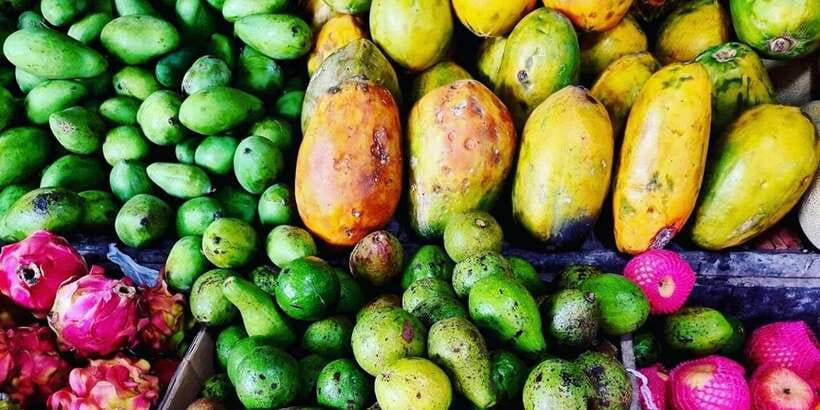
The Subang stop introduces you to one of the day’s most enjoyable surprises: local fruit. Honey pineapple is the star, and your guide may choose a particularly sweet, freshly picked example for you to try. It is noticeably different from the ordinary supermarket pineapple many people know.
You also get to sample mangosteen and snakeskin fruit. Mangosteen has soft, sweet white segments inside a thick purple shell. Snakeskin fruit has a scaly skin and a crisp texture, but its peel can be sharp, so open it carefully.
This stop is short, about 30 minutes, but it does useful work. You are not simply looking at farms from a window. You are tasting what grows in the region and learning about produce through the person guiding you. If you have dietary restrictions, tell the guide early. One guide was able to arrange plant-based food at lunch after a guest explained the request.
Rice fields and village life
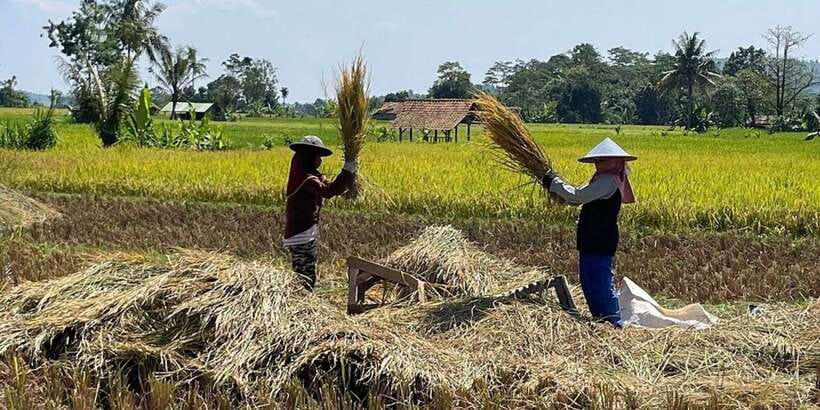
The countryside stops are simple rather than staged. You pause near rice fields, walk around, and watch farmers at work. The schedule allows roughly 30 minutes in Subang and additional short walks near the tea-growing area, so this is not a farm stay or a long village trek.
That simplicity is part of the appeal. You get a look at the patient, physical work behind a bowl of rice, with open fields and mountain views around you. Your guide can explain the local way of life and point out what is happening in the fields, which makes the stop more meaningful than a quick photo from the van.
Bring shoes with a firm sole. The paths may be damp, especially in rainy weather, and the tour is not suitable for people with mobility impairments or wheelchair users. The activity also advises against participation for people over 70, with a separate warning for those over 80, so check the restrictions carefully before booking.
Seeing Tangkuban Parahu’s sulfur crater
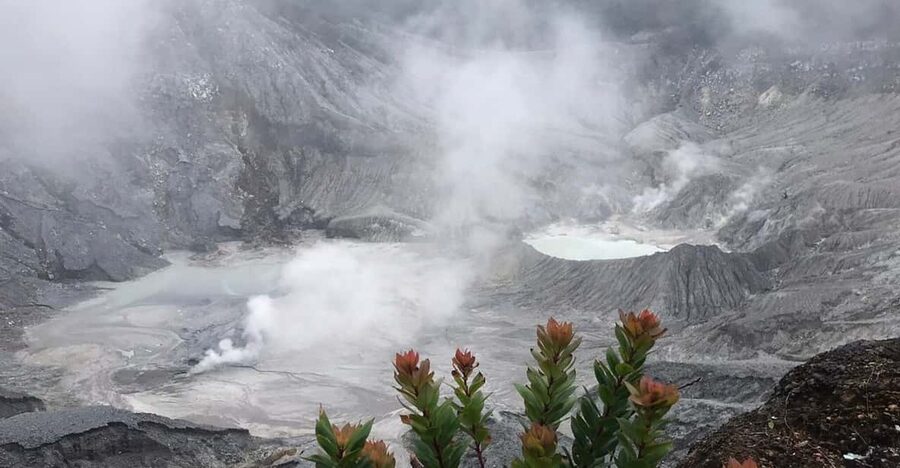
Tangkuban Parahu is the reason to choose this outing over a standard Bandung food or shopping tour. The volcano sits within a forested mountain area, and the visit gives you about 1.5 hours for photographs, walking, and views around the crater.
Expect sulfur in the air. You may see smoke, bubbling mud, and small bursts of activity, and you might hear a low rumble. Conditions change quickly. One day can offer a sharp crater view, while rain and cloud can reduce visibility to almost nothing. Even in poor weather, the smell and sound make the volcano feel active rather than decorative.
The surrounding forest may offer glimpses of wild monkeys. Do not treat them as tame pets or feed them. Around the main viewing area, sellers may approach you with handmade goods and other items. A firm no usually ends the exchange, but carry some cash if you want to buy a local souvenir.
Wear comfortable walking shoes and bring a light change of clothes. The mountain can be wet and cool, while the vehicle and lower elevations may feel warmer. A small towel also helps later at the hot springs.
Same island, a completely different day out:
- Active Volcano, Rice Field, Hot Spring, Fruit market, Tea Plantation with Lunch
★ 5.0 · 513 reviews - Private Full-Day Guided Tour: Explore Jakarta’s Top Highlights
★ 5.0 · 338 reviews - Jakarta Half-Day Guided Tour with a Private Fun Local Host
★ 5.0 · 292 reviews - Jakarta Bogor Botanical Garden, Waterfall and Rice terrace, Lunch
★ 5.0 · 157 reviews
Lunch in Lembang

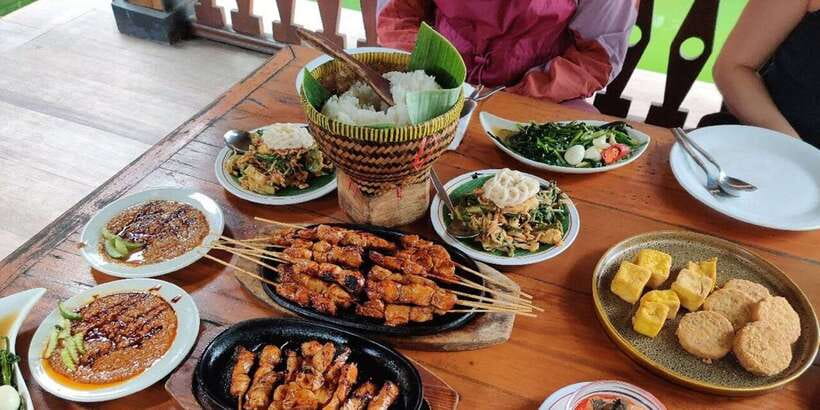
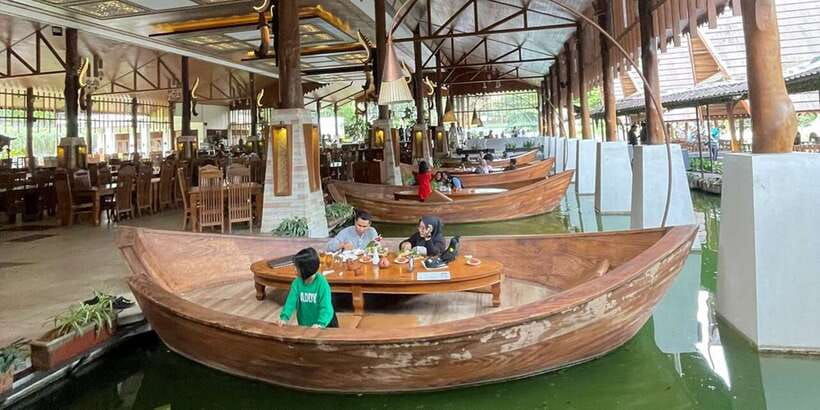
Lunch takes about an hour in Lembang at a local restaurant. The meal is included, and several people found it tasty and satisfying. The restaurant is described as clean, with quick service and a pleasant setting.
Expect Indonesian food rather than a polished international menu. One important limitation is choice. A guest found the meal heavy on fried dishes and less flavorful than expected, especially compared with the wider range of Indonesian cooking. If you want a specific diet, tell your guide before ordering rather than waiting until the food arrives.
The lunch stop also gives your legs a break after the crater and countryside walks. It is not a long culinary class, but it is a practical chance to eat local food in a setting connected to the region.
The kopi luwak stop, with an ethical warning

At Kopi Luwak Cikole, your guide explains coffee growing, shows the coffee plant and beans, and describes different types of Indonesian coffee, along with the production process and claimed benefits. The stop lasts about an hour and can be interesting if you want to understand how coffee moves from plant to cup.
The kopi luwak element needs a clear warning. Some visitors found the center commercial and were uncomfortable seeing civets kept in small cages. One person also questioned whether the animals were drugged because of how calm they appeared. These are serious welfare concerns, not a minor quibble.
You can still learn about coffee without treating the animal display as entertainment. Ask questions about how the civets are kept and how the coffee is produced. If animal welfare is central to your choices, this stop may be the one part of the tour you dislike, and you should consider asking Ekaputratour in advance what the current visit includes.
The coffee tasting itself may be prepared from a packet rather than brewed as a fresh cup from beans you have just seen. That can make the presentation feel more commercial than agricultural.
Tea plants on the volcanic slopes
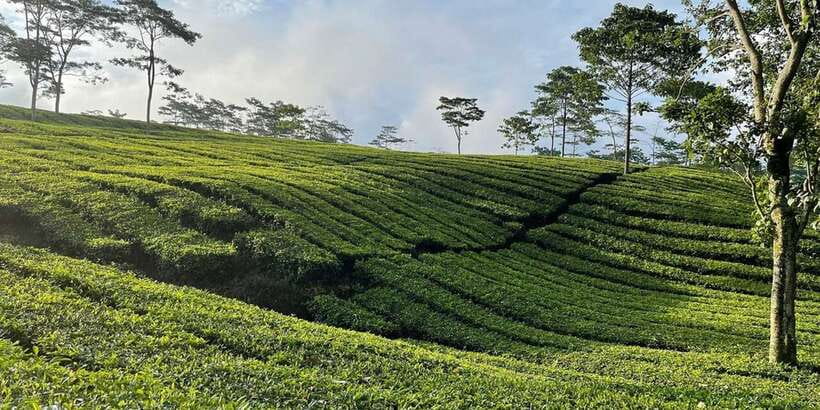
The tea stop at Ciater Cagak Wisata Kebun Teh is brief, around 30 minutes. You walk among tea plants, take photographs, and hear about the crop’s history, cultivation, types, and harvesting.
Do not expect a long guided hike through a working estate. This is a scenic pause, with time to look closely at the plants and take in the highland views. In clear weather, it is one of the prettiest parts of the day. In rain or cloud, the mood changes, but the tea fields can still be atmospheric.
The stop works especially well after the volcano because it shows another side of the same mountain region. Tangkuban Parahu gives you heat, sulfur, and geological force. The tea fields show careful farming and cool, wet growing conditions.
Sari Ater Hot Springs and the final soak
The day ends at Sari Ater Hot Springs in Ciater, where the water is naturally warm and sulfur-infused. You have about an hour for swimming or soaking, and a local massage, including a foot massage, may be available.
The springs are a pleasant way to wash off the road dust and relax before the return drive. But set your expectations correctly. The facility includes several pools at different temperatures, and some are shallow, reaching only around calf height. It is not necessarily the deep, tranquil bath you might picture from the word hot spring.
Some pools can feel extremely hot, so test the water carefully. Bring a swimsuit, towel, and a complete change of clothes. Modest, comfortable clothing for the rest of the day is sensible, since you move between outdoor stops, restaurants, and the bathing area.
For some people, the hot spring is the perfect close to a demanding day. For others, it is the weakest stop, particularly if they want a natural pool with quiet surroundings. I would treat it as a relaxing public facility rather than the main reason to book.
What the $114 price really covers
At $114 per person, this is not the cheapest way to reach the volcano. You are paying for a full private vehicle service shared with a small group, an English-speaking guide, hotel pickup and drop-off in Jakarta, tolls, parking, bottled water, lunch, fruit tasting, and entrance fees.
The value improves if you would otherwise need to arrange a driver, find the volcano entrance, locate the tea and rice stops, organize lunch, and negotiate transport back through Jakarta traffic. The guide also adds value by explaining the farming, coffee, volcano, and local food instead of leaving you to guess what you are seeing.
The price is harder to justify if you mainly want the crater. In that case, a shorter Bandung-based trip may suit you better, though this experience is designed for people staying in Jakarta and wanting several parts of West Java in one day.
The tour has a 4.9 rating from 515 bookings, and the most consistent praise goes to the guides and drivers. English ability, punctual pickup, photo help, local explanations, and flexibility with food or prayer breaks come up repeatedly. Guides including Bryan, Rizky, Nanda, Vincent, Isabella, Mitchell, Valentine, and Tio have been praised for making a packed day feel friendly rather than mechanical.
Who will enjoy this day most
I would recommend it to you if you want variety over depth. In one outing, you see a volcano, rural fields, tea, coffee, tropical fruit, Indonesian food, and hot springs. It gives you a broad introduction to the countryside north of Jakarta.
It also suits solo visitors and couples who prefer a managed day trip. A small group makes it easier to ask questions, and several solo participants found the shared outing comfortable and social.
Families with older children may enjoy the mix of scenery and food, provided everyone can manage walking, early pickup, long vehicle time, changing weather, and the hot spring facilities. It is not a good match for wheelchair users or people with limited mobility.
You should think twice if you dislike long drives, want a slow rural stay, or are uncomfortable with commercial coffee centers and caged animals. The schedule is packed, even though guides generally allow time at each stop.
Practical advice before you go
Wear comfortable walking shoes and clothing that can handle rain, mud, and sulfur water. Pack a towel, a swimsuit or other suitable bathing clothes, and a dry change of clothes.
Keep your phone or camera protected from rain. Weather can change at the volcano, and one clear view can become clouded within minutes. If the crater is hidden, the trip still includes the forest, fields, food, and hot springs, but the volcano may not deliver the photograph you hoped for.
Tell the guide about dietary needs early. The included lunch may have limited choices, but plant-based arrangements have been possible when requested.
Take the guide’s contact details seriously on pickup morning. The guide waits outside the hotel lobby and no more than 10 minutes after the scheduled time. Have your phone available so you do not miss the vehicle.
The tour offers free cancellation up to 24 hours before departure and allows you to reserve now and pay later. That flexibility is useful when Jakarta traffic, weather, or other plans are uncertain, but it does not remove the need to protect the entire evening for the return.
Should you book this Jakarta volcano tour?
Book it if you want a big, varied day and you are willing to trade time for convenience. The volcano is the clear highlight, while the fruit tasting, rice fields, tea plants, local meal, and careful drivers give the long ride a purpose.
I would not book it solely for the hot springs or solely for a serious coffee education. The springs are functional and relaxing rather than wild, and the kopi luwak stop may trouble you because of the animal cages and commercial presentation.
For most people staying in Jakarta, this is a useful way to reach West Java without arranging several separate services. Go with comfortable shoes, realistic expectations, and an open schedule. If you do, the smoking crater, mountain farms, sweet pineapple, and warm final soak can make for one memorable day outside the capital.
FAQ
How long does the Jakarta volcano tour last?
The tour lasts about 14 hours. Pickup begins around 7:00 to 7:25 AM, and return to Jakarta is usually around 7:00 to 8:00 PM, with possible delays on weekends.
Is hotel pickup included?
Yes. Hotel pickup and drop-off are included for the Jakarta area. The guide contacts you about 10 minutes before reaching your hotel and waits outside the lobby.
How many people are in the group?
The tour is a small-group experience limited to 10 participants.
Is the tour conducted in English?
Yes. The tour includes a live English-speaking guide.
What food and fruit are included?
The tour includes lunch at a local restaurant and fresh fruit tasting. The fruit may include honey pineapple, mangosteen, and snakeskin fruit.
What should I bring?
Bring comfortable shoes, comfortable clothes, a towel, and a change of clothes. A change is especially useful after visiting the hot springs.
Is the tour suitable for wheelchair users?
No. The experience is not suitable for wheelchair users or people with mobility impairments. It is also not suitable for people over 70, with an additional restriction listed for people over 80.
More Spa & Hot Springs in Jakarta
- Volcano, Hot Spring, Tea Factory, rice fields and Coffee Tour
★ 5.0 · 25 reviews - Body Massage Experience in Ubud Traditional Spa
★ 5.0 · 3,506 reviews - Mount Batur Sunrise Hike and Natural Hot Spring Option
★ 5.0 · 1,927 reviews - Ubud Hot Springs and Waterfall Private Guided Tour
★ 5.0 · 719 reviews
Just added around Jakarta
- The Secret Society of Batavia – Walking Tour★ 5.0 · 4 reviews
- Soekarno Hatta International Airport by Plaza Premium Lounge★ 4.0 · 46 reviews
- Volcano and Domas Crater of Hot Stony Bubble from Jakarta Lunch★ 5.0 · 23 reviews
- Jakarta Indonesian Culture in half Day★ 5.0 · 50 reviews
- Jakarta Scooter Lessons and Motorcycle Lessons★ 5.0 · 9 reviews
- Situ Gunung Waterfall & Suspension Bridge Sukabumi start Jakarta★ 4.5 · 13 reviews
- Private Tour: Half Day Jakarta Old City Tour★ 4.0 · 4 reviews
- Batik Heritage Introduction Class with Lunch & Souvenir★ 5.0 · 8 reviews
Spa & Hot Springs, compared.
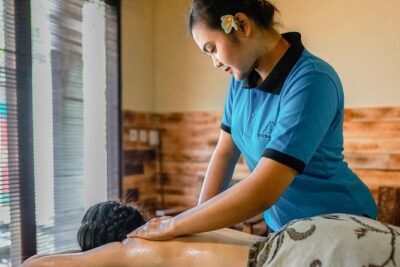
Body Massage Experience in Ubud Traditional Spa
Read our review →
Mount Batur Sunrise Hike and Natural Hot Spring Option
Read our review →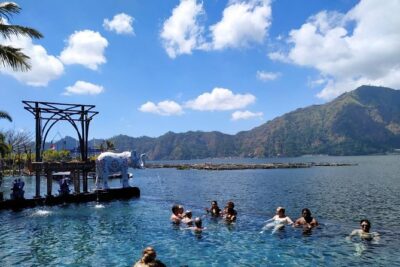
Ubud Hot Springs and Waterfall Private Guided Tour
Read our review →
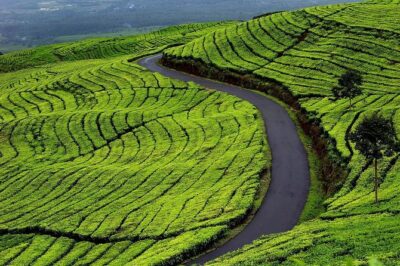
Active Volcano, Rice Field, Hot Spring, Fruit market, Tea Plantation with Lunch
Read our review →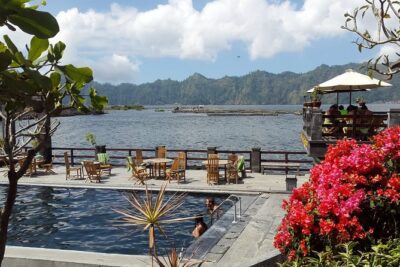
Mt Batur Sunrise, Breakfast & Natural Hot Springs
Read our review →
Private Tour Mount Batur Sunrise Trekking and Natural Hot Spring
Read our review →
Mount Batur Sunrise Hike, Breakfast & Hot Spring
Read our review →Browse the lists this tour appears in