
Reviewed · SNORKELING & DIVING TRIPS
Reef Rehabilitation Course and Snorkeling
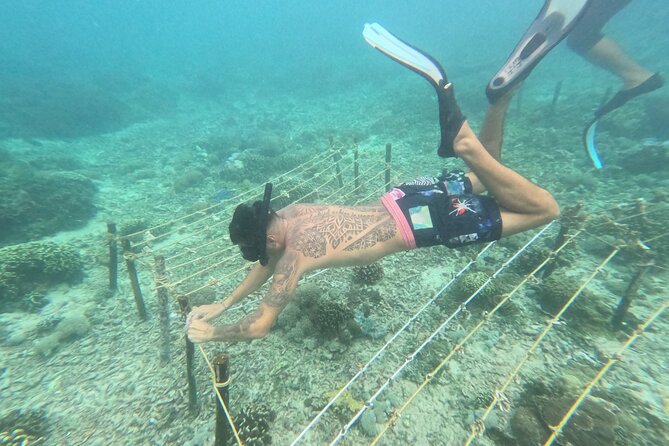
The most useful thing about this Nusa Penida outing is that you do not simply pay for a symbolic coral nameplate. You learn how reef restoration works, handle coral fragments, prepare ropes, and plant 70 corals covering about 4 square meters of seabed. It is hands-on conservation with a clear result.
I like the small maximum of 10 people, which should keep the instruction personal, and I like the three guided snorkeling sessions that let you see both the nursery work and the planting site. The local school visit on Saturdays adds a welcome community link. The main consideration is physical: you need to swim comfortably and have moderate fitness for repeated time in the water.
In This Review
- Key points to know
- What your $62.61 supports beneath the surface
- Meeting the team at Ecotourism Nusa Penida
- Learning why coral reefs need careful repair
- Seeing the coral nursery in three guided water sessions
- Lunch at Coral Cafe and the underwater knot lesson
- Planting 70 corals across 4 square meters
- Saturday adds a local school connection
- Who will get the most from this Nusa Penida activity
- Booking, cancellation, and practical value
- Should you book the reef rehabilitation course?
- FAQ
- How long does the reef rehabilitation course last?
- Where does the experience start and finish?
- How many corals does each participant plant?
- Are snorkeling equipment and restoration materials included?
- Is lunch included?
- How many snorkeling sessions are included?
- Do I need to be a strong swimmer?
- How large is the group?
- What happens on Saturdays?
- Can I cancel for a full refund?
Key points to know
- 70 corals per person: Your work covers about 4 square meters of reef, rather than stopping at a short demonstration.
- Three guided snorkel sessions: The water time is spread across nursery viewing, coral work, and reef planting.
- Local leaders Nyoman and Festi: The program is run by the Ecotourism Nusa Penida team, rooted in the island community.
- Lunch at Coral Cafe: A local lunch breaks up the morning’s instruction and water activities.
- Saturday school program: Saturday departures include English teaching and conservation work with local children.
- Small group format: The maximum is 10 people, useful when you need help with knots, equipment, or coral handling.
What your $62.61 supports beneath the surface
At $62.61 per person, this is not the cheapest snorkeling activity in Bali. It is also not priced like a standard reef tour. Your payment covers roughly six hours, snorkeling equipment, lunch, restoration materials, instruction, and a substantial amount of practical work.
The value comes from the scale of the task. Each participant plants 70 corals across about 4 square meters. That makes the price easier to judge than a vague promise to support marine conservation. You can see where your time and materials go, and you leave having taken part in a real restoration process.
The program grows from a local community effort that has been running for seven years. That matters because reef work is not a one-day photo opportunity. Coral nurseries, fragment collection, rope preparation, and replanting all require repeated care.
You should still book this for the experience, not as a charitable donation. The day is active and educational, with snorkeling and underwater tasks at its center. If you want only a relaxed boat ride and casual fish viewing, a regular snorkeling trip may suit you better.
More Snorkeling & Diving Trips in Nusa Penida
- ️Nusa Penida by Private Boat – Snorkeling 4 spots, Swim with Mantas + Land Tour
★ 5.0 · 6,424 reviews - 2 Days Discover Scuba Diving in Nusa Lembongan – Scuba Initiation
★ 5.0 · 506 reviews - Snorkeling Manta Ray Safari in Nusa Penida
★ 4.0 · 167 reviews
Meeting the team at Ecotourism Nusa Penida
You start and finish at Ecotourism Nusa PenidaBuyuk on Jalan Ped, Nusa Penida, in Klungkung Regency. The activity does not include transport to the meeting point, so you need to arrange your own way there.
Nyoman and Festi are named members of the local team. Their role is not simply to point out fish from a boat. They guide you through coral biology, ocean conditions, nursery methods, and the practical steps used to repair damaged reef.
The small group cap of 10 is a real advantage here. Conservation instruction can become rushed when a large crowd is trying to handle fragile material. With fewer people, you have a better chance of hearing the explanation, seeing the technique, and getting help when you prepare your rope or work underwater.
The start point is in the Ped area of Nusa Penida. Check the exact meeting instructions after booking, and allow enough time to arrive without rushing. Confirmation is provided when you book, and the ticket is mobile, so you do not need to print a paper voucher.
Learning why coral reefs need careful repair
The day begins with a coral conservation presentation. This gives you the basic vocabulary and context before you enter the water. You learn about coral biology, the value of reef ecosystems, and the ocean conditions that affect their survival.
That classroom-style opening is important. Coral can look like rock or decoration to an untrained eye, but it is a living part of a larger system. Understanding that difference helps you handle the fragments with care and makes the later tasks feel purposeful rather than like a craft project.
You also learn how the local team cultivates coral in its nurseries. The nursery is where fragments can be grown and prepared before they are moved to a damaged reef area. Seeing this stage helps connect the presentation to the work in the water.
The program does not promise that every planted coral will survive. Reef restoration is affected by conditions beyond your control. What you get is a practical lesson in the process and a defined contribution to the team’s ongoing work.
Seeing the coral nursery in three guided water sessions
The snorkeling is divided into three guided experiences. That gives the day more structure than one long swim and lets you see different parts of the restoration process.
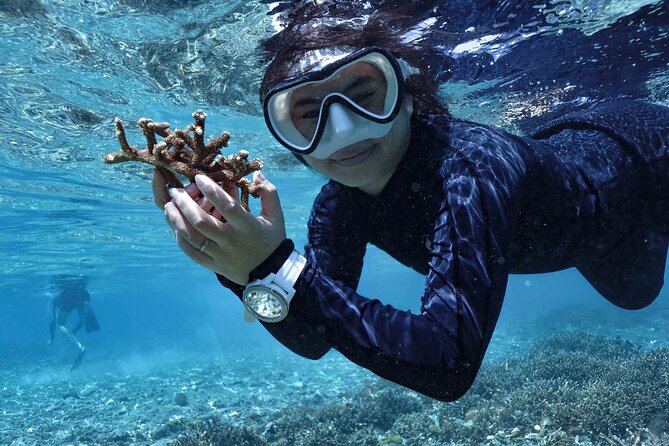
The first water session takes you to the coral nursery. Here, you can see how the team cultivates coral before planting it on the seabed. This is one of the most interesting parts for anyone who wants to understand the mechanics of reef repair rather than simply admire the finished result.
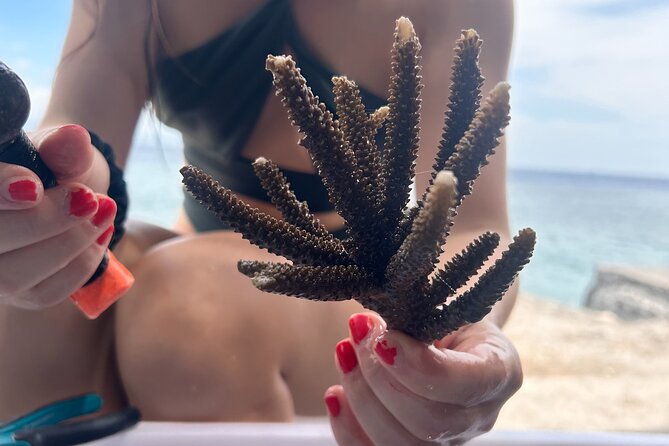
You then harvest coral fragments for the planting work. This requires attention and care. The activity is designed to show you how fragments are selected and prepared, not to encourage casual touching of the reef.
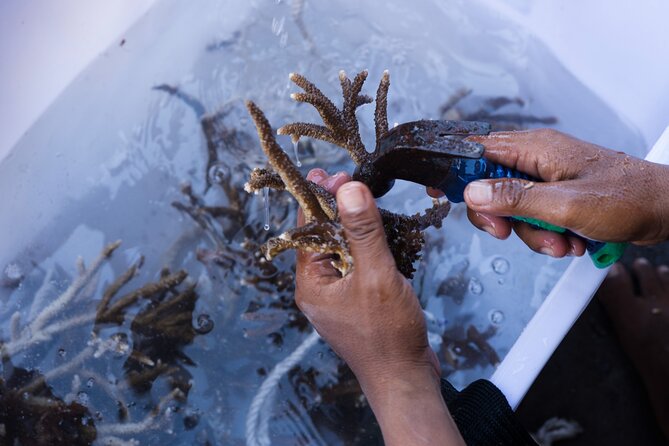
After lunch, you continue with the practical preparation. The team provides the restoration materials, including the ropes used to hold the coral fragments. You learn how to arrange the collected pieces and secure them properly.
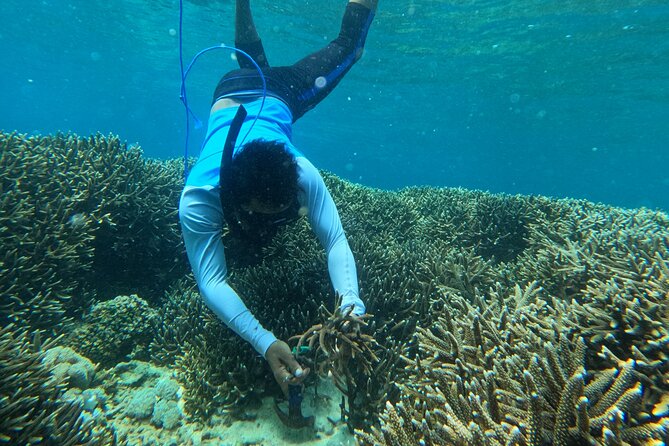
The third water session takes you to the planting stage. You tie the prepared coral onto the seabed and work toward the target of 70 corals per person. This is the part where the day’s lecture, nursery visit, and knot lesson all come together.
Snorkeling ability matters throughout. The information says you should swim comfortably, and that is worth taking seriously. You may need to maintain your position in the water while handling materials, tying knots, and following guidance. This is not a dry-land conservation workshop with a short look through a mask.
Same island, a completely different day out:
- Open Water Course in Nusa Lembongan – Get Certified on remote island (next Bali)
★ 5.0 · 864 reviews - Advanced Open Water Course – Advanced Certification in Lembongan (next to Bali)
★ 5.0 · 222 reviews - 5 Fun Dives in Nusa Lembongan (for certified divers) – Swim with a Mola Mola
★ 5.0 · 205 reviews - Nusa Penida Two Dives Trip for Certified Divers
★ 5.0 · 197 reviews
Lunch at Coral Cafe and the underwater knot lesson
Lunch at Coral Cafe breaks up the work and gives you time to reset. It is included in the price, so you do not need to budget separately for the midday meal, though personal expenses are not included.
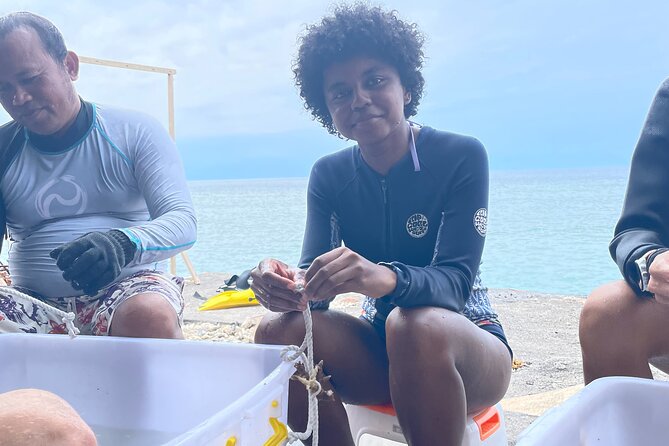
The knot-tying lesson is a small detail with a big practical role. Securing coral underwater is not the same as tying a rope on a dock. You first learn the method, then prepare the ropes with the collected fragments, and finally attach them to the seabed.
This sequence is well judged. You are not sent into the water with a fragile coral fragment and vague instructions. You learn the technique before the planting stage, which should make the work less stressful and reduce careless handling.
Expect the day to feel active rather than leisurely. You will alternate between listening, snorkeling, handling materials, eating, and returning to the water. Wear and bring what you normally need for a half-day water activity, but remember that the supplied information confirms snorkeling equipment, not every personal item you may want.
Planting 70 corals across 4 square meters
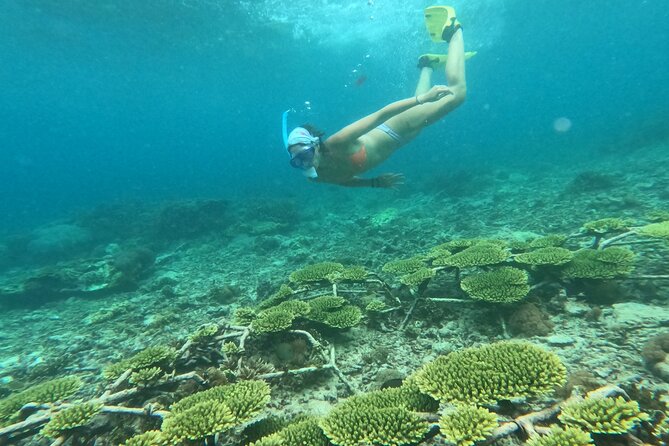
The stated target is 70 corals per person, covering about 4 square meters of reef. That number gives the experience its weight. You are not planting one token fragment for a photograph. You are part of a coordinated group effort with a measurable work area.
The planting also gives you a better understanding of scale. Restoring a reef is not one dramatic act. It is a sequence of small jobs: grow fragments, collect them, tie them to ropes, place them in the right area, and continue caring for the site.
The work may be especially satisfying if you enjoy practical activities. You get to use your hands, learn a technique, and see the direct connection between instruction and action. The conservation message is stronger because you are not only listening to it.
There is a reasonable limit to what a six-hour outing can accomplish. You will not become a marine biologist in one day, and the activity cannot guarantee long-term reef recovery. Still, it offers a clear introduction and a substantial task within the time available.
Saturday adds a local school connection
On Saturdays, the program includes a visit to a local school. You teach English and take part in conservation activities such as beach cleanups with the children.
This changes the character of the day. The experience is not limited to the reef itself. You see how environmental work connects with local education and community life. The included gift for the local children and school gives you a simple way to contribute beyond the underwater project.
Saturday participants should be ready for a fuller community program, not just extra snorkeling. The school visit may appeal to you if meeting local residents and taking part in a small service activity matters as much as the reef work.
The information does not state that the school visit is part of every departure. It is specifically listed for Saturdays, so choose that day if this part is important to you.
Who will get the most from this Nusa Penida activity
I would recommend this to you if you:
- Swim comfortably and can manage repeated water sessions
- Want active conservation rather than passive sightseeing
- Like learning practical skills such as underwater knot tying
- Prefer a small group with direct instruction
- Want lunch, equipment, and restoration materials included
- Are interested in local community work, especially on Saturdays
Families should judge the activity by each participant’s swimming ability and fitness. Service animals are allowed, but the program’s water-based nature still means you should consider whether the person accompanying you can safely take part.
This is less suitable if you dislike snorkeling, feel uneasy working in the water, or want a fully relaxed six-hour schedule. The moderate fitness requirement is not decorative wording. You will be moving between land instruction and practical reef work.
The small maximum of 10 people helps, but it does not turn the course into a private lesson. You still share the day with other participants, and the pace includes group explanations and coordinated planting.
Booking, cancellation, and practical value
The activity is commonly booked about 38 days ahead. That is a useful planning clue, particularly if your Nusa Penida schedule is fixed or you want a Saturday school visit. Booking earlier also gives you more room to choose a date before your island plans fill up.
Free cancellation is available if you cancel at least 24 hours before the local start time. Changes or cancellations made inside that window are not accepted for a refund. Keep the local cut-off in mind if you are arranging plans across different time zones.
The tour ends back at the same meeting point, which simplifies the day once the activity is over. Transport to the starting location and personal expenses are not included, so account for those separately.
The price is strongest when you value all parts of the package: six hours, three guided snorkeling sessions, lunch, gear, instruction, materials, and the 70-coral planting target. It is weaker value if you mainly want a few minutes of reef viewing and would not enjoy the educational or hands-on work.
Should you book the reef rehabilitation course?
Book it if you want your time in Nusa Penida to include a real task, not just a beautiful view. The strongest features are the clear planting target, the small group size, the nursery visit, and the chance to learn from a local team led by people such as Nyoman and Festi.
Choose a Saturday if teaching English and joining a beach cleanup with local children appeals to you. Choose another day if your priority is keeping the outing focused on coral restoration and snorkeling.
I would skip it only if you cannot swim comfortably, need a low-effort schedule, or are comparing it purely with the price of a basic snorkeling trip. For an active visitor who wants to understand reef repair and leave a measurable contribution behind, the $62.61 cost is sensible.
FAQ
How long does the reef rehabilitation course last?
The activity lasts about six hours.
Where does the experience start and finish?
It starts at Ecotourism Nusa PenidaBuyuk on Jalan Ped, Nusa Penida, Klungkung Regency, Bali 80771. It ends back at the same meeting point.
How many corals does each participant plant?
Each participant plants 70 corals across about 4 square meters of reef.
Are snorkeling equipment and restoration materials included?
Yes. Snorkeling equipment and the materials needed for coral restoration are included.
Is lunch included?
Yes. Lunch at Coral Cafe is included in the experience.
How many snorkeling sessions are included?
The program includes three guided snorkeling experiences.
Do I need to be a strong swimmer?
You should be able to swim comfortably. The activity also requires a moderate level of physical fitness.
How large is the group?
The maximum group size is 10 participants.
What happens on Saturdays?
Saturday programs include a visit to a local school, English teaching, and conservation activities such as beach cleanups with the children.
Can I cancel for a full refund?
Yes, if you cancel at least 24 hours before the local start time. Cancellations or changes made less than 24 hours before the start are not accepted for a refund.
More Snorkeling in Nusa Penida
- Snorkeling and Freediving Trip around Nusa Penida
★ 4.5 · 77 reviews - Lembongan Snorkeling at Manta Bay, Crystal Bay and Mangrove
★ 5.0 · 56 reviews - Explore 4 iconic snorkeling spots of Manta Bay in Nusa Penida
★ 4.5 · 29 reviews - Manta Point Snorkeling & West Nusa Penida Island Day Tour
★ 4.5 · 23 reviews
Just added around Nusa Penida
- Try Scuba Diving for Beginners with manta rays (Non – Certified)★ 4.5 · 31 reviews
- Try Freediving on Nusa Penida★ 5.0 · 30 reviews
- Snorkeling 4 Spot With Manta Bay Or Optional Land Trip★ 5.0 · 14 reviews
- Thrilling Off Road Adventure Explore Nature with ATV With Lunch★ 5.0 · 3 reviews
- Seaweed Farming Activity and Sightseeing at Diamond Beach★ 4.5 · 3 reviews
- Certified Scuba Dive with Manta Rays (Open Water Diver minimum)★ 5.0 · 55 reviews
- One Day Nusa Penida Island East★ 5.0 · 29 reviews
- Solo Traveler in Nusa Penida★ 4.5 · 6 reviews
Snorkeling & Diving Trips, compared.
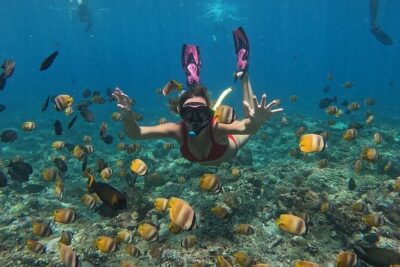
️Nusa Penida by Private Boat – Snorkeling 4 spots, Swim with Mantas + Land Tour
Read our review →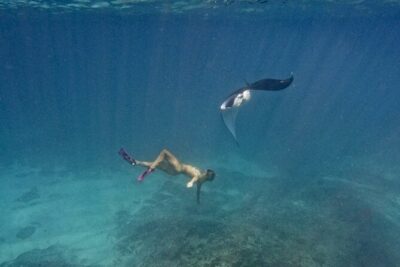
Nusa Penida day trip: boat, 4 snorkeling, Manta rays & Land tour
Read our review →
Nusa Penida Snorkeling Adventure (Private & All-Inclusive)
Read our review →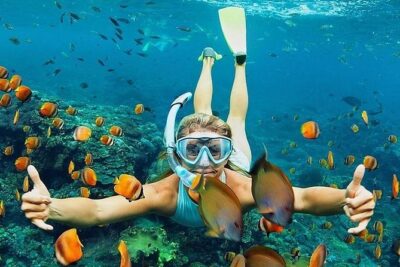
All Inclusive : Bali Blue Lagoon Snorkeling, Lunch, and Transport
Read our review →
Bali Blue Lagoon Snorkeling – Lunch and Transport All Inclusive
Read our review →
Blue Lagoon Snorkeling – Lunch – Kantolampo – Tibumana Waterfall
Read our review →
Bali Blue Lagoon Snorkeling with Private Transfer & Lunch
Read our review →
2 Days Discover Scuba Diving in Nusa Lembongan – Scuba Initiation
Read our review →Browse the lists this tour appears in