
Reviewed · HIKING & TREKKING
Rinjani trekking 2D 1N RIM
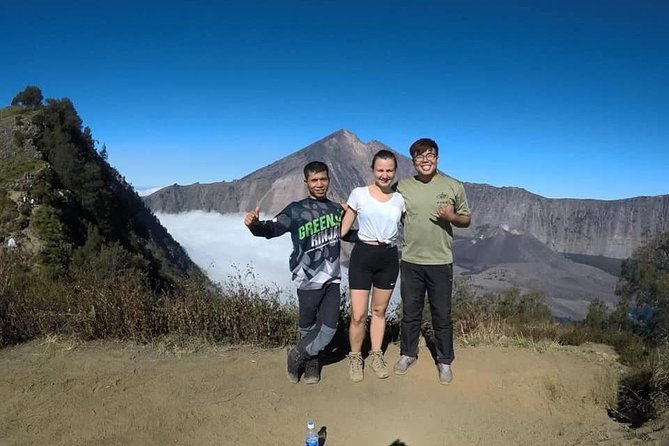
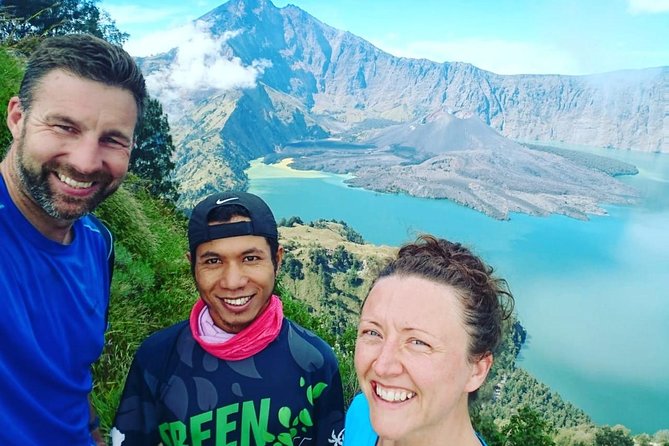
Mount Rinjani’s Senaru crater rim gives you the big volcanic view without the summit push. Over two days, you climb from village farmland through thick forest to a campsite at 2,641 meters, then return the way you came. At the top, the reward is a wide view of the crater lake, the Gili Islands, and Bali’s Mt. Agung.
I like the private format, since your guide can match the pace to your group rather than a fixed crowd. I also like the unusually generous inclusions: meals, snacks, drinks, tents, sleeping bags, a guide, porters, and transport are covered. The drawback is real: this is not a gentle stroll. The ascent takes roughly seven to nine hours, the final section is steep and stony, and the descent on day two can be hard on tired knees.
In This Review
- Key points to know before booking
- Why the Senaru rim is the right Rinjani introduction
- Day one from Senaru to the 2,641-meter crater rim
- Sunset, crater views, and a night at Pelawangan 1
- Day two, sunrise and the long return to Senaru
- What the $205 price really covers
- What to pack, and what not to assume
- The human side of the trek
- Who should book this Rinjani trip?
- Should you book Green Rinjani?
- FAQ
- How long is the Rinjani crater-rim trek?
- What elevation does the tour reach?
- What is included in the $205 price?
- Do I need to bring my own trekking equipment?
- Can I hire a porter for my personal luggage?
- Is this a private tour?
Key points to know before booking
- The route reaches 2,641 meters, not Rinjani’s 3,726-meter summit. You camp at Senaru Crater Rim and return to the village.
- The first day is long but varied. You pass coffee trees and bamboo, then enter shaded rainforest before climbing open savanna.
- Your private guide controls the pace. Guides including Dana, Adi, Yun, Ubang, and Sri have been praised for patience, care, and attention to safety.
- Porters handle the camp and much of the heavy equipment. An extra porter for your personal luggage costs $22 per day.
- Food is a serious part of the package. Meals, fruit, biscuits, snacks, coffee or tea, bottled water, and other drinks are included.
- Bring the basics yourself. A headlamp or flashlight, trekking shoes, long trousers, warm layers, sun protection, and a small day pack are not supplied.
Why the Senaru rim is the right Rinjani introduction
Rinjani is Lombok’s signature volcano, but the mountain offers several different trekking goals. This trip focuses on the Senaru route to the crater rim, rather than the much harder summit and lake routes. That makes it a sensible choice if you want a major mountain experience in two days and one night, but do not need to stand on Rinjani’s highest point.
The route is also good for people who enjoy changing scenery. You start near Senaru village at about 601 meters, with coffee plants, bamboo, and other crops around the first section. Soon the trail enters tropical forest, where shade helps protect you from the sun and the air becomes humid.
I would not call the hike easy. The distance is manageable on paper, but the climb is continuous, and the last approach to the rim is steep and covered with loose stones. A moderate level of fitness is required. If you already hike regularly, the private guide and planned breaks should make the day more manageable. If you rarely walk uphill, you need to prepare seriously.
A few more Lombok trips to weigh up
- 2D1N Senaru Crater Rim Trekking
★ 5.0 · 178 reviews - 3D/2N Rinjani trekking summit,lake and hot springs.
★ 5.0 · 85 reviews - Rinjani Trekking 3D2N Summit
★ 4.5 · 85 reviews
Day one from Senaru to the 2,641-meter crater rim
The schedule begins with pickup around 7:00 a.m., followed by registration at the Rinjani Trekking Centre in Senaru. The walking portion generally starts between 7:30 and 8:00 a.m., when temperatures are cooler.
The opening section is a useful warm-up. For about 30 minutes, you walk through more open ground with views of local coffee trees, bamboo, and other plants grown by people in the area. This is not just filler before the mountain begins. It gives you a quick look at the cultivated foothills around Senaru and shows how closely the trek starts to village life.
After roughly another half hour, you reach the entrance to the tropical rainforest. A short break of about 15 minutes follows, then the trail continues under the trees. This shaded section is welcome, though the humidity can make the effort feel heavier than the elevation gain suggests.
The forest is one of the more enjoyable parts of the route. Large trees close in around the trail, and you may hear or see black or brown monkeys. Keep small bags close and do not leave food unattended. At Pos 2, also called Montong Satas, you take a longer rest after about three hours of walking.
This is where the support team starts to matter. The guide and porters prepare soft drinks, crackers, and fresh fruit such as bananas and pineapple. Those small food stops are valuable on a long uphill day. They let you recover without having to carry a full supply of meals and drinks yourself.
From Pos 2, expect about two more hours to Pos 3, known as Mondokan Lokak. Depending on the season, particularly June through August, you may see local strawberries growing beside the trail. It is a small detail, but it helps break up the steady climb.
Pos 3 is the usual lunch stop. The porters cook there, and fresh fruit, biscuits, and other snacks are served. Brown monkeys are also common around this area. Keep your small day pack within reach, since the monkeys may grab unattended items. That is a practical reason to avoid leaving phones, food, or loose gear on the ground.
After lunch and a substantial rest, the trail continues toward the rim. The first 25 minutes take you out of the rainforest and onto open savanna. The change is sudden: the forest shade disappears, the sun feels stronger, and the views begin to spread across the hills below.
A steeper section follows. One rest area is called Cemara Lima, where you can stop and look back toward Senaru village. From there, the trail continues for about an hour to Pelawangan 1, the Senaru Crater Rim.
This final stretch is the part I would respect most. The ground is stony, the climb remains steep, and you are already carrying the fatigue of a full day. Your guide can adjust the pace because the tour is private, but no guide can remove the climb. Take steady steps, drink regularly, and do not rush the last hour simply to reach camp sooner.
Sunset, crater views, and a night at Pelawangan 1
The campsite sits beside the Senaru crater rim at 2,641 meters. The exact experience depends on cloud and weather, but the viewpoint is the main reason to choose this route.
At sunset, you may see the three Gili Islands below and Mt. Agung on Bali across the water. The open position gives you a broad coastal view that is very different from the enclosed forest earlier in the day. The crater itself contains Lake Segara Anak, and you can also see Rinjani’s 3,726-meter summit rising above the volcanic bowl.
The camp equipment is included: tent, sleeping bag, camping pillow, sleeping mat, camping table and chair, and a toilet tent. That is a strong value at $205, especially since the porters transport and set up the camp while you concentrate on walking. Still, mountain camping is basic. You should expect a functional overnight stop rather than a comfortable hotel room.
Dinner is included, as are drinks and hot coffee or tea. The food receives some of the strongest praise connected with this trip. It is described as plentiful, and one memorable comment even joked about gaining weight during a two-day hike. Do not count on that outcome, but you can reasonably expect more than a bare ration of noodles and rice.
Once darkness arrives, the campsite’s appeal is simple: quiet, cold air and the possibility of sleeping under the stars. Bring warm clothing. The equipment includes a sleeping bag, but the supplied information does not promise a particular thickness or temperature rating. A windproof jacket and long trousers are sensible, not optional extras.
Day two, sunrise and the long return to Senaru
The second morning begins with breakfast and time to enjoy the sunrise. From the rim, you can take photographs of the crater lake, the valley, and the surrounding peaks before starting the descent.
The return to Senaru takes about five to six hours. That may sound easier because you are going downhill, but descents can be more demanding than climbs. Loose stones, uneven ground, and tired legs place extra strain on your knees and ankles. Trekking poles are optional, but I would consider them useful for this section.
You return through the open savanna and rainforest, then back toward the village. The same route feels different in reverse: the exposed slopes that were a hard climb on day one become a rocky descent, while the forest provides welcome shade again.
Arrival at the Rinjani Trekking Centre is expected around 12:30 to 1:00 p.m. A private car then takes you to your next destination. Since the end point is back at the meeting point and the vehicle transfer is included, this is easier to arrange than finding your own transport after a tiring descent.
Same island, a completely different day out:
- Learn to cook Indonesian food at Gili Cooking Classes Trawangan
★ 5.0 · 352 reviews - Tetebatu Walking Tour – Rice Terraces, Waterfall & Monkey Forest
★ 5.0 · 349 reviews - Gili Island Snorkeling Trip – Gili Trawangan, Gili Meno, & Gili Air, From Lombok
★ 5.0 · 330 reviews - Snorkeling with turtle and statue in Gilis
★ 4.5 · 301 reviews
What the $205 price really covers
At $205, this is not simply a guided walk. The package includes overnight camping, food and drinks, a local guide, porters, trekking equipment, pickup, and transfers. Breakfast, lunch, dinner, coffee or tea, bottled water, and snacks are included as well.
That bundle matters on Rinjani. You would otherwise need to arrange transport to Senaru, rent or carry camping equipment, buy several meals, and organize a guide and porters. The porters also make the trip more practical by carrying the camping supplies and preparing the campsite and meals.
The private format adds value for couples, families with older children, or friends with different walking speeds. The guide can stop when your group needs a break and can help keep the day moving when energy drops. Guides named in the supplied information include Dana, Adi, Yun, Ubang, and Sri. Dana is noted for supportive care and strong English, while Adi is described as patient and attentive to pace. The team around Yun, Jamal, and Jaka is praised for organization and support, and Sri is described as careful about safety.
One extra cost is worth noting. A porter for your own luggage costs $22 per day. The regular porters carry the trekking and camping equipment, but you should plan to carry your own daily essentials unless you pay for this service.
What to pack, and what not to assume
The operator does not provide every personal item. You need a headlamp or hand torch, trekking shoes, long trousers, a trekking jacket or windproof jacket, sunblock, a hat, sunglasses, insect repellent, toiletries, and a small daily backpack.
Pack lightly. Your day pack should hold water, snacks, sunscreen, a camera, a small towel, a spare shirt, and anything you need during the climb. You may want trekking poles and sandals for camp. A swimsuit, binoculars, and fishing gear are listed as optional, though they are not needed for the basic rim route.
Do not wear casual sneakers if they have poor grip. The route includes forest soil, savanna, steep sections, and stones. Good trekking shoes are specifically advised. You should also bring muscle balm or a similar product if you find it useful after long uphill days.
The trip requires moderate physical fitness. That wording should not be read as a promise of an easy walk. The first day includes several hours to Pos 2, another two hours to Pos 3, a long lunch break, and then the steep climb to the rim. The second day adds another five to six hours on tired legs.
The human side of the trek
The strongest part of this experience is the support team. Transport is arranged from the meeting point, and the service can include pickup from the airport and transfer to your next accommodation. A night before the hike at the Green Rinjani guest house may also be arranged, with reports of clean rooms, hot water, and good views.
That extra accommodation is particularly useful if you arrive late or need time to prepare. One account describes arriving late, receiving a meal, and being welcomed before the trek. You should confirm exactly what pre-trek accommodation and meals are included in your own booking, but the operator has a reputation for handling these details well.
The porters are a major part of the value. They carry gear, set up the tent, prepare food, and help make camp feel organized at the end of a hard climb. Proper tips for the guide and porters are not included, so budget separately for that customary thank-you.
Who should book this Rinjani trip?
I would choose this tour if you want a private, well-supported mountain trip and your main goal is the crater-rim view. It suits people who value a guide-led pace, do not want to arrange camping logistics, and are happy with a demanding two-day hike.
It is also a good fit if you have limited time in Lombok. You get the major Senaru forest and crater-rim experience without committing to a longer route. Couples and small groups benefit most from the private arrangement.
I would not choose it if your main goal is to climb Rinjani’s summit or spend time at Lake Segara Anak. The tour reaches the rim, shows you the lake from above, and returns to Senaru. It is not a summit itinerary.
The trip is also a poor match if you dislike steep, rocky walking or camping in cool mountain conditions. A guide can help with pace and safety, but you still need to do the uphill work.
Should you book Green Rinjani?
At $205, this is a strong-value way to see Rinjani’s crater rim, particularly because meals, camp gear, porters, guide service, and transfers are included. I like the private pacing and the practical support, and the repeated praise for guides such as Dana, Adi, Yun, Ubang, and Sri gives confidence that the human side of the trip is a real strength.
Book it if you want dramatic sunset and sunrise views, a night beside the crater, and a demanding but focused Lombok adventure. Skip it if you want the summit, a relaxed walk, or a hotel-style night. Go prepared with proper shoes, warm clothes, a headlamp, and realistic expectations, and this should be a memorable two-day introduction to Rinjani.
Free cancellation is available up to 24 hours before the local start time. Changes or cancellations made within 24 hours are not accepted for a refund.
FAQ
How long is the Rinjani crater-rim trek?
The experience lasts about two days and one night. Day one goes from Senaru to the crater rim, and day two returns to Senaru.
What elevation does the tour reach?
The campsite at Senaru Crater Rim is at about 2,641 meters. The route does not climb to Rinjani’s 3,726-meter summit.
What is included in the $205 price?
The price includes overnight camping, tent, sleeping bag, camping pillow, sleeping mat, camping table and chair, toilet tent, food, drinks, guide, porter, pickup, and transfers. Breakfast, lunch, dinner, coffee or tea, bottled water, and snacks are also included.
Do I need to bring my own trekking equipment?
Yes. Bring trekking shoes, a headlamp or flashlight, long trousers, a trekking jacket or windproof jacket, sun protection, insect repellent, toiletries, and a small day pack. Trekking poles and sandals are optional.
Can I hire a porter for my personal luggage?
Yes. An extra porter for your own luggage can be arranged for $22 per day.
Is this a private tour?
Yes. Only your group participates, and the guide can set the walking pace to suit your group. A moderate level of physical fitness is required.
Just added around Lombok
- Trekking Rinjani Volcano To Crater Rim Senaru 2D-1N Private – Syam Trekker★ 5.0 · 45 reviews
- Waterfall Tour And Sasak Traditional Tour★ 5.0 · 3 reviews
- Full-Day Private Trip to South Lombok★ 5.0 · 15 reviews
- MODERATE HIKING: 2D/1N Crater Rim Senaru | Rinjani Samalas Tour★ 5.0 · 8 reviews
- Trekking Rinjani Mountain Summit 2 Days 1 Night – Em Adventure★ 5.0 · 42 reviews
- Panorama Walking Tour and Culture, West Lombok★ 5.0 · 6 reviews
- Fantastic trip to Sindang Gile & Tiu Kelep Waterfall★ 4.5 · 3 reviews
- Trekking Rinjani 1 Day Trek Senaru Crater Rim★ 5.0 · 3 reviews
Hiking & Trekking, compared.
Mount Batur Sunrise Hike and Natural Hot Spring Option
Read our review →
Mount Batur Sunrise Trekking Private All Inclusive
Read our review →
Mount Batur Sunrise Trekking (Private Tour and Breakfast at Restaurant)
Read our review →
Private Tour Mount Batur Sunrise Trekking and Natural Hot Spring
Read our review →
Private Tour : Mount Batur Sunrise Trekking With Private Guide
Read our review →
3-Day Ethical Orangutan Jungle Trek | Bukit Lawang, Sumatra
Read our review →Browse the lists this tour appears in