
Reviewed · WALKING TOURS
Panorama Walking Tour and Culture, West Lombok
Murpeji Village offers the kind of Lombok experience that is easy to miss from a beach resort. The day follows narrow paths beside rice terraces, through tropical forest, and along rivers before reaching Tibu Tereng Waterfall. Along the way, village life is part of the visit, not just scenery outside a vehicle window.
I like the chance to meet local farmers and learn how rice, bees, and palm sugar support daily life. I also like that this is a private tour, so the pace can suit your group better than a large bus outing. The main consideration is the walk itself: it is called soft trekking, but you still need moderate fitness, steady footing, and comfort around uneven paths.
In This Review
- Key points at a glance
- Why Murpeji feels different from a standard Lombok day trip
- Rice terraces shaped by daily work
- Meeting farmers and seeing rice cultivation up close
- A soft trek through river and forest
- Tibu Tereng Waterfall, the cool pause in the trees
- Learning about bees in Murpeji
- Gula aren and the taste of palm sugar
- What the nine-hour schedule means for your day
- Is $73 a fair price for this private outing?
- Who should book the Murpeji walk?
- Practical preparation for the fields and forest
- Final call: a strong choice for culture and gentle adventure
- FAQ
- How long does the Panorama Walking Tour and Culture last?
- What is included in the $73 price?
- Is the tour private or shared?
- Do I need to be physically fit?
- Is pickup available?
- What is the cancellation policy?
Key points at a glance
- Rice terraces and river paths: Walk through working farmland rather than viewing it only from the road.
- Murpeji village life: Meet residents and learn about local agriculture, products, and traditional activities.
- Honey and gula aren: See how villagers work with bees and make use of palm sugar.
- Tibu Tereng Waterfall: Stop in the forest for a cool, peaceful break beside the water.
- Private nine-hour format: Your group travels with private transport, a local guide, lunch, snacks, and bottled water.
- Good value for culture seekers: The $73 price includes many essentials, but a $15 fuel surcharge applies per booking.
Why Murpeji feels different from a standard Lombok day trip
Many Lombok excursions focus on a beach, a viewpoint, or a major waterfall. This one puts the village itself at the center. Murpeji is a setting for learning, walking, and conversation, with farming and small-scale production woven into the day.
The first useful detail is that the journey begins before the main walk. On the drive toward the village, the guide can explain Lombok and Mataram, including local culture and history. That gives you context before you reach the fields. You are not simply dropped at a trailhead and sent into the countryside.
A display of local products forms part of the cultural introduction. Traditional activities connected with Murpeji include batik making, weaving, and local agriculture. The precise order can vary, so I would treat these as parts of the village experience rather than a guaranteed workshop with a fixed timetable.
The tour is private, which matters here. Rural walks are more enjoyable when you can pause to look at irrigation, ask questions, or take a photograph without trying to keep up with a large group. It also means a solo booking may still operate. That is useful if you are traveling alone, though the per-person cost is less favorable when the $15 fuel surcharge is spread across only one person.
A few more Lombok trips to weigh up
- Tetebatu Walking Tour – Rice Terraces, Waterfall & Monkey Forest
★ 5.0 · 349 reviews - Best Lombok Rice Terrace Walking Tour With Waterfall & Monkey
★ 5.0 · 15 reviews - Small-Group Walking and Food Tour by Night in Yogyakarta
★ 5.0 · 313 reviews
Rice terraces shaped by daily work
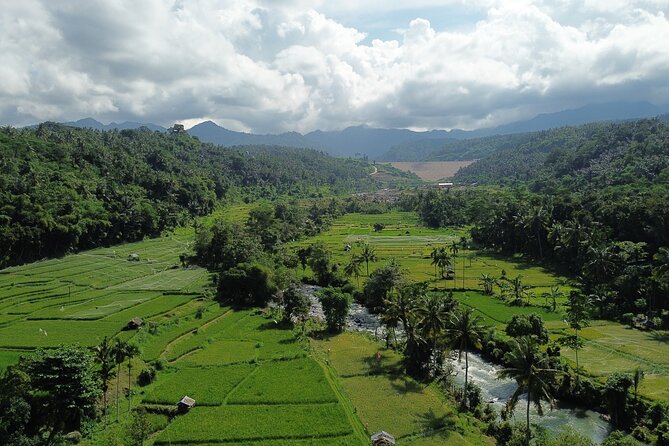
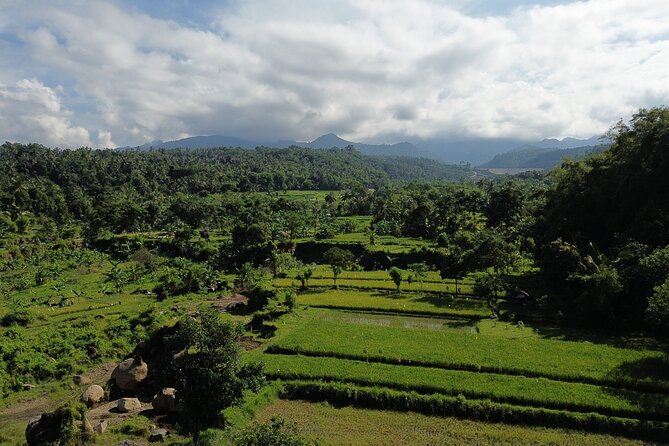
The rice terraces are the visual heart of the route. Farmers have cut level fields into the hills, creating a series of green steps that can hold water during the planting season. When the paddies are flooded, they reflect the sky and give the fields a bright, shifting look.
The narrow paths between the terraces are part of the appeal. You see the small scale of the work more clearly from ground level: the water-filled plots, the raised edges, and the routes farmers use between fields. This is not a staged garden made for photographs. It is agricultural land, so you should expect muddy patches, wet edges, and paths that may feel narrow.
Your guide and local companions can explain the rice-growing process and the role of farmers in the village. That makes the walk more than a scenic outing. You begin to understand how water, land, and labor fit together in Lombok’s rural communities.
The season will affect the view. Planting periods can bring reflective water in the terraces, while other times may show more mature green growth or recently harvested plots. The tour information does not promise a particular farming stage, so book it for the combination of scenery and learning, not for one exact photographic image.
Meeting farmers and seeing rice cultivation up close
The interaction with farmers is one of the strongest reasons to choose this tour. You can learn about rice cultivation from people who work the fields, rather than receiving only a general explanation from a guide in the vehicle.
This kind of meeting has practical value. You can ask about planting, the use of the terraces, and the rhythms of village agriculture. The information supplied for the experience does not give a fixed list of demonstrations or name individual farmers, so the exact conversation depends on the day and the local guide.
The setting also keeps the cultural contact grounded. You are not visiting a large attraction designed around performances. You are walking through a community and seeing how farming connects with other village activities, including honey and palm sugar production.
I would keep your expectations sensible. This is an introduction to village life, not a full agricultural course. You will gain a clearer picture of local work and customs, but the depth of each discussion can depend on weather, timing, and who is available in Murpeji.
A soft trek through river and forest
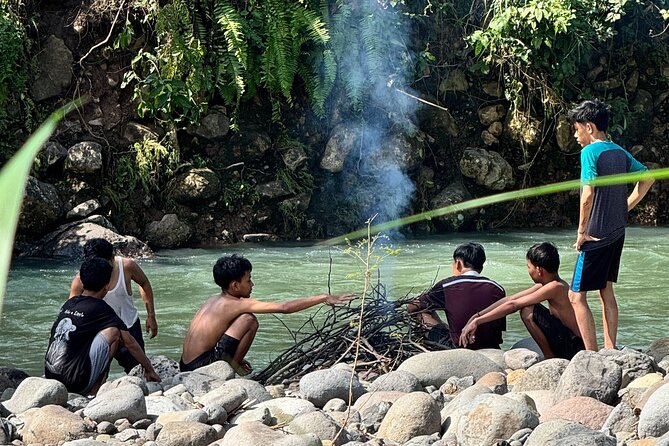
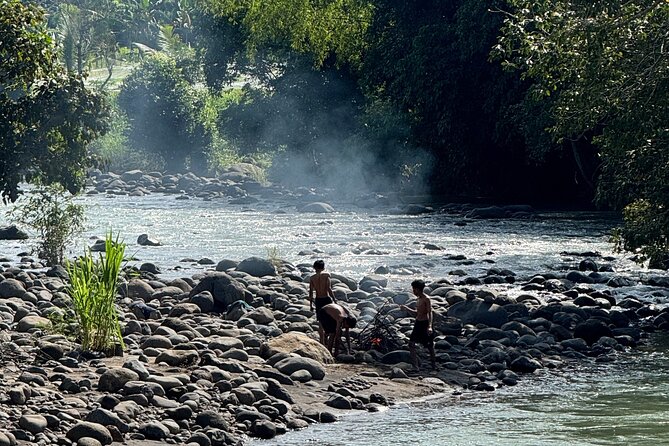
After the terraces, the route continues through rivers and lush tropical forest. The word soft is important, since this is not presented as a strenuous mountain hike. Still, the operator asks for moderate physical fitness, and that is a useful warning.
You may be walking over uneven ground, narrow paths, and damp areas near the water. The walk combines several surfaces rather than following one smooth trail. Good walking shoes are the practical choice, and clothing that can handle splashes or mud will make the day easier.
The forest changes the mood of the outing. Rice fields are open and bright, while the trees provide shade, fresh air, and a sense of quiet. The vegetation is dense, and the area supports a range of plant and animal life. The experience information does not identify specific species, so it is best to enjoy the forest as a natural setting rather than expect a wildlife-spotting tour.
Rivers add another layer to the walk. They help explain why the surrounding farming areas can thrive, while also giving you pleasant places to pause. Water levels and weather may affect how easy the route feels. Since the trip requires good weather, conditions can influence whether the outdoor portion operates as planned.
Same island, a completely different day out:
- Learn to cook Indonesian food at Gili Cooking Classes Trawangan
★ 5.0 · 352 reviews - Gili Island Snorkeling Trip – Gili Trawangan, Gili Meno, & Gili Air, From Lombok
★ 5.0 · 330 reviews - Snorkeling with turtle and statue in Gilis
★ 4.5 · 301 reviews - Anggrek Putih Lombok Cooking Class
★ 5.0 · 253 reviews
Tibu Tereng Waterfall, the cool pause in the trees
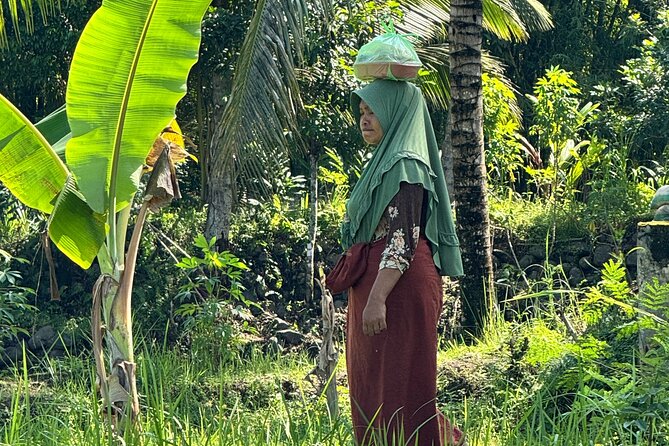
The walk leads to Tibu Tereng Waterfall, described as a secluded fall in Lombok’s tropical forest. It is a natural resting point after the fields and river paths, with the sound of falling water replacing the activity of the village.
You can use the stop for a simple break, dip your feet into the water, or fully enter it if conditions allow. The supplied details do not promise swimming facilities, changing rooms, or a particular water depth. Bring a small towel and a change of clothes if you want the option to get wetter.
The waterfall is best understood as part of the whole route. On its own, it may not satisfy someone seeking a grand, developed attraction with extensive amenities. Its value comes from the walk to reach it, the forest around it, and the chance to slow down in a quiet setting.
I would also avoid treating the waterfall as a guaranteed all-weather stop. The tour requires suitable weather, and rain can affect both safety and comfort on the path. If poor weather cancels the outing, you can be offered another date or a full refund.
Learning about bees in Murpeji
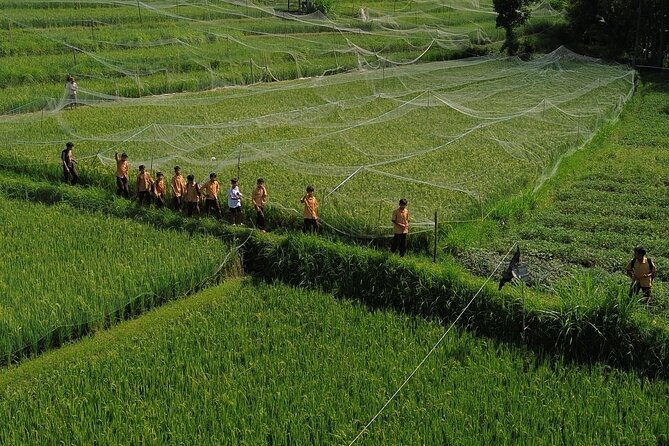
Beekeeping gives the village visit an especially interesting local focus. Residents have developed ways to raise bees and collect honey while keeping the practice in balance with the surrounding environment.
You can learn how honey production works and why bees matter to rural livelihoods. The available details do not specify the bee species, hive design, or whether you will taste honey, so do not book this expecting a formal honey-tasting session. The value is in seeing another side of village work that many visitors would not encounter on a normal sightseeing route.
This stop also fits well with the farming discussion. Rice, forest plants, bees, and household products are not separate subjects in a rural community. They form part of a wider system of land use and income.
If you are uneasy around insects, tell the crew early. No special medical or safety details are provided, so the sensible approach is to listen to the guide and follow local instructions around the hives.
Gula aren and the taste of palm sugar
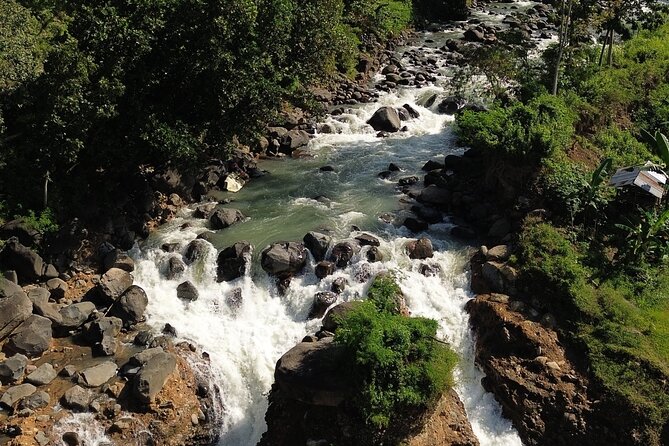
Another village product is gula aren, or palm sugar. You learn about its uses and how it differs from refined sugar. It contains minerals such as potassium, magnesium, and iron, though you should not treat that information as a medical claim or a reason to consume unlimited amounts.
The interesting part is the link between food and local work. Gula aren is not just a sweetener presented as a souvenir. It reflects how villagers use palm resources and turn them into a product with a place in everyday cooking.
Snacks are included, and local products may form part of the cultural introduction. The information does not state that gula aren is always served or sold during the tour, so think of the lesson as more certain than a specific tasting or shopping stop.
For me, this kind of small detail gives the day character. You leave with a better understanding of what local products mean, rather than a string of disconnected photo stops.
What the nine-hour schedule means for your day
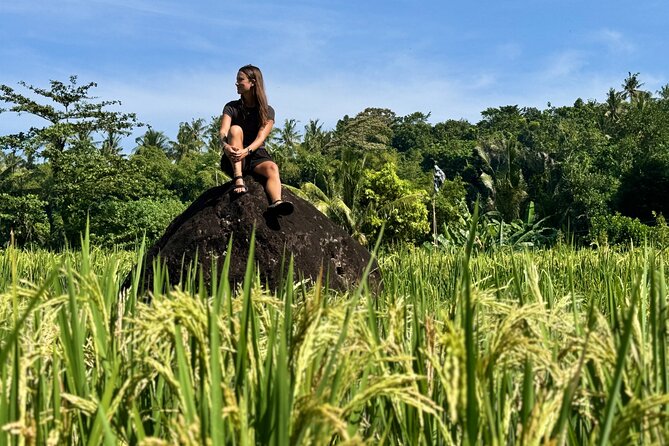
The experience lasts about nine hours and includes pickup and drop-off. That makes it a full-day outing, not a quick half-day walk you can easily fit between other plans.
Private transport is included, along with an English-speaking crew, local guide, lunch, mineral water, snacks, entrance fees, and a donation. Those inclusions reduce the number of small costs you need to manage once the day begins.
The listed start time is 12:00 am, which means midnight if read literally. That is unusual for a village walking tour and may be a listing error or a schedule detail that needs confirmation. I would contact Bale Laut Lombok Tour Organizer before booking or shortly afterward to confirm the actual pickup time and location.
Pickup is offered, and the meeting information says the experience is near public transportation. You should still confirm the exact pickup arrangement, since the supplied details do not name a hotel area, road, or meeting point.
Lunch is included, but no menu is specified. If you have dietary restrictions, ask the operator before the day of the tour rather than assuming the meal can be changed.
Is $73 a fair price for this private outing?
At $73 per person, the tour is not the cheapest way to take a walk in rural Lombok. It includes a long day of transport, an English-speaking crew, a local guide, food, water, entrance fees, snacks, and a donation. Those inclusions make the price easier to justify for visitors who want one organized cultural day without arranging each part themselves.
There is also a $15 fuel surcharge per booking. For one person, the listed total becomes $88 before personal expenses and tips. For two people, it works out to $80.50 per person; for three, $78 per person; and for four, $76.75 per person, before any group discount.
That calculation shows why the private format suits couples, families, and small groups best. A solo visitor gets the privacy and the full service, but pays the highest effective rate. Group discounts are offered, although no discount amount is stated.
Tips and personal expenses are not included. The price also does not cover unexpected purchases. Bring some spending money if you want village products or additional refreshments, though the tour already supplies water and snacks.
Who should book the Murpeji walk?
I would choose this experience if you want rural culture, gentle outdoor activity, and time with local people. It suits you especially well if rice farming, traditional products, and village economics interest you more than a quick checklist of major sights.
It can also work for a group that wants a private day with a flexible feel. Families with older children may enjoy the variety, but the moderate fitness requirement and uneven paths mean very young children or anyone with mobility concerns should be assessed carefully.
You may want a different tour if your main goal is a hard hike, a large waterfall with facilities, or a tightly timed series of famous attractions. Murpeji is about the route and the people you meet, not a single dramatic photo stop.
The experience has received a perfect overall rating from six submitted evaluations, with the most repeated praise focused on friendly guides, helpful local residents, peaceful scenery, and the chance to learn about Lombok culture. One particularly useful detail is that the guide began explaining local history and culture during the drive, helping the day feel connected from pickup to walk.
Practical preparation for the fields and forest
Wear shoes with a good grip. The path includes rice terraces, rivers, forest, and a waterfall, so clean city footwear is a poor match.
Carry sun protection and insect repellent, even though parts of the route pass under trees. A reusable waterproof pouch can protect your phone near the river and waterfall.
Keep your schedule open for the full nine hours. Private transport gives the tour a personal format, but it does not turn a full-day route into a short excursion.
The experience offers free cancellation up to 24 hours before the start time for a full refund. Changes or cancellations made less than 24 hours ahead are not accepted for a refund, and poor weather may lead to another date or a full refund.
Final call: a strong choice for culture and gentle adventure
Book the Panorama Walking Tour and Culture if you want to see how West Lombok’s countryside works, not just how it photographs. The rice terraces, river walk, forest, Tibu Tereng Waterfall, beekeeping, and gula aren lesson create a varied day with real local focus.
The two points to check before paying are the unusual midnight start time and the $15 fuel surcharge. Once those are clear, the package offers solid value for a small private group, particularly if you appreciate a guide who explains the region during the drive and local hosts who share their daily work.
Skip it if you want an effortless sightseeing day or dislike uneven outdoor paths. Choose it if you want a slower, more grounded look at Lombok, with nature and village life treated as parts of the same experience.
FAQ
How long does the Panorama Walking Tour and Culture last?
The experience lasts approximately nine hours.
What is included in the $73 price?
The price includes private transport, an English-speaking crew, lunch, mineral water, snacks, a donation, entrance fees, a local guide, and pickup and drop-off.
Is the tour private or shared?
It is a private tour or activity, so only your group participates.
Do I need to be physically fit?
Yes. The operator recommends a moderate level of physical fitness because the route includes soft trekking through rivers, rice terraces, tropical forest, and a waterfall area.
Is pickup available?
Yes. Pickup and drop-off are included, and the experience is listed as being near public transportation.
What is the cancellation policy?
You can cancel up to 24 hours before the start time for a full refund. Cancellations or changes made less than 24 hours before the start time are not accepted for a refund. If poor weather causes cancellation, you will be offered another date or a full refund.
Just added around Lombok
- Trekking Rinjani Volcano To Crater Rim Senaru 2D-1N Private – Syam Trekker★ 5.0 · 45 reviews
- Waterfall Tour And Sasak Traditional Tour★ 5.0 · 3 reviews
- Full-Day Private Trip to South Lombok★ 5.0 · 15 reviews
- MODERATE HIKING: 2D/1N Crater Rim Senaru | Rinjani Samalas Tour★ 5.0 · 8 reviews
- Trekking Rinjani Mountain Summit 2 Days 1 Night – Em Adventure★ 5.0 · 42 reviews
- Fantastic trip to Sindang Gile & Tiu Kelep Waterfall★ 4.5 · 3 reviews
- Trekking Rinjani 1 Day Trek Senaru Crater Rim★ 5.0 · 3 reviews
- Tete Batu Tour (Culture, Rice Terraces and Waterfalls)★ 5.0 · 23 reviews
Walking Tours, compared.
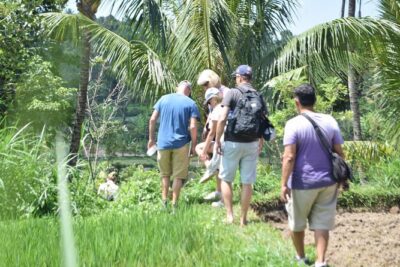
Tetebatu Walking Tour – Rice Terraces, Waterfall & Monkey Forest
Read our review →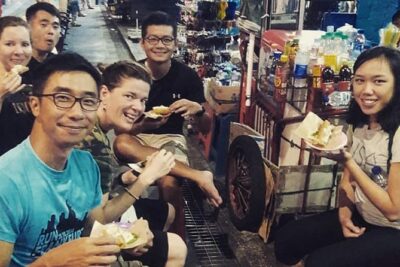
Small-Group Walking and Food Tour by Night in Yogyakarta
Read our review →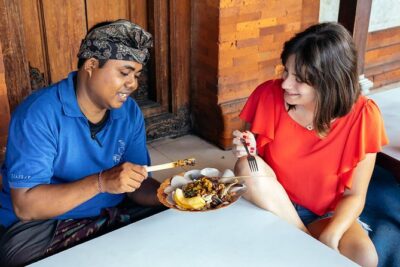
Bali Private Food Walking Tour With Locals: The 10 Tastings
Read our review →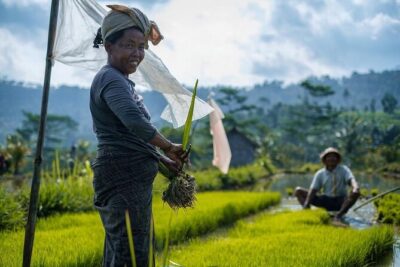
Sidemen Trekking: A Walk from a Different Perspective
Read our review →
Ubud yoga, rice terrace walk and floating Breakfast tour
Read our review →
Ubud Countryside Tour: Campuhan Ridge Walk and Rice Terrace
Read our review →Browse the lists this tour appears in