
Reviewed · WORKSHOPS
Crafting Heritage Batik Painting Workshops
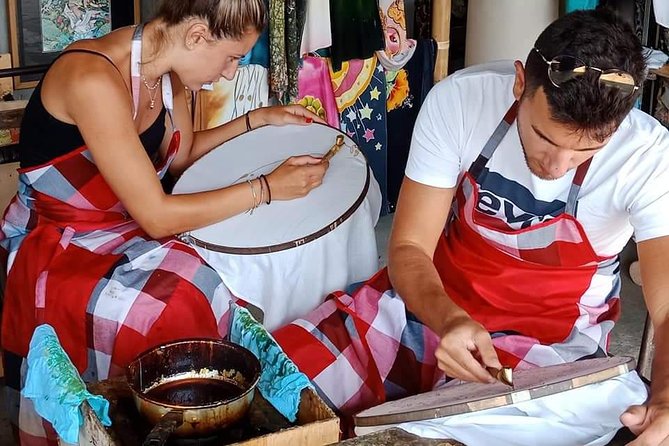
Batik painting here is less about producing a perfect picture and more about learning a wonderfully forgiving craft. At Five Arts Studio, outside Ubud, you sketch a design, draw it onto fabric with hot wax, then add dye in stages. The wax blocks the color, leaving your original lines in place when it is washed away. Your finished piece becomes a personal souvenir, not another shop-bought textile.
I like two things in particular: the relaxed family-compound setting and the choice between working independently or asking the tutor to guide you closely. Instructors such as Dika and Agong help patiently, including with young children, while still giving you room to make your own decisions. The main consideration is that batik takes patience. Wax can land where you do not want it, and the process is harder than it first appears.
In This Review
- Key points to know before booking
- Why this batik class feels different from a souvenir stop
- Your three hours at Five Arts Studio
- Patient instruction without taking over
- A family-friendly creative afternoon
- The family compound and studio atmosphere
- What the $29 price really covers
- Who will get the most from this experience
- Tips for making a better batik piece
- Getting there and planning your visit
- Should you book the Five Arts Studio batik class?
- FAQ
- How long does the batik workshop last?
- Where does the activity take place?
- What happens during the class?
- Are materials included?
- Are refreshments provided?
- Can beginners and children take part?
- What is the cancellation policy?
Key points to know before booking
- You work through the full batik process: sketching, hot-wax outlining, dyeing, and washing off the wax.
- The class takes place in a working family compound: you see a more personal studio setting than a standard craft classroom.
- Beginners are welcome: instructors offer step-by-step help, but you can also work at your own pace.
- The three-hour session includes refreshments: coffee, tea, mineral water, and snacks are provided.
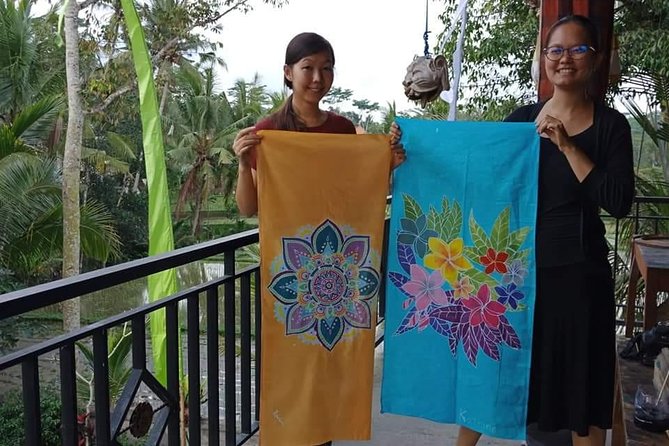
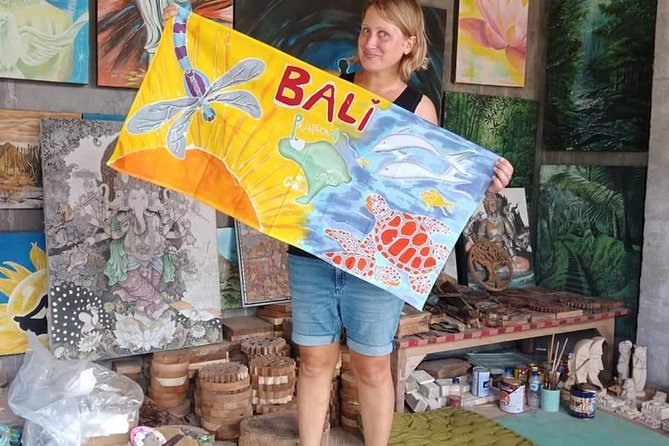
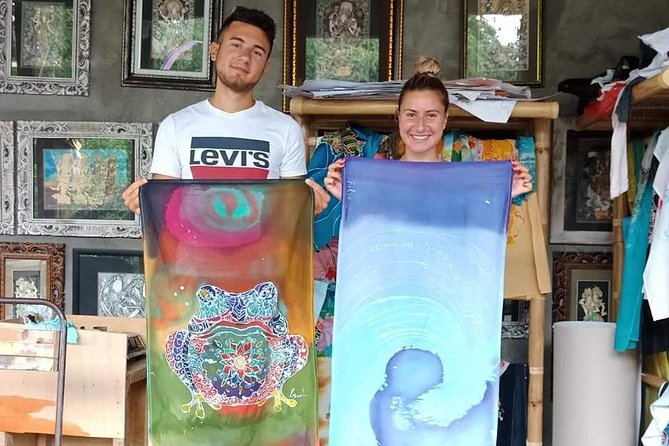
- You take home an original fabric artwork: imperfections become part of its handmade character.
- The $29 price is strong value: materials, instruction, and refreshments are included, though transport and lunch are not listed.
Why this batik class feels different from a souvenir stop
Batik is not simply fabric decorated with paint. It is a traditional Indonesian art form built around controlling where color can and cannot go. Hot wax creates the barrier. Dye fills the open areas. Once the wax is removed, the lines and patterns appear in their original fabric color.
That process gives this class real value. You are not just watching someone make a textile. You are learning why the final pattern looks the way it does, and you get to make the decisions yourself. The craft rewards patience more than artistic skill, which is good news if you normally avoid creative activities on holiday.
The class is held at Five Arts Studio on Jl. Raya Keliki in Keliki, Tegallalang, Gianyar. It is described as a casual studio within a family home compound, giving the visit a more intimate feel than a large commercial workshop. You may see artists, local children, and other participants working around the space, depending on the day.
I like that the setting connects the artwork with everyday Balinese life. You are not only learning a technique in a blank room. You are seeing how an artist works within a family environment, with the studio and home sharing the same compound.
A few more Ubud trips to weigh up
- Ubud Cooking Class Bali with Balinese Chef
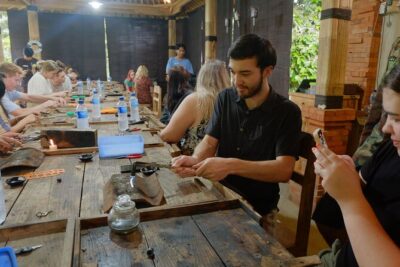
★ 5.0 · 1,609 reviews - Ubud Silver Class Jewelry making in bali
★ 5.0 · 978 reviews - PRIVATE Authentic Balinese Cooking Class in Ubud at Putu’s Home
★ 5.0 · 644 reviews
Your three hours at Five Arts Studio
The experience begins at the studio and ends at the same meeting point. No separate stops are listed, so the value comes from the time spent learning and making rather than from moving between attractions.
You first choose or develop a design. You can bring your own idea, use a suggested motif, or select from designs prepared by the studio. The available patterns range from simple shapes to more detailed drawings. If you are not confident with a pencil, this stage should not hold you back. The teaching team can help you get started.
Next comes the wax work. You trace the design onto fabric using hot wax. This is the stage where patience matters most. The wax needs to follow the intended lines, and a small drip can change the final image. You may find the technique more demanding than expected, especially if you are used to ordinary paintbrushes.
That difficulty is part of the appeal. The class gives you enough guidance to avoid feeling lost, but it does not remove every challenge. You learn by handling the tools, making small mistakes, and adjusting your plan. The finished result will likely include a few happy accidents. That is a fair trade for making something that is genuinely yours.
Once the wax outline is ready, you apply colorful dyes to selected sections of the fabric. The wax protects the areas beneath it, allowing you to build a design with contrasting colors and blended shades. The staff can help you understand how to use the dye and where to add it, but you remain in charge of the color choices.
The final stage reveals the design. When the wax is washed away, the original lines remain visible against the dyed fabric. This moment gives the process its payoff. A piece that may have looked uncertain during painting starts to make sense as the pattern appears.
The precise drying or finishing arrangements are not specified, so you should follow the studio’s instructions for handling your work at the end of the session. The important point is that you leave with your own batik creation.
Patient instruction without taking over
The teaching style is one of the strongest reasons to book. The instructors explain the stages clearly and offer practical help when you need it. Dika is specifically praised for giving easy-to-follow instruction, while Agong has helped younger children through the process from start to finish.
You can ask for close guidance or work more independently. That flexibility matters because people arrive with different aims. You may want to learn every technical step. Someone in your group may simply want a calm afternoon activity. Both approaches fit the class.
The staff also understand that beginners can become frustrated. Wax drops in the wrong place. Color spreads farther than planned. A design that looked simple on paper may take more control than expected. The best advice is to accept that batik is handmade. Do not chase perfect lines at the expense of enjoying the process.
English-language instruction is available, and one participant specifically described the teacher as speaking very good English. The supplied information does not identify every instructor at every session, so names and teaching assignments may vary. Dika and Agong are the named instructors associated with the experience.
A family-friendly creative afternoon
This class works well for families because the activity is hands-on without requiring previous training. A six-year-old was able to take part with help from the instructor, and the teaching team supported the child throughout the process.
That does not mean every child will find all three hours easy. Hot wax requires care, and the work calls for attention. Parents should expect to stay involved, particularly during the wax stage. The group limit of 30 people is fairly generous, so the atmosphere can change depending on how many people are booked that day.
Adults without children fit comfortably here, too. You might come alone, as a couple, or with friends. One person had a one-to-one class when no other student was booked, which allowed for close instruction but felt less social. If you prefer meeting other people through an activity, a busier session may offer more conversation.
The workshop also suits mixed-ability groups. A confident artist can bring a personal motif and experiment with color, while a beginner can select a simpler design and follow the tutor’s lead. The shared activity gives everyone something to focus on, without turning the class into a competition.
Same island, a completely different day out:
- All-Inclusive Ubud Private Tour
★ 5.0 · 14,344 reviews - Best of Ubud Full-Day Tour with Jungle Swing
★ 5.0 · 8,571 reviews - Ubud: Monkey Forest, Jungle Swing, Rice Terrace, and Water Temple
★ 5.0 · 7,160 reviews - Best of Ubud 1-Day Private Tour
★ 5.0 · 4,451 reviews
The family compound and studio atmosphere
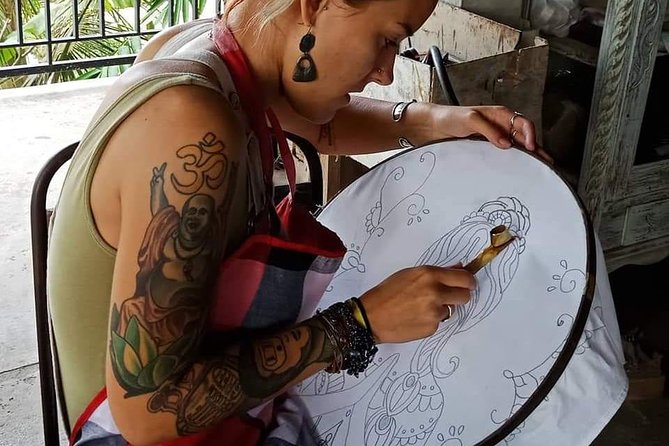
Five Arts Studio is part of a family compound rather than a polished visitor center. That means the setting may feel rustic and lived-in. For many people, this is precisely the point. You get a look at the kind of place where an artist lives and works, instead of seeing batik only as a finished product in a shop.
The studio is described as peaceful, comfortable, and active. Coffee, tea, mineral water, and snacks are included, giving you a chance to pause while your work progresses. Those small comforts matter during a three-hour session, especially because the creative process can take more concentration than expected.
You can also order local food for lunch, although lunch is not included. Alcohol is available to purchase. Since the class itself lasts about three hours and no meal is built into the price, plan ahead if you expect to be hungry afterward.
The compound setting is not intended for visitors seeking luxury facilities or a tightly scripted performance. I would choose this experience for its personal connection and relaxed pace, not for polished presentation.
What the $29 price really covers
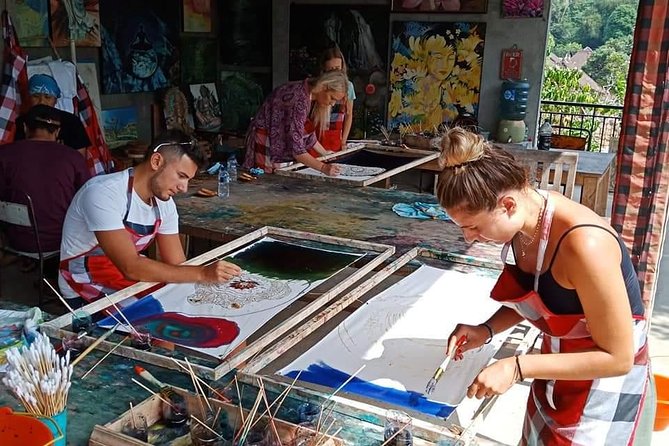
At $29 per person, this is a good-value activity in Ubud. The fee includes the instruction, fabric, wax, dyes, and other materials needed to make your piece. Snacks, coffee or tea, and mineral water are also included.
The strongest value is the combination of learning and a take-home object. Many Ubud activities give you a short demonstration or a photo opportunity. Here, most of your three hours go into a skill you can remember and perhaps repeat later.
The price does not include lunch, alcohol, or stated transportation. You need to reach Five Arts Studio at Jl. Raya Keliki yourself. The location is near public transportation, but no pickup service is specified, so check your route before booking.
A mobile ticket makes entry simple. Confirmation is provided at booking. The activity allows service animals, and the operator lists a strong physical fitness level as a requirement. That last point is worth noting, although the supplied details do not explain which part of the session creates the requirement. If you have mobility or stamina concerns, ask the operator before reserving.
Who will get the most from this experience
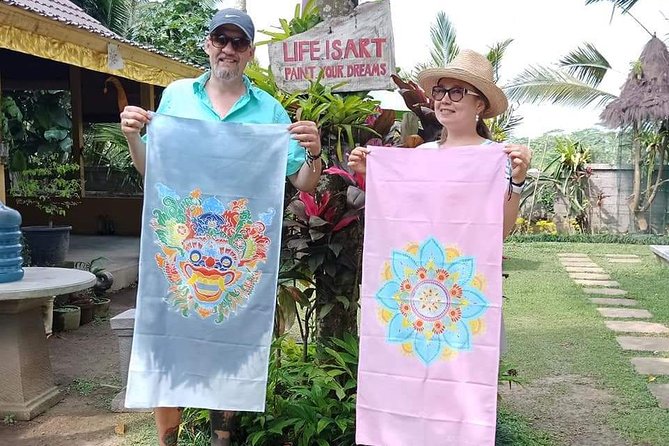
I would recommend the workshop to you if you want an activity with a real connection to Indonesian culture and enough time to make something yourself. It suits:
- First-time artists who want patient support
- Families looking for an activity beyond sightseeing
- Couples and friends who enjoy creative projects
- Solo visitors who like a calm, focused class
- Anyone seeking a personal souvenir rather than a mass-produced purchase
It is less suitable if you want a quick activity with an instant result. The wax stage can be fiddly, and the finished artwork depends partly on your care and patience. You should also avoid booking it if your main aim is a guided tour of several Ubud sights, since the experience stays at one studio.
The class is also a good choice for people who worry they are not artistic. The instructors provide designs and practical help, and the process allows you to adapt when something goes wrong. Your work may not look like a professional textile, but it should carry the memory of the afternoon clearly.
Tips for making a better batik piece
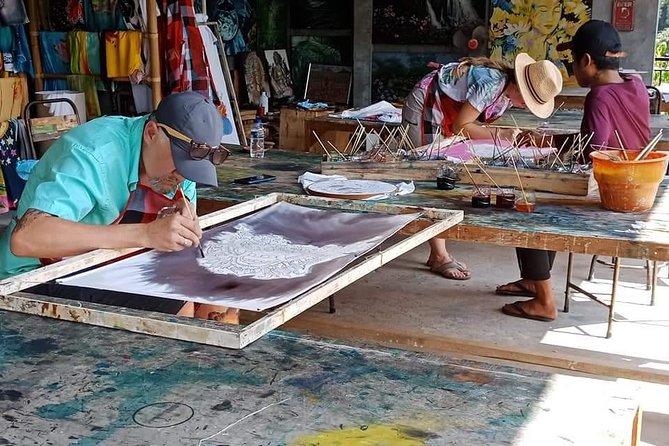
Start with a design that matches your patience level. A detailed motif may look appealing, but every line must be traced in wax. A simpler pattern gives you more freedom to experiment with dye.
Listen carefully during the wax demonstration. The outline controls the color, so this stage has more influence over the final result than the painting stage. Move slowly and accept that small irregularities are normal.
Think about color before you begin applying dye. You can use the suggested ideas from the studio or bring your own plan. Blended colors can produce attractive results, but too many competing shades may make the pattern harder to read.
Leave room for changes. Several participants found the activity more difficult than expected, then ended up pleased with the finished work. If wax or dye goes astray, ask the instructor how to adjust the design rather than assuming the piece is ruined.
Wear an outfit you can relax in. The supplied details do not state a dress code or provide protective clothing, so it is sensible to avoid bringing your most delicate clothes to an activity involving wax and dye.
Getting there and planning your visit
The meeting point is Five Arts Studio, Jl. Raya Keliki, Keliki, Kecamatan Tegallalang, Kabupaten Gianyar, Bali 80561, Indonesia. The activity ends back at the studio.
Because no hotel pickup is included in the information provided, allow time to find the address and arrive ready for the three-hour session. The studio is near public transportation, though the exact route and travel time depend on where you are staying.
You can cancel for a full refund if you do so at least 24 hours before the local start time. Cancellations or changes made within 24 hours are not accepted for a refund. This gives you useful flexibility when planning an Ubud day, but it is worth checking your timing carefully before the deadline.
Should you book the Five Arts Studio batik class?
Book it if you want a quiet, creative activity with cultural value and a souvenir you made yourself. The combination of patient teaching, a family-compound setting, included materials, and a $29 price makes it especially appealing for families and first-time artists.
Skip it if you dislike slow craft work, want a polished luxury setting, or prefer an activity that moves through several attractions. Batik rewards care, and the final piece reflects your own handling of the wax and dye.
For most people, I would call this a worthwhile Ubud addition. You learn a traditional technique, meet artists in their working environment, and leave with a fabric piece that carries your own decisions, including the occasional imperfect line.
FAQ
How long does the batik workshop last?
The experience lasts approximately three hours.
Where does the activity take place?
It takes place at Five Arts Studio, Jl. Raya Keliki, Keliki, Kecamatan Tegallalang, Kabupaten Gianyar, Bali 80561, Indonesia.
What happens during the class?
You sketch a design, trace it onto fabric using hot wax, apply colorful dyes to selected areas, and wash away the wax so the original lines remain visible.
Are materials included?
Yes. The materials needed to create your own batik piece are included.
Are refreshments provided?
Yes. Snacks, coffee, tea, and mineral water are included. Lunch can be ordered separately, and alcohol is available to purchase.
Can beginners and children take part?
Yes. The class is suitable for beginners, and an instructor has helped a six-year-old through the full process. Children may need close adult support during the hot-wax stage.
What is the cancellation policy?
You can cancel at least 24 hours before the local start time for a full refund. Cancellations or changes made less than 24 hours before the start time are not refunded or accepted.
Just added around Ubud
- Bali Airport Pick-up to Ubud (Arrival Transfer)★ 5.0 · 4 reviews
- Bali Airport: One-Way Private Transfer To/From Hotel★ 5.0 · 25 reviews
- Munduk Car Hire with English Speaking Driver★ 5.0 · 14 reviews
- Bali Airport – Arrival Transfer★ 5.0 · 5 reviews
- Bali ATV Quad Bike and White Water Rafting – All Inclusive★ 5.0 · 7 reviews
- Bali ATV Ride Ubud Jungle Track★ 4.5 · 5 reviews
- Bali All Inclusive : Tlaga Singha Infinity Pool & Atv Adventure★ 5.0 · 21 reviews
- Bali ATV Ride with Jungle Swing and Rice Terrace Tour★ 5.0 · 50 reviews
Workshops, compared.
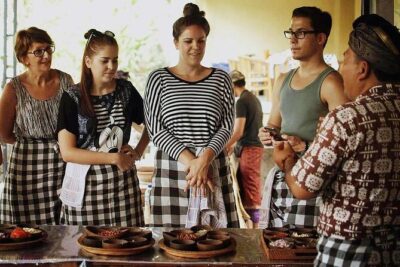

PRIVATE Authentic Balinese Cooking Class in Ubud at Putu’s Home
Read our review →

Learn to cook Indonesian food at Gili Cooking Classes Trawangan
Read our review →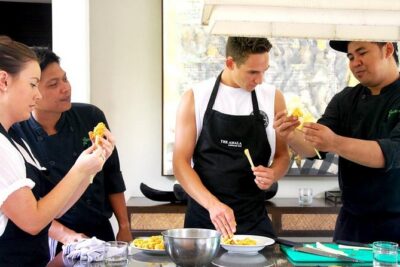

Browse the lists this tour appears in