
Reviewed · BALINESE COOKING CLASSES
Anggrek Putih Lombok Cooking Class
At Anggrek Putih, cooking starts in the garden rather than at the stove. You tour the property’s Little Eden, plant seeds, and then use old-fashioned tools to prepare Indonesian dishes from Lombok, Java, and other regions. The meal may include banana-leaf fish and curry, with vegetarian choices available.
I like the small-group format, advertised for up to 10 people, because it gives you more room to ask questions and work at the cooking stations. I also like the garden visit and seed planting, which connect the meal to the ingredients instead of treating Indonesian food as a list of recipes.
The main caution is the strict cancellation policy. Your booking is non-refundable, and bad weather can affect the class, although a weather cancellation brings an alternative date or full refund.
In This Review
- Key points at a glance
- Starting at 10:30 am in Lombok
- Walking through the Little Eden garden
- Cooking across Lombok, Java, and beyond
- A shared lunch at the end
- What $30 buys you
- Pickup from Mataram and Senggigi
- Who will enjoy this class most
- Weather and the no-refund rule
- Should you book Anggrek Putih?
- FAQ
- How long does the Anggrek Putih Lombok cooking class last?
- What time does the class start?
- Where does the cooking class take place?
- Is hotel pickup available?
- What food will you prepare?
- Are vegetarian options available?
- What happens if bad weather cancels the class?
Key points at a glance
- Garden first, cooking second: Tour the Little Eden garden and plant seeds before preparing lunch.
- Regional Indonesian menu: Learn dishes from Lombok, Java, and other parts of Indonesia.
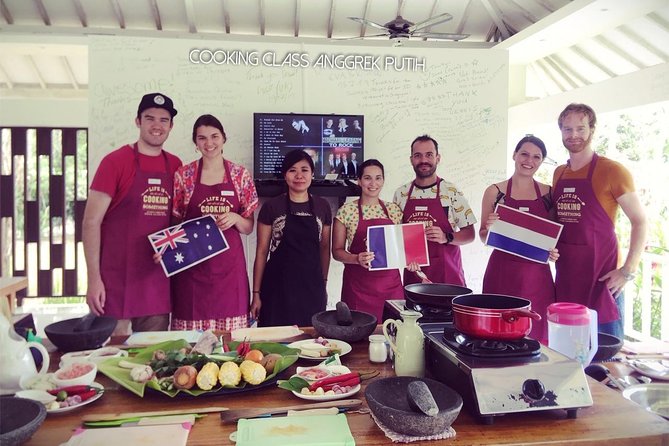
- Traditional kitchen tools: Use a stone mortar and pestle rather than relying only on modern equipment.
- Shared meal included: Sit down for lunch and conversation after cooking.
- Vegetarian-friendly: Vegetarian options are available, and the class has accommodated allergies.
- Hotel pickup: Pickup is offered from hotels in the Mataram and Senggigi areas.
Starting at 10:30 am in Lombok
The class begins at 10:30 am at the Anggrek Putih guest house. If you are staying in Mataram or Senggigi, pickup is offered, which removes one of the small but annoying tasks of a cooking class: figuring out local transport before breakfast.
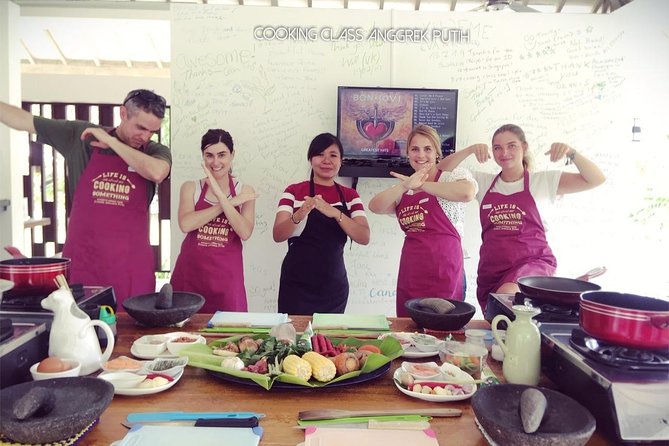
You meet the other members of the group at the guest house, complete registration, and receive a welcome drink. The pace here is useful. You are not rushed straight into chopping vegetables, and you have a moment to settle in and meet the people who will share your table later.
The listed duration is about three hours. That makes this a manageable half-day activity rather than an all-day commitment. You can fit it into a day of sightseeing, though the 10:30 am start means it will occupy the heart of your morning and early afternoon.
The group size is described as capped at 10 for a personal feel. Another tour detail lists a maximum of 12, so the exact number can vary. Either way, this is not presented as a large demonstration where you sit at the back and watch a chef work.
More balinese cooking classes in Lombok:
- Indonesian Food Cooking Class of Gili Air
★ 5.0 · 87 reviews - Ubud Cooking Class Bali with Balinese Chef
★ 5.0 · 1,609 reviews - PRIVATE Authentic Balinese Cooking Class in Ubud at Putu’s Home
★ 5.0 · 644 reviews
Walking through the Little Eden garden
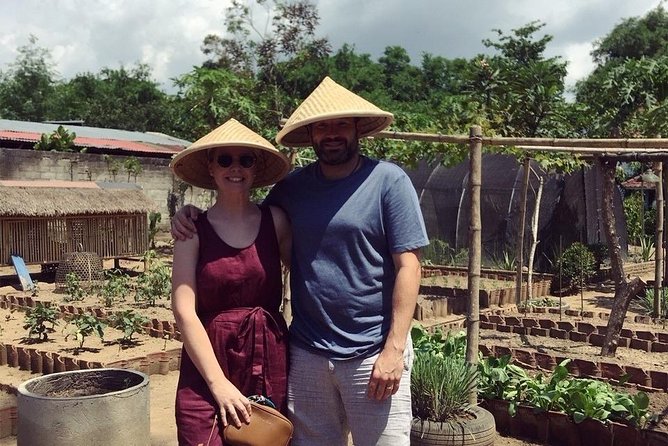
The garden visit gives the class a sense of place. You walk through the vegetable garden at the property, see where some ingredients are grown, and plant seeds yourself. It is a simple activity, but it adds meaning to the meal waiting later.
I like this part because it slows the class down. Indonesian food can involve many fresh herbs, vegetables, spices, and chilies, and a garden tour gives you a better sense of how closely cooking is tied to local produce. You are not simply handed a prepared ingredient and told to stir it into a pan.
Seed planting also makes the visit more hands-on for families and anyone who enjoys practical activities. It is not a major farming lesson, and the supplied details do not promise a long agricultural tour. Think of it as a short introduction to the garden and a small act of participation before the cooking begins.
There is also a photo session. That gives you time to record the setting, though visitors who want a nonstop cooking lesson may find the garden and photo portions take time away from the kitchen. For most people, that trade is fair. The experience is designed as a cultural outing, not only as a technical class.
Cooking across Lombok, Java, and beyond
After the garden visit, you move to the main part of the class: preparing a range of Indonesian dishes. The menu draws from Lombok, Java, and other regional cuisines, so this is more than a single local recipe lesson.
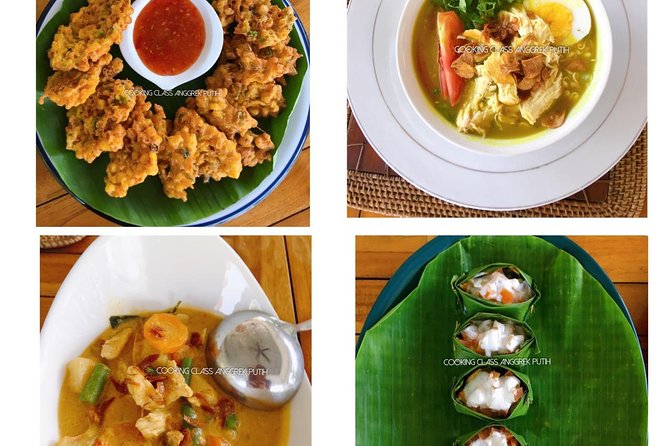
The named dishes include banana-leaf fish and curry. Banana leaves are a familiar part of Southeast Asian cooking, often used to wrap or serve food, and here they help make the meal feel distinctly Indonesian. Curry gives the class another flavor profile and shows how spice, aromatics, and cooking methods can change from one regional dish to another.
The exact menu may vary, and the supplied information does not provide a fixed list of every recipe. That is worth knowing before you book. You can expect a selection of dishes rather than a guaranteed multi-course menu with every item specified in advance.
The class uses traditional tools, including a stone pestle and mortar. This is one of the more useful details for anyone who wants to understand Indonesian cooking rather than simply eat it. A mortar and pestle changes the texture of spice pastes and gives you a direct feel for the work behind the food.
It may also require more effort than pressing a button on a blender. If you have limited strength or do not enjoy repetitive kitchen work, you may find this part tiring. The class description does not state how much time each person spends grinding, so you should see it as a hands-on element rather than a polished cooking show.
A shared lunch at the end
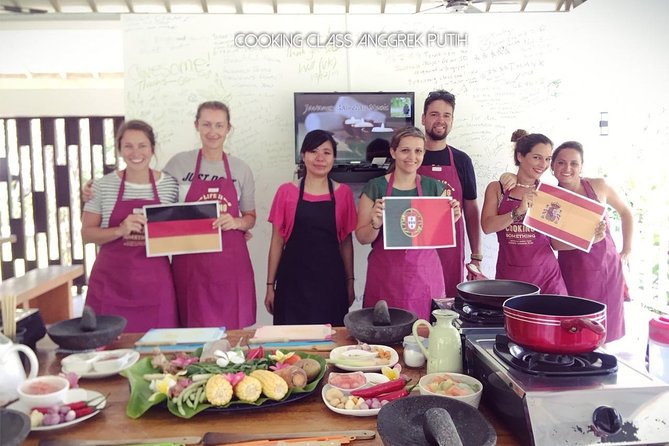
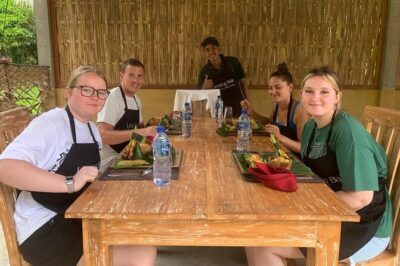
The reward for the kitchen work is lunch at the property. You sit down to eat what the group has prepared and chat with the other members. This shared meal is an important part of the class, since food makes more sense when you taste it soon after preparing it.
I especially like the social rhythm here. You meet over a welcome drink, work together in the garden and kitchen, then finish around the same table. That progression suits you if you enjoy learning through conversation and shared tasks.
The meal is described as a feast, but the precise portions and full menu are not listed. You should expect a substantial tasting and lunch from the recipes prepared in class, not a guarantee of every dish mentioned in the description.
Vegetarian options are available. The class has also accommodated food allergies, which is useful, but you should communicate your needs when booking or before the cooking begins. The available information does not identify every allergy the kitchen can handle, so do not assume that every restriction can be met without advance notice.
A few more Lombok trips to weigh up
- Learn to cook Indonesian food at Gili Cooking Classes Trawangan
★ 5.0 · 352 reviews - Balinese Ubud cooking school (9 Dish Cooking and Market Tour)
★ 5.0 · 540 reviews - Balinese Farm Cooking Class by Pemulan Bali
★ 5.0 · 410 reviews - Balinese Cooking Class in Seminyak
★ 5.0 · 281 reviews
What $30 buys you
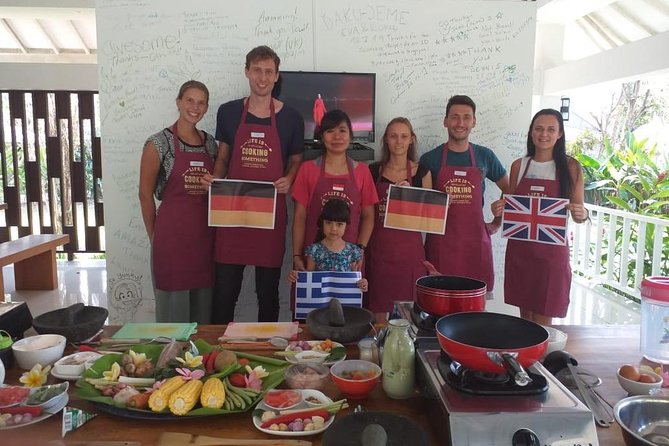
At $30 per person, the value comes from several parts packed into one three-hour outing. You get the welcome drink, garden visit, seed planting, cooking lesson, meal, and possible hotel pickup from Mataram or Senggigi. If you had to arrange each piece separately, the price would be harder to compare.
The meal alone is not the only reason to book. You are also paying for a hosted activity, access to the garden, ingredients, instruction, and a chance to use traditional kitchen equipment. That makes the price reasonable for you if you want an organized cultural activity with food included.
The value is less obvious if you only want to learn a large number of recipes. The menu is not fully specified, and three hours goes quickly once registration, photos, garden time, cooking, and lunch are included.
The group size matters here. A class of 10 or fewer usually gives you a better chance to participate than a big group, though the maximum may reach 12. If you are comparing this with a private class, this option should cost less, but you will share the teacher’s attention and kitchen space.
Pickup from Mataram and Senggigi
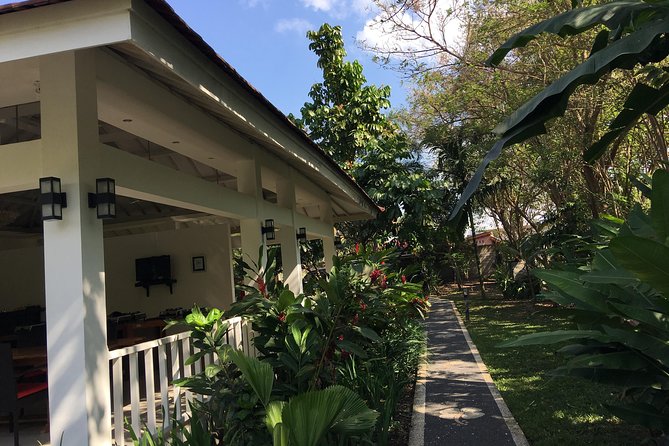
Pickup is offered from the Mataram and Senggigi areas. That is helpful if your hotel is within the stated service area, especially because the class starts at a specific time and you may not want to negotiate transport on the morning of the activity.
The available information does not give a pickup time, exact hotel boundaries, or return journey length. Confirm those details when your booking is accepted. After lunch, you return to your Mataram or Senggigi hotel, so the activity is designed as a round trip rather than a one-way visit.
If you are staying outside those areas, do not assume pickup is included. The location is Lombok, but the listed pickup coverage is specifically Mataram and Senggigi.
Confirmation is sent within 48 hours, subject to availability. Since this class is booked an average of 37 days ahead, reserve early if your Lombok dates are fixed. That booking pattern suggests the small capacity can matter during busy periods, though availability is never guaranteed until confirmation arrives.
Who will enjoy this class most
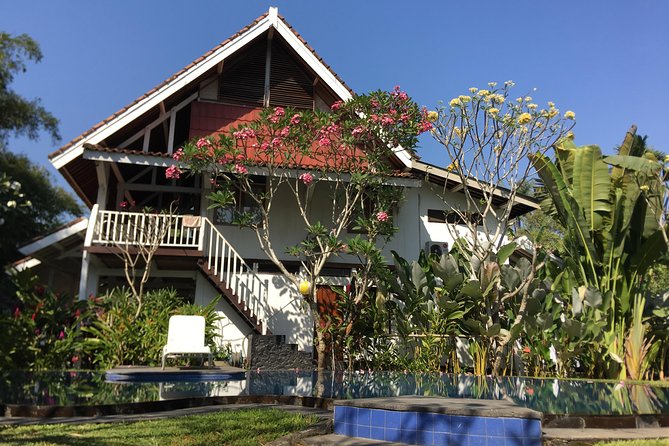
I would choose this class if you want food, light gardening, and conversation in one outing. It suits couples, families, solo visitors who like meeting people, and anyone who wants a break from standard sightseeing.
It is also a good match for you if Indonesian cuisine is part of the reason you came to Lombok. The class reaches beyond one island menu and introduces dishes connected to Lombok, Java, and other regions. You leave with a broader idea of Indonesian cooking, not just a single plate.
Vegetarians should find the class easier to book than many food tours because vegetarian options are specifically available. If you have allergies, contact the provider early. Accommodation has been possible, but the class does not publish a full allergy policy.
This may not be the best choice if you prefer a private lesson, a fixed recipe list, or a very fast professional demonstration. The garden walk, seed planting, photos, and shared lunch are central parts of the outing. They are benefits for some people and distractions for others.
Weather and the no-refund rule
The activity requires good weather. That matters because part of the program takes place outdoors in the vegetable garden, and the garden visit and planting are not easily separated from the rest of the class.
Your booking is non-refundable and cannot be changed for any reason if you cancel or request an amendment. This is the biggest practical drawback, so check your schedule before paying and avoid booking it too early if your plans are uncertain.
If the provider cancels because of poor weather, you are offered a different date or a full refund. That protection applies to a weather cancellation by the provider, not to your own change of plans.
Should you book Anggrek Putih?
Book it if you want a relaxed, small-group introduction to Indonesian food with a real garden component. The combination of seed planting, traditional tools, regional recipes, and a shared lunch gives the three hours more texture than a simple cook-and-eat lesson.
I would give it extra weight if you are staying in Mataram or Senggigi and value hotel pickup. The garden and meal also make it a good choice for people who enjoy social activities and want to bring cooking ideas home.
Think twice if you need a private class, a guaranteed menu, or flexible cancellation. For everyone else, $30 is a fair price for a half-day outing that connects the food on your plate with the plants, tools, and people behind it.
FAQ
How long does the Anggrek Putih Lombok cooking class last?
The class lasts approximately three hours.
What time does the class start?
The stated start time is 10:30 am.
Where does the cooking class take place?
The activity begins at the Anggrek Putih guest house in Lombok.
Is hotel pickup available?
Yes. Pickup is offered from hotels in the Mataram and Senggigi areas.
What food will you prepare?
The class covers Indonesian regional dishes from Lombok, Java, and beyond. Named examples include banana-leaf fish and curry, but a complete fixed menu is not provided.
Are vegetarian options available?
Yes. Vegetarian options are available, and the class has accommodated food allergies.
What happens if bad weather cancels the class?
If poor weather causes the provider to cancel, you can choose another date or receive a full refund.
More Workshops in Lombok
- Surf Lesson Gili Trawangan
★ 4.5 · 13 reviews - Private Surf Lessons in Selong Belanak Lombok
★ 5.0 · 9 reviews - Beginner surf lesson private class – Adult
★ 5.0 · 6 reviews - Group Surf Lesson Senggigi Lombok
★ 5.0 · 4 reviews
Just added around Lombok
- Trekking Rinjani Volcano To Crater Rim Senaru 2D-1N Private – Syam Trekker★ 5.0 · 45 reviews
- Waterfall Tour And Sasak Traditional Tour★ 5.0 · 3 reviews
- Full-Day Private Trip to South Lombok★ 5.0 · 15 reviews
- MODERATE HIKING: 2D/1N Crater Rim Senaru | Rinjani Samalas Tour★ 5.0 · 8 reviews
- Trekking Rinjani Mountain Summit 2 Days 1 Night – Em Adventure★ 5.0 · 42 reviews
- Panorama Walking Tour and Culture, West Lombok★ 5.0 · 6 reviews
- Fantastic trip to Sindang Gile & Tiu Kelep Waterfall★ 4.5 · 3 reviews
- Trekking Rinjani 1 Day Trek Senaru Crater Rim★ 5.0 · 3 reviews
Balinese Cooking Classes, compared.
PRIVATE Authentic Balinese Cooking Class in Ubud at Putu’s Home
Read our review →
PRIVATE Balinese Cooking Class in Ubud with Dewa with Transfers
Read our review →
Balinese Cooking class with traditional morning market visit
Read our review →Browse the lists this tour appears in