
Reviewed · CITY TOURS
Jakarta Private City Tour with Obama School visit
Jakarta’s most unusual stop is not a monument. It is the elementary school where Barack Obama studied from 1969 to 1971. You can enter State Elementary School Menteng 01 Pagi, see the statue of young Obama, and meet students, an experience that gives the city a personal connection far beyond the usual sightseeing circuit. Guides such as Neti and Ratih are also praised for clear English, warmth, and lively explanations.
I like the way this private tour combines major landmarks with ordinary city life. You see cargo boats at old Sunda Kelapa Harbour, a traditional puppet maker in Kota Tua, and Petak Sembilan Temple in Glodok. I also like the private car and flexible order of stops, since Jakarta traffic can make a fixed schedule tricky. The main drawback is pace: seven stops in five to six hours means some visits are short, and lunch is not included.
In This Review
- Key points to know before booking
- A useful first day in Jakarta
- Sunda Kelapa Harbour and Jakarta’s working waterfront
- Kota Tua, canals, and the puppet maker
- Glodok Chinatown and Petak Sembilan Temple
- Istiqlal Mosque and Jakarta Cathedral
- MONAS, Jakarta’s national landmark
- Entering Obama’s former elementary school
- Why the private format matters in Jakarta
- What $65 per person buys you
- Who will get the most from this tour
- Guide quality and the human side of the day
- Should you book the Jakarta private city tour?
- FAQ
- How long does the Jakarta private city tour last?
- How much does the tour cost?
- Is hotel pickup available?
- Is this a private tour?
- Is transportation included?
- Is lunch included?
- Which sights are included?
- Can you visit Obama’s former school?
- Can the order of the stops change?
- What is the cancellation policy?
Key points to know before booking
- Obama’s former school: Enter Menteng 01 Pagi, see the young Obama statue, and meet students.
- Private vehicle and guide: Your group travels by air-conditioned vehicle with private transportation, parking, bottled water, and guide service included.
- Jakarta in several layers: The route links an old harbour, Dutch colonial buildings, Chinese heritage, Islamic architecture, a cathedral, and Indonesia’s national monument.
- Traffic-friendly planning: The order can be rearranged to suit road conditions, a useful feature in a huge city.
- Strong guide service: Neti, Ratih, Ratif, and Sharia are praised for English, historical context, friendliness, and practical help with photographs.
- Half-day timing: The tour lasts about five to six hours, costs $65 per person, and does not include lunch.
A useful first day in Jakarta
Jakarta is too large to understand from a single square or museum. This tour works as a first look because it moves through several parts of the city and shows how different communities, faiths, and eras fit together.
You begin with a private pickup and an air-conditioned vehicle. That matters here. Jakarta roads can slow the day, and having a driver means you are not spending your limited sightseeing time figuring out local transport between widely separated sights. Parking fees and bottled water are included, along with the guide service.
The tour is private, so only your group participates. That gives you room to ask questions, request photographs, and adjust the order of the stops. The guides are not simply there to point at buildings. Neti is praised for impeccable English and an energetic manner, while Ratih and Ratif are noted for explaining Indonesian history, religion, and colonial rule in an easy-to-follow way.
A few more Jakarta trips to weigh up
- Private Full-Day Guided Tour: Explore Jakarta’s Top Highlights
★ 5.0 · 338 reviews - Jakarta Half-Day Guided Tour with a Private Fun Local Host
★ 5.0 · 292 reviews - Jakarta Heritage of Old Batavia Private City Tour (Historical)
★ 5.0 · 143 reviews
Sunda Kelapa Harbour and Jakarta’s working waterfront
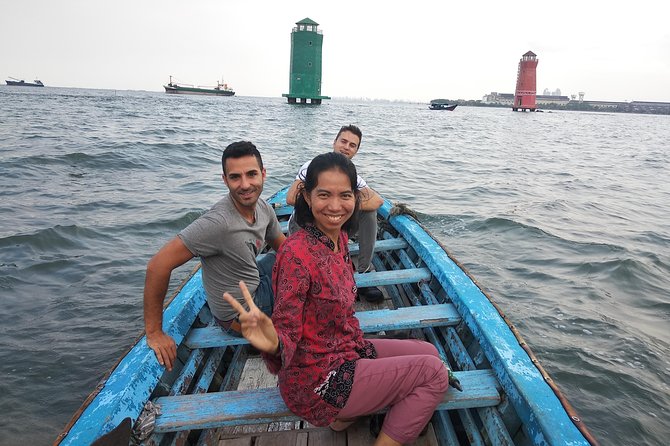
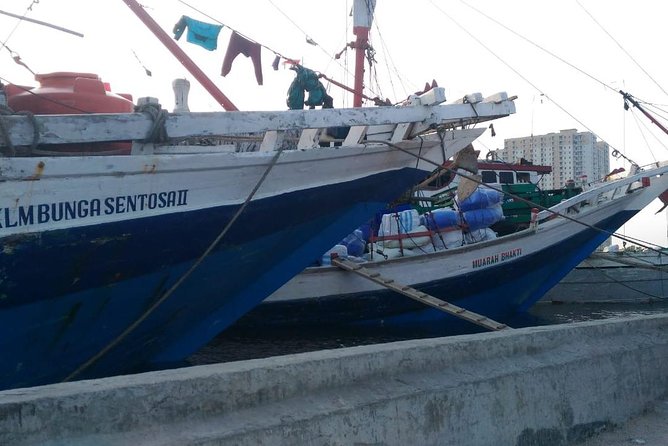
The first stop is Sunda Kelapa Harbour, the oldest harbour in Jakarta. It dates back to the Hindu era and served as a main gateway to the city. Today it remains a domestic cargo port.
You have about 20 minutes here, enough for a quick look at the waterfront and photographs. The value of this stop is its sense of continuity. Jakarta did not begin as a modern capital of office towers and crowded roads. Its story began with water, trade, and ships bringing goods into the city.
Do not expect a long museum visit or a polished waterfront promenade. This is a brief outdoor stop at a working harbour. The port gives you a direct look at daily commercial activity, but the short time means your guide’s explanation is important. Ask questions while you walk, especially if you want to understand how the harbour fits into Jakarta’s early development.
Kota Tua, canals, and the puppet maker
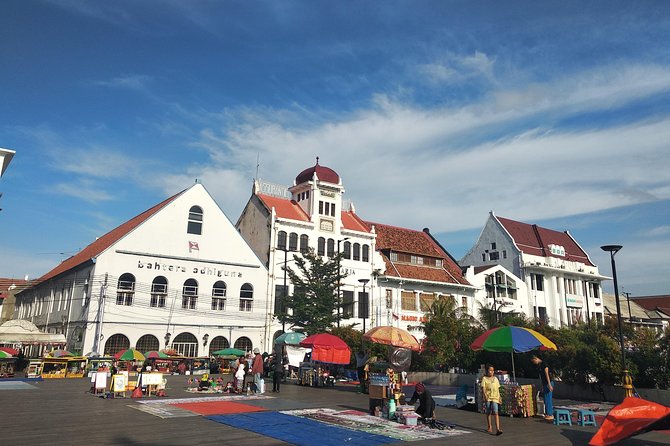
Jakarta Old Town, known as Kota Tua, receives about an hour. This is one of the fuller stops and one of the best places to connect Jakarta with its Dutch colonial past.
You walk along the canal and see surviving Dutch buildings. The route also includes the Jakarta sinking monument, a reminder that the capital faces serious problems with land subsidence and water. The stop is not limited to grand architecture. You also visit a puppet maker and see how traditional puppets are made.
That combination is what makes Kota Tua worthwhile. Colonial buildings can feel distant when you only view them from a car window. A craft demonstration brings the local culture closer and gives you something concrete to remember. You are seeing both the city the Dutch built and the traditions that continued around it.
The admission is free, but the hour can pass quickly. If you like photography, this is one of the stops where you may want to ask your guide for a little extra time. The tour covers several other sights, so you should not expect a slow morning devoted only to Old Town.
Glodok Chinatown and Petak Sembilan Temple
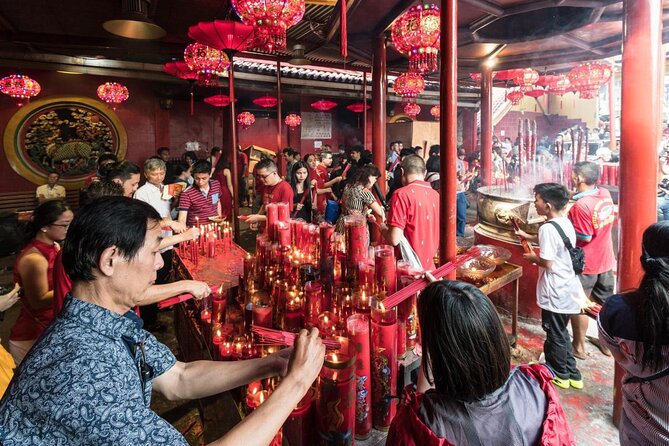
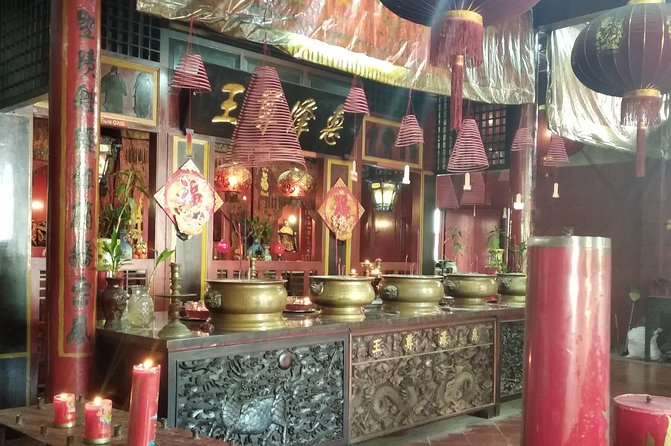
The Glodok Chinatown visit lasts about 40 minutes and focuses on Petak Sembilan, also called Dharma Bhakti Temple. Built in 1650, it is identified as Jakarta’s oldest Chinese temple.
This stop adds an important part of the city’s cultural story. Jakarta is not defined by one community or one faith, and Glodok shows the long presence of Chinese Indonesians in the capital. The temple provides a link between religious practice, local neighborhoods, and the city’s early trading life.
The visit is short, so your guide’s comments help you notice details you might otherwise pass without understanding. You can ask about the temple’s age, its name, and its place in Glodok’s history. Since the stop is in a living neighborhood rather than a closed historical site, you are seeing a part of Jakarta that remains connected to everyday life.
As with the harbour, this is not a long, quiet cultural visit. The route is designed to give you a useful introduction, not several hours in one district. If you prefer slow exploration, the schedule may feel brisk. If you are visiting Jakarta for the first time, the variety is a fair trade.
Same island, a completely different day out:
- Jakarta: Volcano, Tea/Rice Fields, Hot Spring, Local Food
★ 4.9 · 515 reviews - Active Volcano, Rice Field, Hot Spring, Fruit market, Tea Plantation with Lunch
★ 5.0 · 513 reviews - Jakarta Bogor Botanical Garden, Waterfall and Rice terrace, Lunch
★ 5.0 · 157 reviews - Jakarta Half-Day Sightseeing Tour To Modern City and Old Town
★ 5.0 · 137 reviews
Istiqlal Mosque and Jakarta Cathedral
The tour then moves into one of Jakarta’s most striking architectural pairings. Istiqlal Mosque is described as the largest mosque in Southeast Asia and the grand mosque of Indonesia. It was initiated by Indonesia’s first president, Sukarno, and completed in 1978 during the presidency of Suharto.
You have about 40 minutes at the mosque, with admission included. This is more than a quick photograph from the street. The visit gives you a chance to discuss Indonesia as the country with the world’s largest Muslim population and to understand the mosque’s national role.
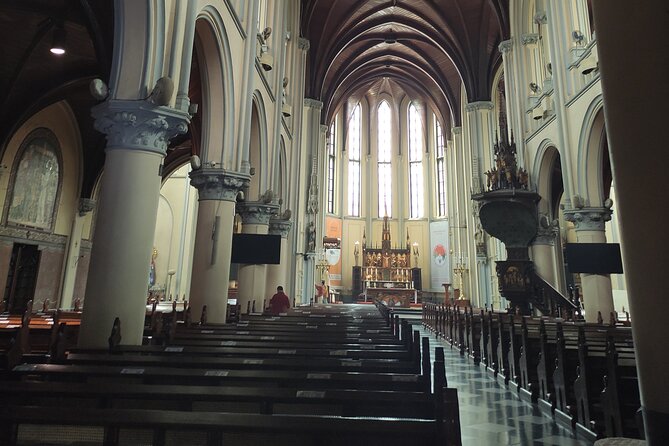
Across from Istiqlal is Jakarta Cathedral, a neo-Gothic church built during the colonial period with European architectural influence. The visit here lasts about 15 minutes and admission is free.
The pairing is meaningful. The mosque and cathedral face one another, and together they symbolize religious coexistence in central Jakarta. Your time at the cathedral is short, so think of it as an architectural and cultural counterpoint to Istiqlal rather than a full church tour.
Dress and behavior should be respectful at both religious sites. The supplied information does not specify a dress code or equipment loan, so ask your guide about current visiting requirements. The guide can also explain the symbolism of placing these two major houses of worship opposite each other.
MONAS, Jakarta’s national landmark
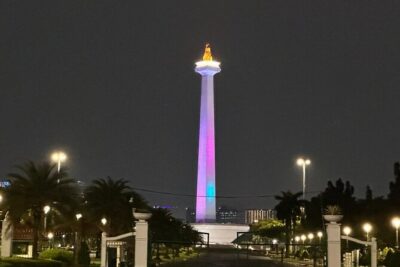
The National Monument, usually called MONAS, is Indonesia’s best-known landmark. It rises 132 meters and represents the spirit of Indonesia’s struggle against colonial rule.
You have about 15 minutes here, mainly for walking and photographs. That is enough to see the monument and understand its national importance, but not enough for an extended visit. The tour does not promise a lengthy museum or observation-deck experience, so book this excursion for an exterior introduction to MONAS.
The brief stop works well within this route. After seeing the Dutch colonial past, the Chinese temple, and the religious landmarks, MONAS shifts the focus to Indonesian independence and national identity. It is a useful visual marker in the middle of the city and an easy place to take a souvenir photograph.
Entering Obama’s former elementary school
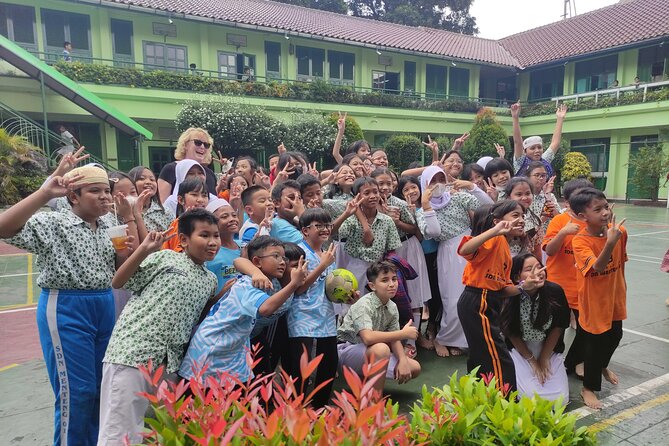
The final stop is the tour’s most distinctive feature. At State Elementary School Menteng 01 Pagi, Barack Obama studied from 1969 until 1971, when he was a child in Jakarta.
You go inside the school, see a statue of young Obama, and meet students. This is a more personal experience than simply viewing a plaque or taking a picture outside a famous person’s former home. You also learn something about education in Indonesia and see how the school remembers its connection to an American president.
The visit lasts about 20 minutes. That is long enough for a meaningful introduction, but it is not a full school day or an extended education program. The presence of students makes the stop feel like a living place rather than a museum. You should be ready to follow your guide’s instructions and be respectful while on school grounds.
The school visit also helps explain why this tour is different from a standard Jakarta highlights drive. You are not only collecting landmarks. You are seeing a local institution connected to a major international figure, and you have the chance to meet people who are part of the school community today.
Why the private format matters in Jakarta
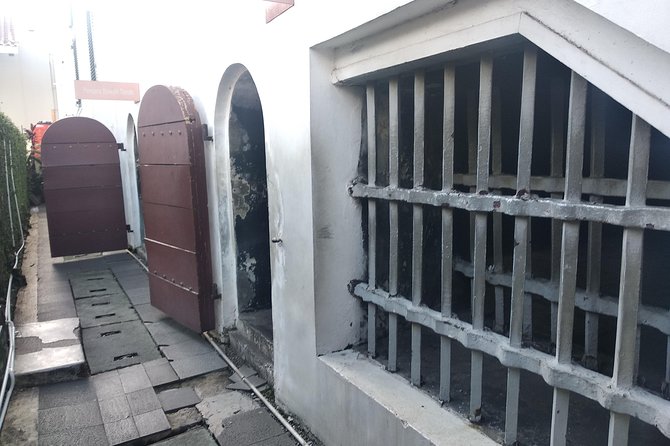
A private tour is especially useful in Jakarta because the city is sprawling and road conditions can affect the order of the day. One guide rearranged the route around traffic, allowing the group to keep the main stops despite the city’s unpredictable delays.
You are not locked into the rhythm of a large group. Guides have helped with photographs, answered questions, and adjusted the timing around tight onward schedules. One group was picked up on time and returned to the hotel in time for afternoon flights, though you should still allow a safe buffer for Jakarta traffic.
The vehicle is air-conditioned, and private transportation, parking, and bottled water are included. Pickup is offered, and the tour is listed as near public transportation. The activity is private, so your companions are the only people in the group.
There is one practical limit. Private does not mean leisurely. The tour still covers seven stops in roughly five to six hours. Traffic, photographs, religious-site procedures, and the school visit all compete for time. The guide may change the sequence, but the day remains an efficient overview rather than a slow neighborhood walk.
What $65 per person buys you
At $65 per person, this tour offers solid value if you want transport, a guide, and a broad introduction in one booking. You are paying for a private vehicle and driver, an English-speaking guide, parking, bottled water, and access to a route that would be awkward to coordinate independently in half a day.
The strongest value comes from the range of experiences. You see the old harbour, colonial Jakarta, Chinese religious heritage, Indonesia’s national mosque, a neo-Gothic cathedral, MONAS, and Obama’s school. No single stop carries the whole tour. Together they give you a clearer picture of Jakarta’s past and present.
Lunch is not included. Plan to eat before or after the tour, or ask the operator how the day can be arranged if you need a meal break. The provided details do not specify a restaurant stop, so do not assume food is part of the schedule.
Group discounts may be available, which can improve the per-person value for families or friends traveling together. Confirmation is provided at booking, and free cancellation is available up to 24 hours before the local start time. Changes or cancellations inside that window are not accepted for a refund.
Who will get the most from this tour
I would recommend this experience to a first-time Jakarta visitor who wants to see the main landmarks without managing the city’s roads alone. It also suits anyone interested in the relationship between Indonesian history, religion, colonial rule, and modern national identity.
Families may especially like the Obama school visit and the puppet maker. The day has enough variety to keep younger visitors from facing a long sequence of similar monuments, though the heat and short stops may require patience.
This tour is also a good fit if you have only one free day or a tight schedule before a flight. The private format makes it easier to keep moving and ask for help with photographs or explanations.
I would be more cautious if you want a slow, specialist visit to one area. Kota Tua receives about an hour, Glodok about 40 minutes, and the major landmarks are handled in short blocks. The tour gives you breadth, not deep time at each place.
Guide quality and the human side of the day
The guide can make or break a city tour, and the strongest praise here centers on personal service. Neti is described as warm, energetic, enthusiastic, and fluent in English. Ratih and Ratif are praised for explaining Indonesia’s past, including Dutch colonization and the struggle for independence.
Sharia is also noted for answering questions and adding useful information at each stop. Driver Harry is specifically paired with Neti, helping make a large city feel manageable. The names indicate that guide assignments can vary, so you may not receive one particular person, but the service pattern is clear: expect an active guide who explains rather than simply escorts.
The best use of your time is to ask questions. Jakarta’s sights cover several centuries and several faiths. A good question at Sunda Kelapa can add meaning to the Old Town visit, while a question at Istiqlal or the cathedral can connect architecture with national identity.
Should you book the Jakarta private city tour?
Book it if you want an efficient first look at Jakarta with a private car, a flexible route, and a rare visit to Obama’s former school. The combination of old harbour, Kota Tua, Glodok, Istiqlal, the cathedral, MONAS, and Menteng 01 Pagi gives you more range than a basic monument tour.
Keep your expectations realistic. You will not spend hours at any one site, lunch costs extra, and traffic can force changes to the order. But at $65 per person, the tour is a sensible choice for first-time visitors who value context, personal guiding, and a packed half-day that reaches parts of Jakarta you might otherwise miss.
FAQ
How long does the Jakarta private city tour last?
The tour lasts approximately five to six hours.
How much does the tour cost?
The listed price is $65 per person. Group discounts are offered.
Is hotel pickup available?
Yes. Pickup is offered as part of the experience.
Is this a private tour?
Yes. Only your group participates in the private activity.
Is transportation included?
Yes. Private transportation in an air-conditioned vehicle is included, along with parking fees and bottled water.
Is lunch included?
No. Lunch is not included in the tour price.
Which sights are included?
The route includes Sunda Kelapa Harbour, Jakarta Old Town, Glodok Chinatown, Istiqlal Mosque, Jakarta Cathedral, MONAS, and State Elementary School Menteng 01 Pagi.
Can you visit Obama’s former school?
Yes. The tour includes a visit inside State Elementary School Menteng 01 Pagi, where Obama studied from 1969 to 1971. You see a statue of young Obama and meet students.
Can the order of the stops change?
Yes. The order may be rearranged according to Jakarta traffic conditions.
What is the cancellation policy?
You can cancel up to 24 hours before the experience start time for a full refund. Cancellations or changes made less than 24 hours before the start time are not accepted for a refund.
Just added around Jakarta
- The Secret Society of Batavia – Walking Tour★ 5.0 · 4 reviews
- Soekarno Hatta International Airport by Plaza Premium Lounge★ 4.0 · 46 reviews
- Volcano and Domas Crater of Hot Stony Bubble from Jakarta Lunch★ 5.0 · 23 reviews
- Jakarta Indonesian Culture in half Day★ 5.0 · 50 reviews
- Jakarta Scooter Lessons and Motorcycle Lessons★ 5.0 · 9 reviews
- Situ Gunung Waterfall & Suspension Bridge Sukabumi start Jakarta★ 4.5 · 13 reviews
- Private Tour: Half Day Jakarta Old City Tour★ 4.0 · 4 reviews
- Batik Heritage Introduction Class with Lunch & Souvenir★ 5.0 · 8 reviews
City Tours, compared.
Jakarta Heritage of Old Batavia Private City Tour (Historical)
Read our review →
Jakarta Half-Day Sightseeing Tour To Modern City and Old Town
Read our review →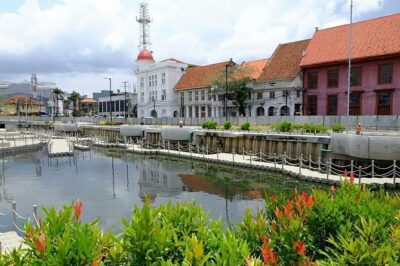
Halfday Excursion Old city Batavia with Lunch and Souvenir
Read our review →
Borobudur and Prambanan Tours from Yogyakarta City
Read our review →
4 Hours Jakarta Private City Tour – (Most Tourist Attractions)
Read our review →
Highlights & Hidden Gems of Bali: Private City Tour
Read our review →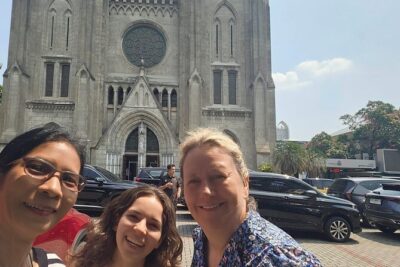
Jakarta Half Day Visit The Monument with Highlight City Tour
Read our review →Browse the lists this tour appears in