
Reviewed · NUSA PENIDA TOURS
Mangrove Reforestation and Exploration around the Nusa Islands
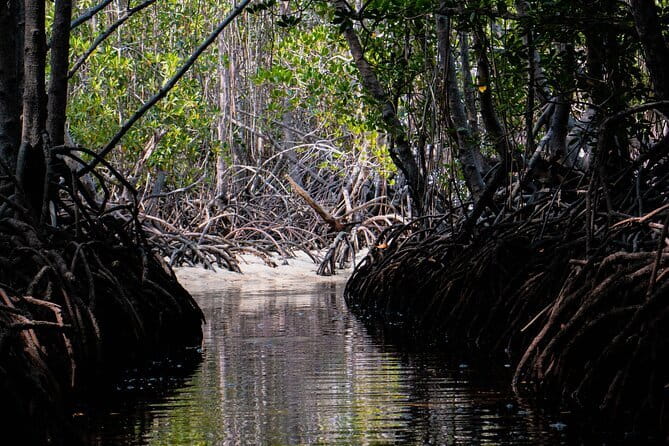
The best part of this outing is that you do more than look at the mangrove forest. You prepare seedlings and plant 10 young trees, then see the forest from the water by boat or canoe. I like the hands-on work and the clear purpose behind it: mangroves protect shorelines, store carbon, and give many forms of life a place to grow. I also like that lunch and island exploring are built into the day, so conservation work does not take up every minute.
The main thing to consider is the physical side. You will work near the forest edge and move between activities, and the experience is not recommended for people with mobility challenges. The fixed meeting point is in Nusa Penida, so check your transport plans carefully before booking.
In This Review
- Key points at a glance
- What makes this Nusa Islands outing different
- Learning the work before planting
- Getting your hands dirty in the nursery
- Why mangroves matter around the islands
- Ten trees, then lunch on Nusa Ceningan
- Exploring Nusa Lembongan and Nusa Ceningan
- Seeing the forest by boat or canoe
- Is $76.60 a fair price?
- Who should book this experience?
- The final call
- FAQ
- How long does the mangrove experience last?
- How many mangrove trees will I plant?
- What other conservation work is included?
- Is lunch included?
- Is transportation included?
- Will I explore both Nusa Lembongan and Nusa Ceningan?
- Is a boat or canoe ride included?
- Where does the experience start and end?
- Can I cancel for a full refund?
Key points at a glance
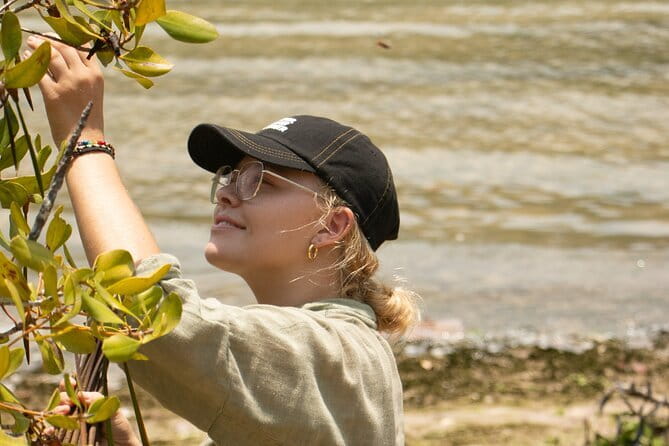
- Plant 10 mangrove trees: Your conservation work has a clear, countable result.
- Prepare seedlings for the next group: The nursery work connects your visit to future planting efforts.
- Learn why mangroves matter: The educational talk covers coast protection, carbon storage, biodiversity, and threats to the ecosystem.
- Eat lunch on Nusa Ceningan: Lunch is included, with ocean views and an island setting.
- Explore two Nusa Islands: The day includes time around Nusa Lembongan and Nusa Ceningan.
- Finish on the water: A boat or canoe lets you see the thriving part of the mangrove forest from a different angle.
What makes this Nusa Islands outing different
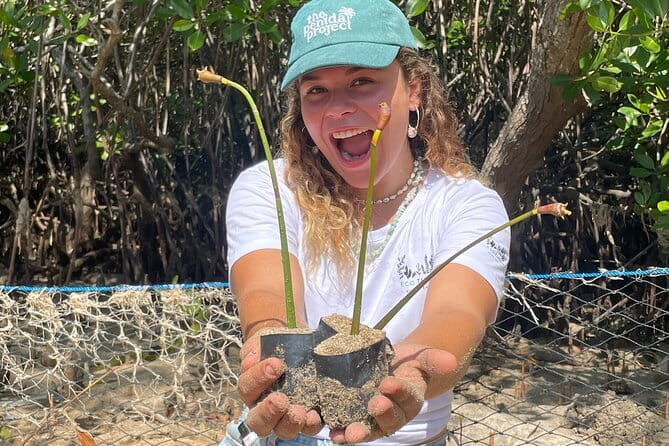
Many island excursions ask you to admire nature from a boat, a viewpoint, or a beach. This one asks you to put in some work. You collect and prepare seedlings, learn how the forest functions, and plant 10 young mangroves along its edge.
That simple shift matters. You are not just passing through the ecosystem. You are taking part in a small restoration effort, with an action you can understand and remember. The work is modest, but it gives the day more purpose than a standard sightseeing trip.
The experience also reflects the local community’s nine-year conservation effort. Ecotourism Nusa Penida operates around the Nusa Islands and presents the mangrove activity as part of wider ecological work. The day is designed to connect education, restoration, and island exploration rather than treat them as separate products.
You should keep your expectations realistic. Planting 10 trees will not transform the whole coast in one afternoon. What you get is a practical introduction to restoration and a chance to support an ongoing local program while seeing the islands in a less typical way.
Other Nusa Penida days people book alongside this one:
- ️Nusa Penida by Private Boat – Snorkeling 4 spots, Swim with Mantas + Land Tour
★ 5.0 · 6,424 reviews - Open Water Course in Nusa Lembongan – Get Certified on remote island (next Bali)
★ 5.0 · 864 reviews - 2 Days Discover Scuba Diving in Nusa Lembongan – Scuba Initiation
★ 5.0 · 506 reviews
Learning the work before planting
The day begins at Mangrove Point on Nusa Lembongan, with the meeting point listed at Ecotourism Nusa PenidaBuyuk on Jalan, Ped, Nusa Penida. The provided details do not name an individual guide, but the activity includes instruction on the mangrove ecosystem and its role in island life.
That talk is an important part of the experience. You learn why mangroves help protect coastlines, store carbon, support biodiversity, and provide shelter for living things. You also hear how these forests are threatened and why restoring them takes more than simply placing a seedling in the mud.
This background helps you understand the planting work. Without it, the nursery and forest-edge activities could feel like a quick photo opportunity. With it, you can see how seedlings fit into a larger cycle of coastal protection and habitat care.
The teaching is also intended to work for a broad age range. One family included children aged 10 and 12, and the explanation was clear enough for them to follow. Still, the exact depth of the talk can depend on the guide and the group, so people looking for a specialist ecology course should think of this as accessible field education, not an academic workshop.
Getting your hands dirty in the nursery
The nursery portion gives you a closer look at the early stage of mangrove restoration. You collect and prepare seedlings for the next group, then take part in planting along the forest’s edge.
I like this two-part design. Planting your own trees gives you an immediate sense of contribution, while preparing seedlings for later groups shows that conservation is ongoing. You are helping both today’s planting and the work that follows.
The activity is practical rather than polished. Expect contact with the natural setting and some physical effort. The information says the experience is not recommended for people with mobility challenges, which is useful to know before paying. The tour is not described as wheelchair accessible, and the forest-edge work may be awkward for anyone who has trouble walking, bending, or moving over uneven ground.
For most participants who can manage ordinary outdoor activity, the work should be one of the day’s most memorable parts. You plant 10 trees, so the task is specific rather than vague. It also avoids the common problem of conservation activities where you are asked to help but never learn what your contribution actually involved.
Why mangroves matter around the islands
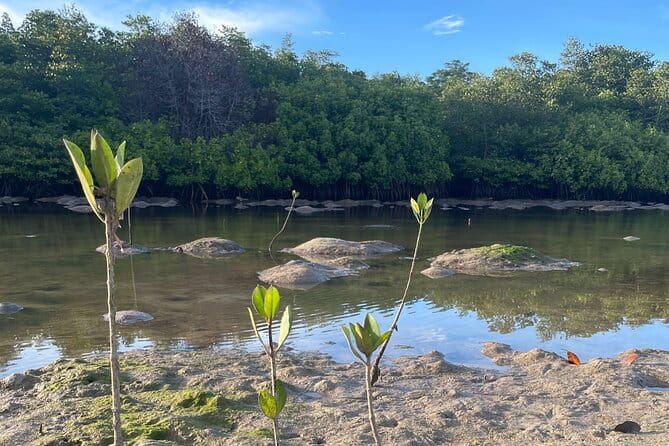
Mangrove forests often look quiet from a distance, but they perform several jobs at once. Their roots help hold shorelines together, their branches provide habitat, and their soils store carbon. Around low-lying islands, these functions are especially important.
The activity connects those ideas to the Nusa Islands. You learn how damage to mangrove areas can affect coast protection and wildlife, then see restoration work in practice. That link between explanation and action is the strongest educational feature of the outing.
The forest is also useful as a place to notice how an ecosystem works. The water, roots, seedlings, and forest edge are not separate sights. They are parts of one coastal system. A short lesson can make the later boat or canoe section much more interesting because you know what to watch for.
You should not book this solely for spectacular scenery. The conservation value is the point, and some of the time is spent on preparation and planting rather than sightseeing. If you want a morning of beaches and viewpoints, another Nusa Islands excursion may suit you better.
Same island, a completely different day out:
- Advanced Open Water Course – Advanced Certification in Lembongan (next to Bali)
★ 5.0 · 222 reviews - 5 Fun Dives in Nusa Lembongan (for certified divers) – Swim with a Mola Mola
★ 5.0 · 205 reviews - Nusa Penida Two Dives Trip for Certified Divers
★ 5.0 · 197 reviews - Two fun dives morning trip (Certified Divers only)
★ 5.0 · 170 reviews
Ten trees, then lunch on Nusa Ceningan
After the restoration work, the day continues with lunch on Nusa Ceningan. Lunch is included, along with snacks, and the setting is described as an ocean-view meal with an island feel.
This is a sensible break in a seven-hour program. Planting and nursery work can make a day feel more active than a normal sightseeing trip, so having food included means you do not need to interrupt the schedule to find a restaurant. It also keeps the conservation activity connected to the local setting rather than sending you away to handle lunch on your own.
The menu is not specified, so do not book expecting a particular dish or dietary arrangement. The practical promise is simply a local lunch, snacks, and a scenic setting. If you have strict dietary needs, ask the operator before the day begins, since the available information does not describe special meal options.
Nusa Ceningan gives the outing a useful change of pace. You spend part of the day working with seedlings and part of it taking in the coast, food, and island surroundings. The mix keeps the program from feeling like a volunteer shift with sightseeing added as an afterthought.
Exploring Nusa Lembongan and Nusa Ceningan
The experience includes exploration around both Nusa Lembongan and Nusa Ceningan. The description promises local charm, lesser-known spots, and scenic views, but it does not provide a detailed list of every viewpoint or stop.
That lack of a fixed sightseeing list can be a benefit if you prefer a flexible island day. The local team describes itself as familiar with the islands and ready to shape the outing around the day’s activities. It also means you should not compare this directly with a tour built around named beaches, temples, or photo stops.
The focus remains ecological. You are seeing the islands through their coastal systems, especially the mangrove forest, rather than racing from one famous attraction to another. I would choose this for a slower, more purposeful look at the Nusa Islands.
Private transportation is included, which is valuable in a small island setting. It reduces the need to arrange separate rides between sections of the day and gives the group a dedicated way to move around. The group is capped at 10 people, so the outing should feel more personal than a large bus excursion, though private transportation does not necessarily mean the entire experience is private to one booking.
The meeting and ending point are the same. Since the start is at Ecotourism Nusa PenidaBuyuk in Ped, Nusa Penida, you need to reach that point yourself unless the operator gives you additional arrangements after booking. The supplied details do not promise hotel pickup or ferry transfers.
Seeing the forest by boat or canoe
The final part takes you into the thriving section of the mangrove forest by boat or canoe. This is a fitting end because you see the ecosystem from the water after learning about it and working at its edge.
The water route gives you a different view of the roots and forest structure. It also provides a quieter way to understand why mangroves are tied to the coast. The exact choice between boat and canoe is not explained, so you may want to ask which option is planned for your date.
Do not assume this is a swimming or snorkeling trip. The listed water activity is a boat or canoe ride through the mangrove area. The experience is about forest ecology and restoration, not underwater sightseeing.
The water section may be the easiest part physically, but the overall tour still includes outdoor work and movement. If you are unsure about bending, walking, or getting into a canoe, ask the operator before booking rather than relying on the final water portion to be gentle.
Is $76.60 a fair price?
At $76.60 per person, the cost is higher than a basic mangrove boat ride, but the comparison is not quite fair. This price includes private transportation, all fees and taxes, lunch, snacks, the planting program, and a boat or canoe.
You are paying for a full seven-hour experience rather than a short cruise. The value is strongest if you would otherwise pay separately for transport, food, and a sightseeing trip around the two islands. The planting and nursery work add a service element that a normal nature tour does not provide.
The price is less compelling if your main goal is simply to see mangroves from the water. In that case, a shorter boat outing might offer enough. Here, you spend time learning and working before reaching the water, so the value depends on wanting participation, not just scenery.
A small group maximum of 10 also helps. It should give the guide more room to explain the ecosystem and help with the planting, though the experience is not advertised as exclusive. For families with older children, solo visitors, and people who want a purposeful day, the package is reasonably priced.
Who should book this experience?
I would choose this outing if you want your time in Bali to include a useful local activity. It suits people who like learning by doing, rather than only taking photographs. The clear planting goal makes it especially appealing if you want to leave an island with a specific contribution behind.
It can also work well for families with children old enough to listen, handle simple tasks, and manage an outdoor day. The educational explanation has been understandable for children aged 10 and 12, but the mobility warning still applies to every age group.
Solo participants may appreciate the small group size and the built-in structure. You do not need to organize a separate lunch, transport plan, or mangrove visit. The activity gives you a full day with a social element, even though no specific group makeup is guaranteed.
I would be more cautious if you dislike mud, physical tasks, or educational talks. The forest work is not a token ten-minute stop. It is central to the experience, and the outing is designed around conservation rather than luxury.
Service animals are allowed, and the meeting point is near public transportation. The experience requires a minimum number of participants, so a cancellation is possible if that number is not reached. Free cancellation is available up to 24 hours before the start time, which gives you some flexibility, but changes or cancellations inside that window are not accepted.
The final call
Book this experience if you want hands-on conservation, a local lunch, and a water-level look at the Nusa Islands in one day. The strongest reasons to go are the clear planting task, the useful mangrove lesson, the small group limit, and the fact that transport, food, and the boat or canoe are included.
Skip it if you want a pure beach day, a detailed list of famous sights, or a completely effortless outing. At $76.60, the value comes from taking part in restoration and learning why the forest matters. For an active, thoughtful day around Nusa Lembongan, Nusa Ceningan, and Nusa Penida, that is a fair trade.
FAQ
How long does the mangrove experience last?
The experience lasts approximately seven hours.
How many mangrove trees will I plant?
You will plant 10 young mangrove trees along the edge of the forest.
What other conservation work is included?
You will collect and prepare mangrove seedlings for the next group, in addition to planting your 10 trees.
Is lunch included?
Yes. A local lunch on Nusa Ceningan is included, along with snacks.
Is transportation included?
Yes. Private transportation is included, as well as all fees and taxes.
Will I explore both Nusa Lembongan and Nusa Ceningan?
Yes. The experience includes exploration around Nusa Lembongan and Nusa Ceningan.
Is a boat or canoe ride included?
Yes. The final forest exploration takes place by boat or canoe.
Where does the experience start and end?
It starts at Ecotourism Nusa PenidaBuyuk, Jalan, Ped, Nusa Penida, Klungkung Regency, Bali 80771, Indonesia, and ends back at the same meeting point.
Can I cancel for a full refund?
Yes, if you cancel at least 24 hours before the experience start time. Cancellations made less than 24 hours before the start time are not refunded, and the activity may also be canceled if its minimum number of participants is not met.
Just added around Nusa Penida
- Try Scuba Diving for Beginners with manta rays (Non – Certified)★ 4.5 · 31 reviews
- Try Freediving on Nusa Penida★ 5.0 · 30 reviews
- Snorkeling 4 Spot With Manta Bay Or Optional Land Trip★ 5.0 · 14 reviews
- Thrilling Off Road Adventure Explore Nature with ATV With Lunch★ 5.0 · 3 reviews
- Seaweed Farming Activity and Sightseeing at Diamond Beach★ 4.5 · 3 reviews
- Certified Scuba Dive with Manta Rays (Open Water Diver minimum)★ 5.0 · 55 reviews
- Reef Rehabilitation Course and Snorkeling★ 5.0 · 7 reviews
- One Day Nusa Penida Island East★ 5.0 · 29 reviews
Nusa Penida Tours, compared.
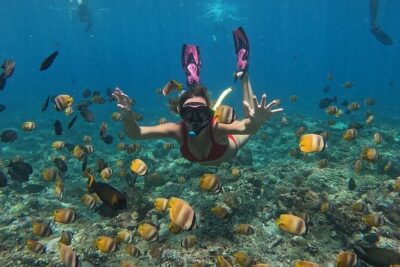
️Nusa Penida by Private Boat – Snorkeling 4 spots, Swim with Mantas + Land Tour
Read our review →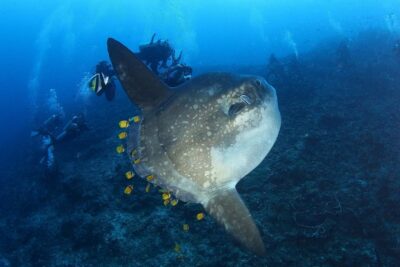
Open Water Course in Nusa Lembongan – Get Certified on remote island (next Bali)
Read our review →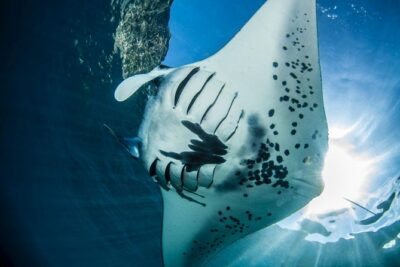
2 Days Discover Scuba Diving in Nusa Lembongan – Scuba Initiation
Read our review →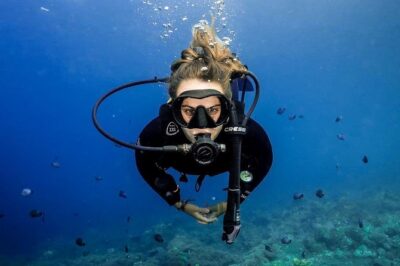
Advanced Open Water Course – Advanced Certification in Lembongan (next to Bali)
Read our review →
5 Fun Dives in Nusa Lembongan (for certified divers) – Swim with a Mola Mola
Read our review →
Nusa Penida Two Dives Trip for Certified Divers
Read our review →
Two fun dives morning trip (Certified Divers only)
Read our review →
Browse the lists this tour appears in