
Reviewed · WORKSHOPS
Private Traditional Bali Silver Jewelry Making Class
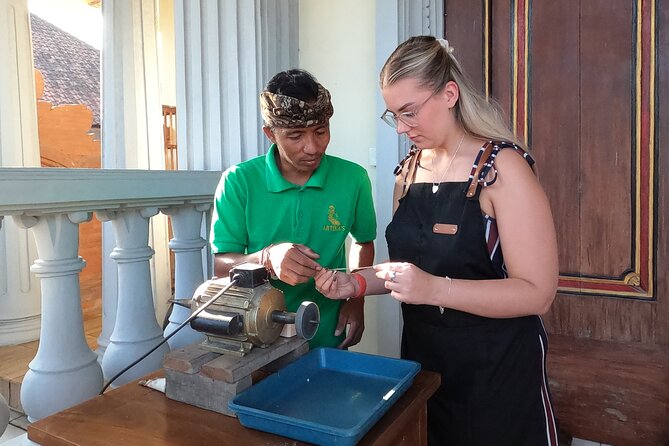
Making a silver ring by hand is far more personal than buying one in a Bali shop. At Rajata Silver Class in Celuk, you sketch or choose a design, then work through the real process with saws, hammers, solder, sandpaper, and polish. Your finished jewelry is the souvenir, not just another item from a market shelf.
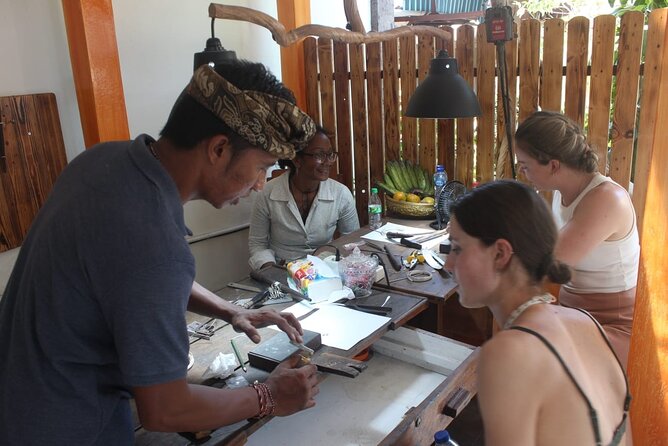
I like the private format because Arik, or another personal tutor from the workshop, can slow down at the tricky parts and help you keep your design realistic. I also like the family-run setting, where you may meet members of the silversmith’s family and see how the craft fits into daily life in Celuk.
The main point to check before booking is the silver allowance. The description refers to 10 grams, while the inclusions specify 5 grams included, with extra silver charged at IDR 50,000 per gram. Confirm the allowance and your hotel transfer price before you go.
In This Review
- Key points to know before you book
- Why making silver beats buying another souvenir
- Arriving in Celuk, Bali’s silversmith village
- A warm welcome before the tools come out
- Choosing a design that fits three hours
- Learning the tools and basic techniques
- Working with five grams of silver
- The final sanding and polishing
- What the $48 price really covers
- Who will enjoy this class most
- Timing, transport, and practical planning
- Cancellation and booking timing
- Should you book the Celuk silver class?
- FAQ
- Where does the silver jewelry class take place?
- How long does the activity last?
- Is this a private activity?
- How much silver is included?
- Can I use more silver?
- Can I create my own jewelry design?
- Which jewelry-making techniques will I learn?
- Is hotel pickup included?
- What is the cancellation policy?
Key points to know before you book
- You make a real piece of jewelry: The class covers design, sawing, stamping, hammering, soldering, sanding, and polishing.
- Celuk is Bali’s silver center: The workshop sits in Sukawati, outside Ubud, in a village known for its silversmiths.
- Private instruction keeps the pace flexible: Only your group takes part, so you can ask for help whenever a technique feels difficult.
- Arik is a frequently named instructor: One account refers to Ari, so confirm the tutor’s name when arranging your visit.
- The included silver amount needs checking: The practical inclusion states 5 grams, and extra silver costs IDR 50,000 per gram.
- Hotel pickup costs extra: Paid transfers are offered from Ubud, Sanur, Canggu, Seminyak, Kuta, Legian, Nusa Dua, Jimbaran, and Uluwatu.
Why making silver beats buying another souvenir
Ubud is full of attractive crafts, but a handmade ring or pendant carries a different sort of memory. You remember the crooked first cut, the moment a design begins to take shape, and the final polish that makes the metal shine.
This class gives you that connection without requiring you to already know anything about jewelry. You do not need to arrive with a finished plan. The workshop has sample designs, and your tutor can help you choose something that fits the time, tools, and amount of silver available.
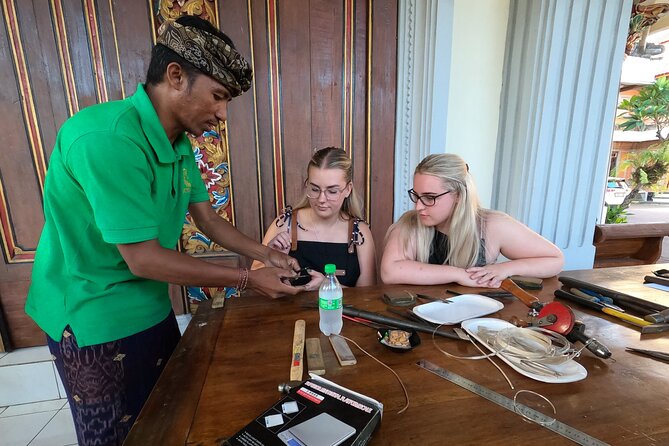
I especially like that the class does not reduce the craft to a quick demonstration. You handle the material yourself. The tutor explains the tools, shows you how to use them, and then guides you through each stage. That makes the finished item feel earned.
The private setup matters here. Jewelry work can be fiddly, and a large class would make it harder to get help at the exact moment you need it. With only your own group present, you can ask how hard to hammer, where to cut, or how much material to remove without feeling rushed.
A few more Ubud trips to weigh up
- Ubud Cooking Class Bali with Balinese Chef
★ 5.0 · 1,609 reviews - Ubud Silver Class Jewelry making in bali
★ 5.0 · 978 reviews - PRIVATE Authentic Balinese Cooking Class in Ubud at Putu’s Home
★ 5.0 · 644 reviews
Arriving in Celuk, Bali’s silversmith village
The meeting point is Rajata Silver Class in Celuk, Sukawati, Gianyar Regency. Celuk is outside Ubud and is widely associated with Bali’s silver craftsmen, so the setting adds useful context to the lesson.
You end at the same meeting point. There is no separate sightseeing stop or workshop-to-workshop tour built into the experience. The focus is the class itself, which suits you if you want a practical cultural activity rather than a broad village excursion.
Hotel pickup is not included, but it can be arranged for an additional charge. The stated car prices are 450,000 Indonesian rupiah from hotels in central Ubud and Sanur, 500,000 from Seminyak, Kuta, and Legian, 550,000 from Canggu, Nusa Dua, and Jimbaran, and 600,000 from Uluwatu.
These are per-car prices as stated, not per-person prices. If you are sharing the ride with family or friends, the transfer may be easier to justify. If you are staying near Ubud and can arrange your own transport, the class price is easier to keep under control.
A warm welcome before the tools come out
The class lasts about three hours. Accounts of the visit describe a family welcome at the workshop, with cold drinks on arrival, bottled water, soft drinks, and snacks included.
That small start matters because silver work takes concentration. You can settle in, look around the samples, and talk through your idea before picking up the tools. The setting is personal rather than polished like a large commercial attraction, which is part of its appeal.
The workshop may also feel like a working family home rather than a formal school. That can be a plus if you want contact with local life. One account describes meeting the whole family and even a kitten. Do not book this expecting a silent studio or a highly staged cultural show. The charm is in the ordinary, family-run atmosphere.
Choosing a design that fits three hours
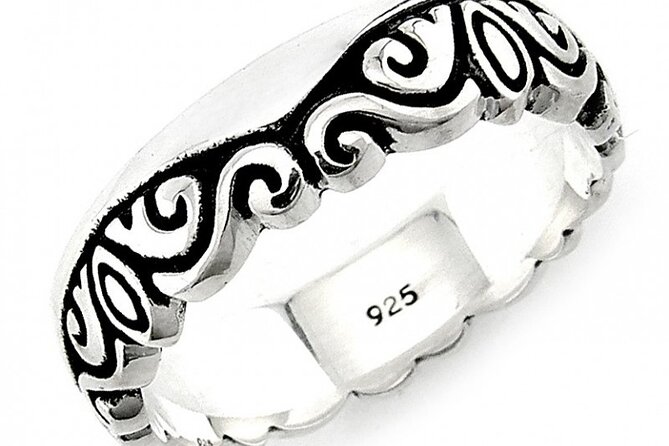
You can create your own design or use one of the workshop templates. This is where your best preparation helps. Bring a few simple ideas on your phone, such as a plain band, a small symbol, initials, or a modest textured shape.
A tutor can tell you when a design is too complicated for the available time or silver. That guidance is important. A delicate design with many parts may require more soldering and finishing than you can comfortably complete in one session.
One account describes adding initials to a ring. That is a smart approach for a first project because a personal mark can make a simple shape feel special without demanding advanced construction.
I would choose a design with clear lines and limited decoration. A straightforward ring or small pendant gives you more time to learn the process and finish the surface properly. You are paying for hands-on instruction, not simply for the weight of the silver, so the learning matters as much as the object.
Same island, a completely different day out:
- All-Inclusive Ubud Private Tour
★ 5.0 · 14,344 reviews - Best of Ubud Full-Day Tour with Jungle Swing
★ 5.0 · 8,571 reviews - Ubud: Monkey Forest, Jungle Swing, Rice Terrace, and Water Temple
★ 5.0 · 7,160 reviews - Best of Ubud 1-Day Private Tour
★ 5.0 · 4,451 reviews
Learning the tools and basic techniques
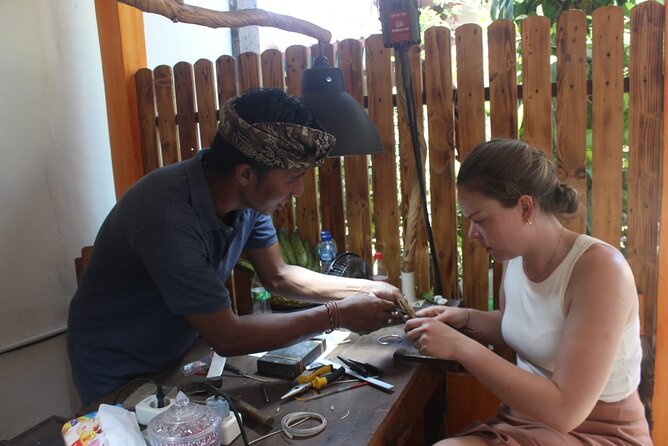
The tutor begins with the tools and their uses, along with basic safety guidance. You then get practical instruction in several stages:
- Sawing the silver into the shape you need
- Stamping or adding texture
- Hammering to form or mark the metal
- Soldering pieces together
- Sanding rough edges
- Polishing the finished surface
Each step changes the metal in a visible way. Sawing teaches patience and control. Hammering can add texture, but too much force can distort a small piece. Sanding may feel slow, yet it is what removes sharp edges and rough cuts.
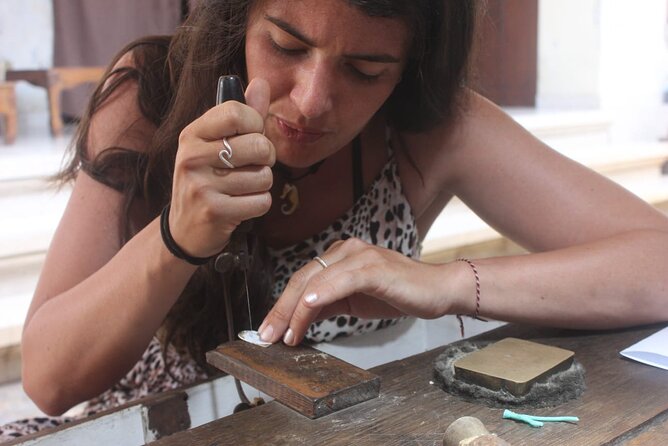
Soldering is likely to be the stage where you need the closest help. It joins separate pieces and requires care, so your tutor’s presence is especially useful. You should expect guidance rather than complete independence, particularly if you have never worked with heated metal.
The class also teaches you to respect the tools. This is not a craft activity where every mistake can be hidden with paint or glue. Silver shows rough work, which makes the final polishing stage satisfying but also means you should listen closely to instructions.
Working with five grams of silver
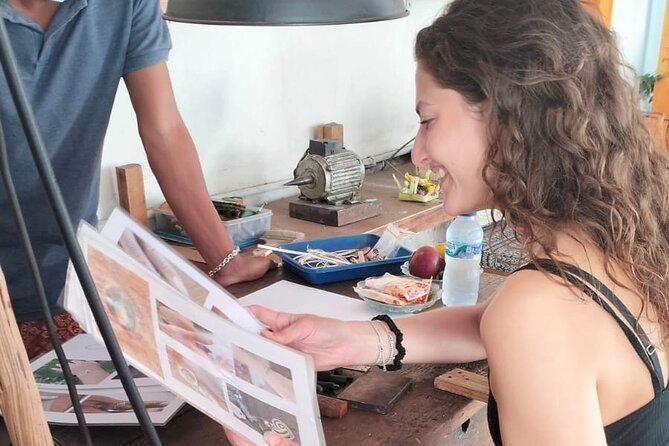
The inclusion details specify 5 grams of silver. That amount is enough for a small project, such as a simple ring or modest piece of jewelry, but your design must match the material provided.
The main description also refers to 10 grams, creating a clear inconsistency. I would contact the provider before booking and ask exactly how much silver is included in your price, what forms of jewelry fit that amount, and how any unused or additional material is handled.
Extra silver is listed at IDR 50,000 per gram. That is useful because you can expand your project if needed, but you should treat it as a possible additional cost rather than assuming the $48 price covers a larger design.
This is one reason to keep your first design sensible. A simple piece lets you focus on technique and reduces the chance that you need a large amount of extra metal. If you want a broad pendant, a heavy ring, or several pieces, ask about the likely silver cost before work begins.
The final sanding and polishing
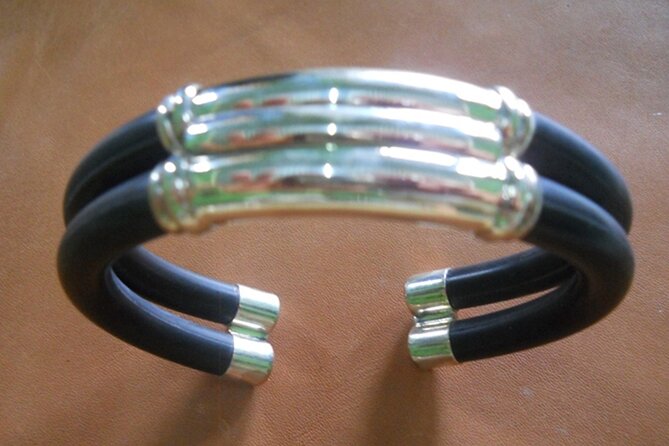
The last stages turn a rough handmade object into something you can actually wear. Sanding smooths the cuts and edges, while polishing brings out the silver’s shine.
Do not expect the surface to look factory-perfect. Your jewelry is made during a short class, and small marks may remain. For many people, those marks are part of the point. The piece carries evidence of your hand and the time spent making it.
At the same time, your tutor helps you finish the work neatly. Accounts of the class praise the patience and attention given during the process, and that is especially valuable at the end. A rushed final polish could spoil an otherwise good project.
You leave with jewelry made from your own design or from a template. The exact form depends on your choice, your pace, and the amount of silver available. The result is best viewed as a personal handmade souvenir, not as a substitute for a professional jeweler’s custom commission.
What the $48 price really covers
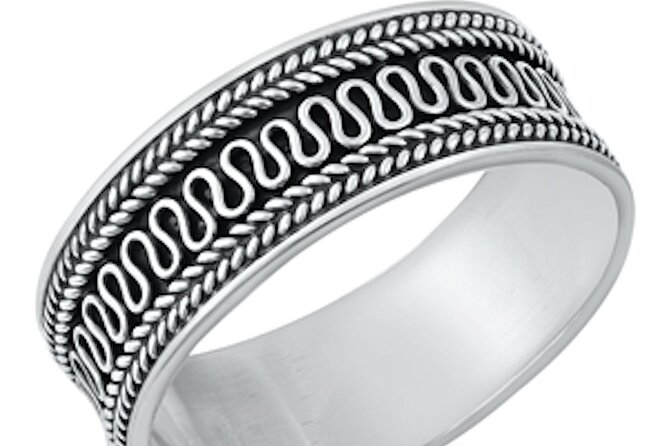
At $48 per person, this is not the cheapest craft activity you will find in Bali. It does offer more than a short demonstration: private instruction, tools, silver, drinks, snacks, and about three hours of work.
The value is strongest if you want to learn by doing. You receive individual help and leave with an object you made yourself. A shop-bought ring might cost less, but it would not include the design decisions, mistakes, techniques, and family workshop setting.
The price is less attractive if your only goal is to obtain inexpensive silver jewelry. You should also factor in transport if you need a paid hotel pickup. The transfer charges can add a sizable amount, especially from Uluwatu or the farther beach areas.
Because the silver allowance is described in two different ways, confirm that detail before paying. A clear answer will let you compare this class fairly with other jewelry workshops around Ubud.
Who will enjoy this class most
I would recommend it to couples, families, and small groups who want a shared activity with a useful souvenir at the end. It also suits parents and older children who can follow tool and safety instructions, though the supplied information does not give a specific minimum age.
It is a good match for creative people who enjoy making things with their hands. You do not need previous jewelry experience. In fact, beginners may get the most from the class because each technique is introduced from the start.
It also suits anyone who prefers a personal lesson over a large group activity. Since only your group participates, you can shape the pace around your own project.
I would think twice if you dislike detailed manual work or want a passive cultural visit. Three hours of cutting, shaping, sanding, and polishing can feel long if you would rather spend the afternoon sightseeing. The class is also not ideal for someone who wants a guaranteed complex design without extra material or time.
Timing, transport, and practical planning
The activity takes about three hours, and you finish where you started. Confirmation is provided at booking, and a mobile ticket is available.
The experience requires good weather. If poor weather causes cancellation, you are offered another date or a full refund. Since paid transfers are separate, confirm pickup details and charges before relying on the workshop to arrange your transport.
The class is generally open to most people, but the work involves hand tools and heated metal during soldering. Wear something comfortable for sitting and working, and choose clothes you do not mind wearing during a hands-on craft session.
Your best preparation is simple:
- Save two or three design ideas before arriving.
- Keep the first design fairly simple.
- Ask about the included silver amount.
- Confirm the price of extra silver if your project may need more.
- Arrange transport early if you are staying outside Ubud.
- Leave enough time after the class if you have another fixed booking.
Cancellation and booking timing
You can cancel for a full refund up to 24 hours before the local start time. Cancellations or changes made within 24 hours are not refunded or accepted.
The class is often reserved well ahead of the date, with an average booking lead time of about 24 days. That does not guarantee that every date will sell out, but it is sensible to reserve early if your Bali schedule is fixed.
The private format also makes this a useful anchor for a Ubud day. You can arrange your transport, class, and later plans around a known three-hour block instead of hoping to find a craft activity at the last minute.
Should you book the Celuk silver class?
Book it if you want a personal Bali memory that you can wear, and if you enjoy learning through your own hands. The private instruction, family-run setting, and chance to add a personal detail such as initials make this more meaningful than ordinary souvenir shopping.
I would book with two conditions. First, confirm whether your $48 includes 5 grams or 10 grams of silver. Second, decide how you will reach Celuk and add the transfer cost if needed.
If you want a polished professional piece, buy from a jeweler instead. If you want to understand how silver jewelry is made and leave with something shaped by your own decisions, this three-hour class is a strong Ubud-area choice.
FAQ
Where does the silver jewelry class take place?
The class takes place at Rajata Silver Class in Celuk, Sukawati, Gianyar Regency, Bali, outside Ubud.
How long does the activity last?
The silver class lasts approximately three hours.
Is this a private activity?
Yes. Only your group participates in the private class.
How much silver is included?
The inclusion details state that 5 grams of silver are included. The main description refers to 10 grams, so confirm the exact allowance with the provider before booking.
Can I use more silver?
Yes. Additional silver is listed at IDR 50,000 per gram.
Can I create my own jewelry design?
Yes. You can create your own design or take inspiration from samples and templates at the workshop.
Which jewelry-making techniques will I learn?
The class covers tool use, sawing, stamping, hammering, soldering, sanding, polishing, working with silver, and basic safety guidance.
Is hotel pickup included?
No. Hotel transfer is not included, but paid return transfers are available from several Bali areas, including Ubud, Sanur, Canggu, Seminyak, Kuta, Legian, Nusa Dua, Jimbaran, and Uluwatu.
What is the cancellation policy?
You can cancel at least 24 hours before the local start time for a full refund. Cancellations or changes made less than 24 hours before the start time are not refunded.
Just added around Ubud
- Bali Airport Pick-up to Ubud (Arrival Transfer)★ 5.0 · 4 reviews
- Bali Airport – Arrival Transfer★ 5.0 · 5 reviews
- Bali Airport: One-Way Private Transfer To/From Hotel★ 5.0 · 25 reviews
- Munduk Car Hire with English Speaking Driver★ 5.0 · 14 reviews
- Bali ATV Quad Bike and White Water Rafting – All Inclusive★ 5.0 · 7 reviews
- Bali ATV Ride Ubud Jungle Track★ 4.5 · 5 reviews
- Bali All Inclusive : Tlaga Singha Infinity Pool & Atv Adventure★ 5.0 · 21 reviews
- Bali ATV Ride with Jungle Swing and Rice Terrace Tour★ 5.0 · 50 reviews
Workshops, compared.
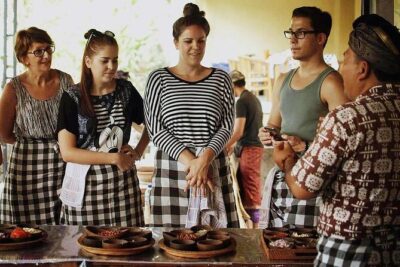
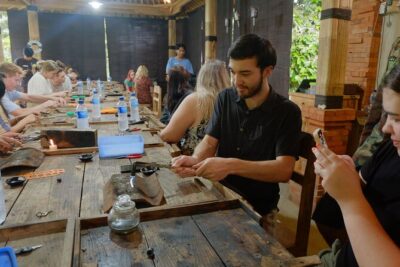

PRIVATE Authentic Balinese Cooking Class in Ubud at Putu’s Home
Read our review →

Learn to cook Indonesian food at Gili Cooking Classes Trawangan
Read our review →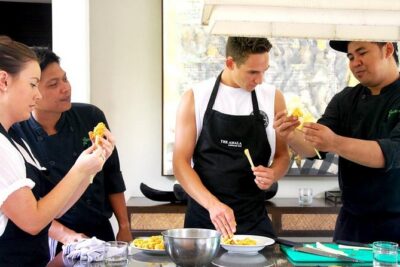


Browse the lists this tour appears in