
Reviewed · COOKING CLASSES
Authentic Balinese Cooking Classes
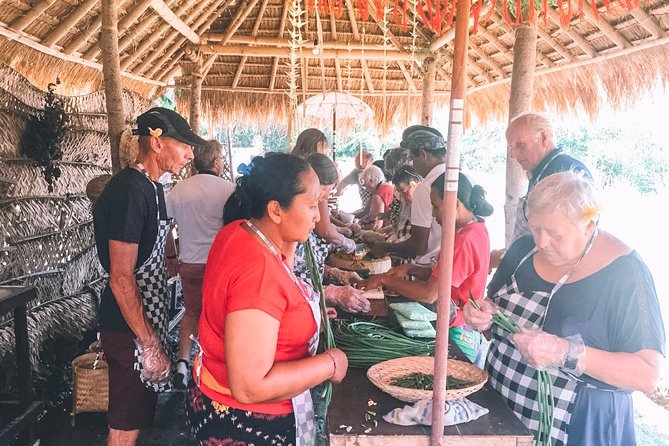
Bali’s best food lessons begin before the stove is lit. At Bakas Cooking Class, morning participants visit a local market with the chef, learn which produce to choose, and practice the friendly art of bargaining before preparing satay, nasi goreng, and black rice pudding. I especially like the hands-on cooking stations and the chance to connect food with daily Balinese life.
The class is limited to 10 people, so you should receive real attention rather than watch a chef work from across the room. I also like the included round-trip pickup from Ubud and much of south Bali. The main caution is distance: one recent visit involved a 1.5-hour drive to the site, and a delayed pickup plus a partly closed market made the day feel very different from the planned schedule.
In This Review
- Key points to know
- A cooking class that starts with the market
- The drive from south Bali to Bakas
- Choosing ingredients and learning Balinese flavor
- Three dishes, prepared from scratch
- A small group with room for questions
- Rice fields, rainforest views, and the setting
- Is $65 a fair price?
- Timing, pickup, and the practical details
- Who will enjoy this most
- Should you book Bakas Cooking Class?
- FAQ
- Where does the cooking class take place?
- Is hotel pickup included?
- Does every class include a market visit?
- What food will I prepare?
- How large is the class?
- Can I cancel for a full refund?
Key points to know
- Market visit: Morning bookings include a local market tour with lessons on produce, customs, and bargaining.
- Three Balinese dishes: You prepare and eat satay, nasi goreng, and black rice pudding.
- Small class size: Groups are capped at 10 people, with an individual station and utensils for each participant.
- Scenic setting: The cooking area may offer views toward rainforest, and some itineraries include a stop near rice fields.
- Hotel transfers: Pickup and return are offered from Ubud, Seminyak, Legian, Kuta, Nusa Dua, Jimbaran, Sanur, Denpasar, and Benoa Harbor.
- Schedule choice: Start times run from morning to afternoon, but only morning classes include the market visit.
A cooking class that starts with the market
This experience is about more than following a recipe. The morning option begins with a trip to a traditional food market, where the chef explains local ingredients, Balinese cooking customs, and the choices behind a good meal.
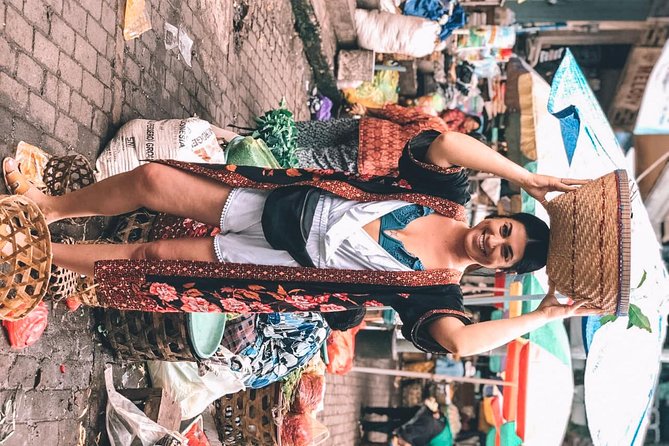
Bali’s markets open early, so this part works best for people willing to start their day promptly. You’ll see local meat, fish, and produce, then learn what to select and what to reject. The bargaining lesson is useful, too. It gives you a small but practical look at how food is bought in Bali instead of treating the market as a quick photo stop.
The market visit is also the part most sensitive to timing. A late pickup can shorten the visit, and one reported morning included a drive to a market that was partly closed. I would confirm the pickup time and market plans before setting out, especially if this is one of the main reasons you chose the class.
Afternoon bookings are worth considering if you want a slower start or do not care about shopping for ingredients. You should understand the tradeoff: the market visit is specifically tied to the morning class.
A few more Jimbaran trips to weigh up
- Ubud Cooking Class Bali with Balinese Chef
★ 5.0 · 1,609 reviews - PRIVATE Authentic Balinese Cooking Class in Ubud at Putu’s Home
★ 5.0 · 644 reviews - Balinese Ubud cooking school (9 Dish Cooking and Market Tour)
★ 5.0 · 540 reviews
The drive from south Bali to Bakas
The advertised pickup area covers a wide stretch of the island. You can request collection from addresses in Ubud and many south Bali bases, including Seminyak, Legian, Kuta, Nusa Dua, Jimbaran, Sanur, Denpasar, and Benoa Harbor.
That convenience has a cost in time. Although the tour is sold as a roughly six-hour experience, the road portion can be substantial. A reported journey from the hotel to the cooking site took about 1.5 hours. Traffic and your starting point will affect the day, but you should not assume that six hours means six hours at the cooking venue.
The location description can also be confusing. The experience is marketed in connection with Jimbaran, while the cooking class itself is described as being in Bakas, Klungkung. That is a considerable distinction when planning your day. Ask for the exact pickup window and estimated drive time from your hotel.
The upside is simple: you do not need to arrange taxis, compare drivers, or find a rural cooking venue on your own. Round-trip transport is particularly useful for a group staying in south Bali or Ubud. It also lets you enjoy the meal without worrying about getting back behind the wheel.
Choosing ingredients and learning Balinese flavor
At the market, the chef explains the ingredients used in the class and how local cooks judge freshness. This is valuable because Balinese food depends on more than a written ingredient list. The right herbs, vegetables, meat, fish, and spices affect the final taste, and the market gives you a chance to see those choices in context.
The bargaining lesson adds another useful layer. You are not simply told what something costs. You learn how to approach a purchase in a traditional market setting, with the chef helping you understand local habits and manners.
The class is conducted in English. That makes the explanations accessible, but the experience remains rooted in local food rather than being adapted into a generic international cooking lesson. You should expect the chef to explain Balinese tastes and customs as you shop and prepare the meal.
One practical point: the market part is included with morning bookings, not necessarily with every start time. If shopping for ingredients and learning to bargain are central to your plans, choose the earliest suitable departure.
Three dishes, prepared from scratch
The menu centers on three familiar Balinese and Indonesian favorites: satay, nasi goreng, and black rice pudding. That is a good mix for a cooking class because it covers a savory grilled dish, a popular rice meal, and a sweet dessert.
Satay gives you a chance to work with skewered ingredients and the cooking method that makes the dish so recognizable. Nasi goreng is an everyday-style rice dish with plenty of room for learning how ingredients and seasonings are combined. Black rice pudding finishes the meal with a traditional sweet course.
The exact recipe details are not specified in the information provided, so you should not expect a fixed list of spices or a particular protein until the chef explains the day’s ingredients. That is part of the point of visiting the market. The class connects what you buy with what you cook.
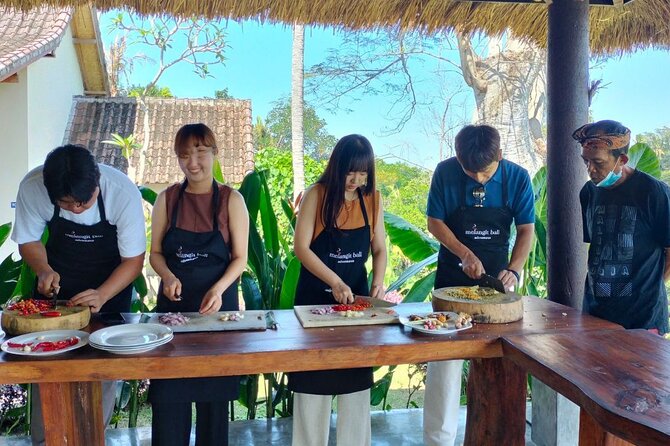
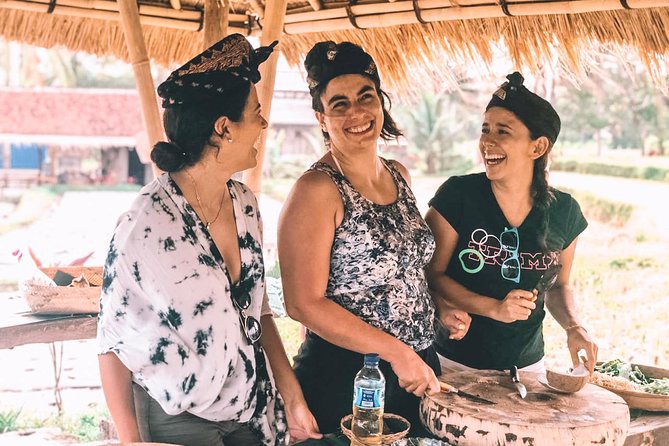
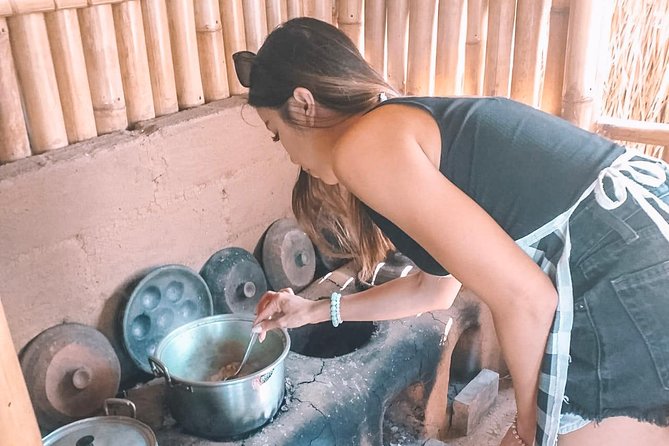
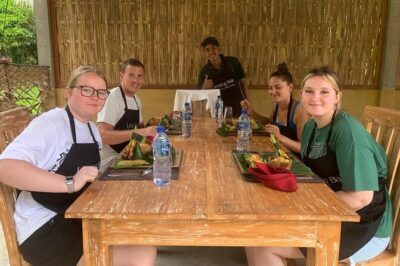
You do the work yourself. Each participant receives a cooking station and utensils, then prepares and cooks the dishes rather than merely watching a demonstration. I prefer this format because it gives you a better chance of repeating the recipes at home. You leave with recipes intended to help you recreate the meal for friends.
The meal is also part of the experience. After chopping, grinding, and cooking, you eat the food you made. That turns the class into a full half-day outing rather than a short lesson followed by a separate restaurant stop.
Same island, a completely different day out:
- Private Uluwatu Temple and Kecak Fire Dance Evening Tour in Jimbaran Bay
★ 5.0 · 1,199 reviews - Uluwatu Temple Entry and Kecak Fire Dance Ticket
★ 5.0 · 479 reviews - Kecak and Fire Dance Ticket at Uluwatu Temple
★ 4.0 · 222 reviews - Bali Instagram Tour: The Most Popular Spots ( Private All-Inclusive )
★ 5.0 · 162 reviews
A small group with room for questions
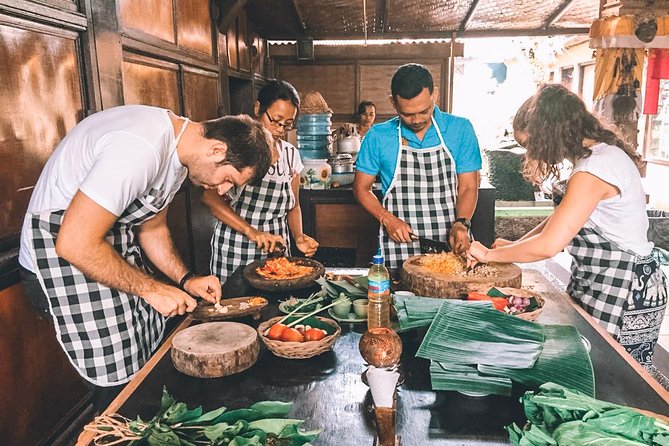
The class has a maximum of 10 participants. That is small enough to make personal help possible, though the amount of attention will depend on the final group and the pace of the session.
A cooking station for each participant is a strong practical feature. You can handle the ingredients directly, ask for help at the moment you need it, and follow the recipe with your own tools. This suits beginners who want guidance without being left to watch from the sidelines.
The teachers are described as skilled and friendly, with an emphasis on fun instruction. Gede is named in the available information and responds personally to participants after the class. One pickup was handled by Gede and his wife, which suggests that the experience may have a warm, family-run feel, although the exact staff arrangement can vary.
I would book this for people who enjoy active learning. If you dislike chopping, grinding, or following several steps in a kitchen, the class may feel long. If you like food and want more than a restaurant meal, six hours gives the day enough time to include shopping, instruction, cooking, and eating.
Rice fields, rainforest views, and the setting
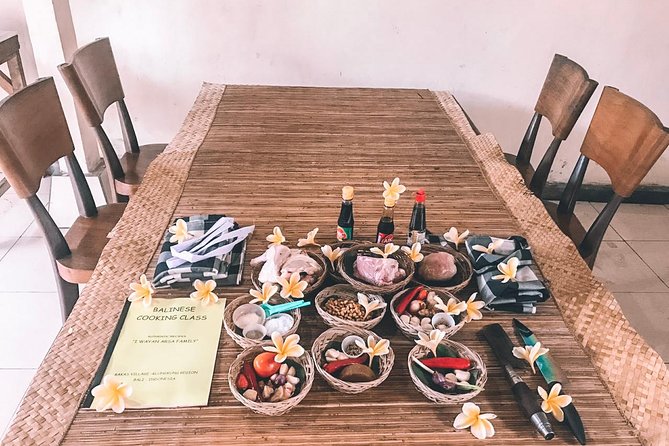
The venue is one of the class’s most appealing features. One account describes cooking with views toward rainforest, while another includes a visit near rice fields before reaching the cooking location. The setting can add a welcome change from Bali’s busier beach and resort districts.
Do not treat the scenery as guaranteed sightseeing at every start time. The supplied details connect the market with morning bookings, and the rice field stop is not presented as a formal part of every schedule. Still, the rural setting is an important reason to consider this class instead of a cooking lesson located inside a hotel or city restaurant.
The longer drive can therefore work both ways. It takes time away from the kitchen, but it may lead you into a quieter part of Bali and provide a stronger sense of the island beyond the main resort strip.
The best approach is to view the day as a food and countryside outing, not as a tightly timed cooking workshop. Build in patience for the roads, pickup changes, and the possibility that the market schedule may not run perfectly.
Is $65 a fair price?
At $65, the value depends heavily on where you stay and how much you would otherwise spend on transport. The fee includes the class, ingredients, market component for morning bookings, cooking equipment, the meal you prepare, and round-trip pickup from a broad list of Bali locations.
For someone based in Ubud, Kuta, Seminyak, or another listed pickup area, the included vehicle service can make the price reasonable. A private taxi to a rural venue and back could add a meaningful amount, especially if you are traveling alone or with only one companion.
The value is less clear if you are already near Bakas or have easy access to a cheaper local class. The experience also takes about six hours, and the drive can use a significant part of that time. You are paying for the full outing, not only the hours spent cooking.
The strongest reasons to pay the price are the small class size, direct participation, market instruction, and transport. The weakest point is the possibility that a delayed pickup or reduced market visit leaves you with less of the planned experience. Confirming the schedule in advance is a sensible step.
Timing, pickup, and the practical details
The listed operating hours run daily from 7:00 a.m. to 3:00 p.m., with a start time you can choose within the available schedule. Morning is the clear choice if you want the market. Afternoon may suit you better if you prefer a later start and mainly want the cooking lesson.
Pickup is offered, and you receive confirmation at booking. The class is near public transportation, but the included transfers are more useful than trying to piece together public transport for a rural destination.
Plan for a flexible day. One reported pickup was changed from 7:00 a.m. to 8:00 a.m. the night before, then arrived at 9:00 a.m. That is not a reason to reject the class outright, but it is a reason not to schedule a flight, spa appointment, or another fixed activity immediately afterward.
The experience offers free cancellation if you cancel at least 24 hours before the start time. Cancellations or changes inside that window are not accepted for a refund, and the cut-off follows local Bali time.
Who will enjoy this most
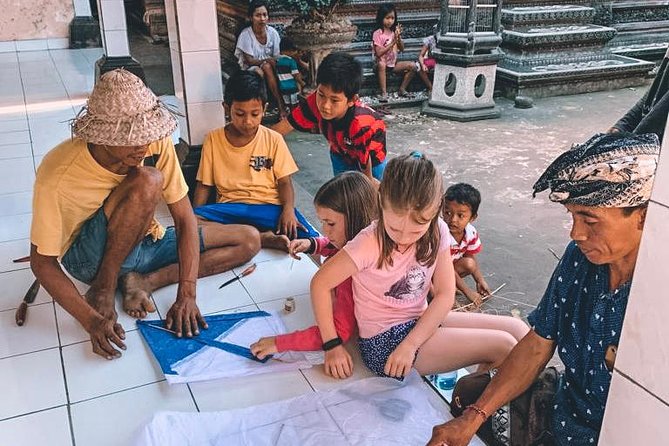
I would recommend Bakas Cooking Class to food-focused visitors who want to work with local ingredients and take recipes home. It suits couples, families, and small groups who like doing something together rather than sitting through a passive demonstration.
It is also a good fit if you want a glimpse of ordinary food shopping and countryside life. The market, bargaining lesson, and rural setting give the day more local texture than a class held entirely in a resort kitchen.
You should think twice if your Bali schedule is tight, your hotel is far from Bakas, or you need exact departure and return times. The long drive and possible pickup delays matter. People who want only a quick lesson near the beach will likely find this outing too time-consuming.
The current score is 4.4 out of 5 from seven ratings, with especially strong praise for the food, the setting, and the personal feel of the day. The main weakness is not the cooking itself, but transport and the risk that the market portion will not match the planned timing.
Should you book Bakas Cooking Class?
Book it if you want a hands-on Balinese food day with market shopping, local instruction, a scenic setting, and hotel transfers included. The combination of cooking your own meal and learning how ingredients are selected gives you something useful to take home.
Choose a morning slot for the full version, and confirm the pickup time, exact venue, and market plan before the day begins. If you can accept a long drive and a flexible schedule, $65 is a fair price for the transport, meal, instruction, and small-group format.
Skip it if your priority is speed, certainty, or a class close to Jimbaran’s beach area. In that case, a nearby cooking lesson may serve you better. For everyone else, this is a flavorful way to spend a day outside Bali’s resort routine.
FAQ
Where does the cooking class take place?
The cooking class is described as taking place in Bakas, Klungkung, Bali, although the experience is also marketed with Jimbaran as the location. Confirm the exact venue when booking.
Is hotel pickup included?
Yes. Round-trip transfers are offered from Ubud, Seminyak, Legian, Kuta, Nusa Dua, Jimbaran, Sanur, Denpasar, and Benoa Harbor.
Does every class include a market visit?
No. The market visit is included for morning bookings. Afternoon bookings may focus on the cooking class itself.
What food will I prepare?
The class includes satay, nasi goreng, and black rice pudding. You prepare and cook the dishes at your own station, then eat what you make.
How large is the class?
The activity has a maximum of 10 participants. Each person receives a cooking station and utensils.
Can I cancel for a full refund?
Yes, if you cancel at least 24 hours before the experience start time. Cancellations or changes made less than 24 hours before the start are not refunded.
Just added around Jimbaran
- Surfnesia Surf Lesson and Guiding★ 5.0 · 46 reviews
- Uluwatu Kecak Tickets A Spectacular Show★ 5.0 · 19 reviews
- Private Tour Uluwatu Temple and Kecak Sunset Dance★ 5.0 · 24 reviews
- Uluwatu Temple Entrance & Kecak Dance Tickets★ 5.0 · 9 reviews
- Bali Private inclusive tour: Best of Ubud in a Day★ 5.0 · 48 reviews
- Ubud Temples, Waterfalls, Rice Terraces & Balinese Culture★ 5.0 · 14 reviews
- Ubud Sacred Monkey Forest & Art Village Tour★ 5.0 · 11 reviews
- Ubud Customized Private Tour★ 5.0 · 10 reviews
Cooking Classes, compared.
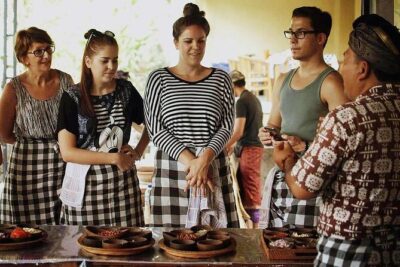
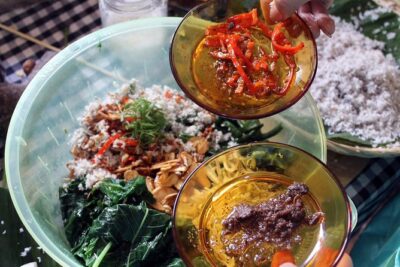
PRIVATE Authentic Balinese Cooking Class in Ubud at Putu’s Home
Read our review →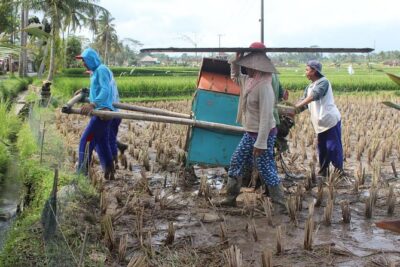
Balinese Ubud cooking school (9 Dish Cooking and Market Tour)
Read our review →
Learn to cook Indonesian food at Gili Cooking Classes Trawangan
Read our review →
Browse the lists this tour appears in