
Reviewed · WORKSHOPS
Batik Master Class with Full Process
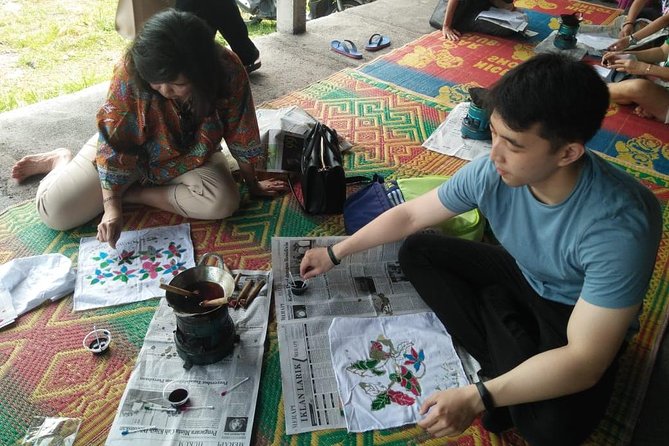
Batik here is not a quick paint-and-take-home craft. You trace a pattern, guide hot wax through a small traditional canting tool, add colors in sequence, and wait for the finished cloth to dry. The process gives you a useful glimpse into one of Yogyakarta’s signature arts, not just a souvenir with a local label.
I like two things right away: the patient one-on-one help and the chance to take home work you made yourself. The class also includes local snacks, coffee, and tea, which makes the three hours feel relaxed rather than rushed. One point to keep in mind: the cloth may still be wet when you leave, so bring a way to protect it during your ride back.
In This Review
- What makes this batik class worth your time
- Starting near Pasar Prambanan
- The first lesson: wax, cloth, and the canting tool
- Three hours of drawing, waxing, and color
- What happens after the last color
- Pairing the workshop with Prambanan
- A second temple stop at Sojiwan
- Snacks, tea, and a relaxed pace
- What the $19.50 price really covers
- Who will enjoy this and who may not
- Weather, cancellation, and simple planning tips
- Should you book the Batik Master Class?
- FAQ
- How long does the batik class last?
- Where does the activity begin?
- Where does the activity end?
- What do I make during the class?
- Are snacks and drinks included?
- Is transport included?
- Can I cancel for a full refund?
- What happens if bad weather cancels the activity?
What makes this batik class worth your time

- You complete the full process, from tracing and waxing to coloring, chemical treatment, washing, and drying.
- A local master batik artist leads the work, with English instruction and translation available for the class.
- The handkerchief-sized piece is included, while a tote bag costs a little extra.
- The workshop is near Prambanan, making it easy to pair with a temple visit.
- Sojiwan Temple is listed as a second stop, adding another cultural sight to the outing.
- Snacks, coffee, and tea are served while you work, a small touch that helps the class feel personal.
Starting near Pasar Prambanan
The meeting point is Pasar Prambanan, on Jl. Merpati No. 60 in Klurak Baru, Bokoharjo, within Sleman Regency. The activity ends at the same place, so plan your onward transport around that fixed start and finish.
This is not a workshop in central Malioboro. It sits in the Prambanan area, about 35 minutes from Malioboro according to the activity details, though your actual trip depends on traffic and where you stay. Some people arrange a private car and driver for the day. That can make sense if you also want to visit the temples, since you can keep your transport with you instead of arranging separate rides.
The class is usually booked about 10 days ahead, so I would not leave it until the last morning of your Yogyakarta stay. Confirmation arrives at booking, and the mobile ticket is convenient if you are already carrying your phone rather than a printed voucher.
The setting is described as peaceful and close to Prambanan. That matters. Batik is a slow craft, and the quieter location suits the work better than a busy shop floor would. You have time to concentrate on keeping the wax line steady without feeling that a crowd is pressing behind you.
A few more Yogyakarta trips to weigh up
- Yogyakarta Cooking Class and Market Tour
★ 5.0 · 99 reviews - Ubud Cooking Class Bali with Balinese Chef
★ 5.0 · 1,609 reviews - Ubud Silver Class Jewelry making in bali
★ 5.0 · 978 reviews
The first lesson: wax, cloth, and the canting tool
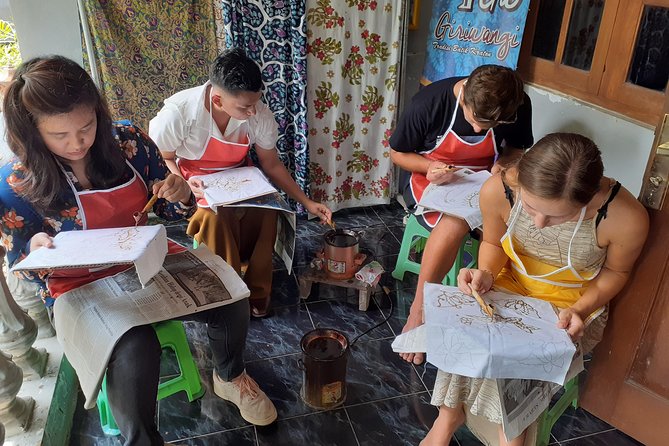
The session begins with an introduction to batik and the tools you will use. You learn how the process works, how to handle the equipment properly, and how wax controls the movement of dye through the fabric.
The key tool is the canting, a small pen-like implement used to place melted wax on the cloth. This is where the class becomes more demanding than ordinary fabric painting. The wax must travel in a controlled line, and your hand needs enough steadiness to follow the pattern.
You first trace a design. Then you outline it with wax. The wax acts as a barrier, helping keep colors in their intended sections. A first attempt rarely looks perfectly even, and that is part of the value. You are learning how the material responds, not simply filling in a printed picture.
The instructor’s role is important here. The master artist demonstrates the technique and helps you correct your grip and movement. One class account describes especially patient instruction for beginners, including reassurance that an imperfect line is still part of making art. That is a useful attitude for families and anyone who has not worked with hot wax before.
The class is conducted in English, and an English translator has been noted as part of the teaching setup. Still, ask for a demonstration whenever a spoken instruction feels unclear. With a craft like this, seeing the hand movement is often more useful than hearing another explanation.
Three hours of drawing, waxing, and color
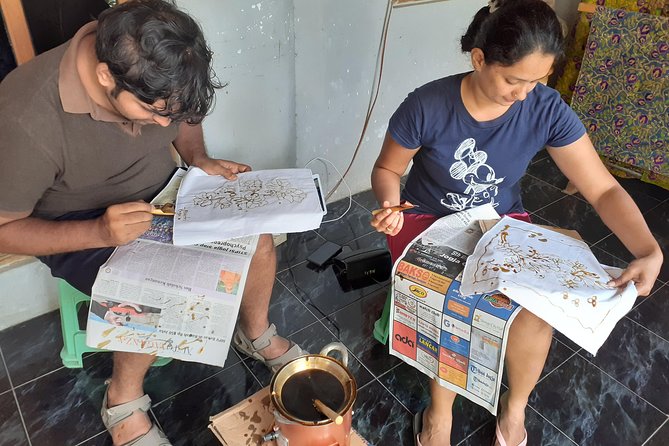
Allow about three hours for the complete process. That is enough time to draw, apply wax, and paint rather than stopping after a quick demonstration.
The order matters. You do not simply splash color onto cloth and wait for a result. The design, wax lines, and dye stages work together. You gradually see the pattern take shape as the colors are added.
For children, the coloring stage may be the easiest part to enjoy. It offers more freedom than the careful wax work, and families have found the full sequence approachable. Adults who like drawing or handmade crafts may prefer the earlier stage, when a steady hand makes the biggest difference.
I would wear something comfortable and accept that this is hands-on work. The supplied information does not specify clothing requirements, but melted wax and dye are part of the process, so practical clothes are sensible. The activity calls for a moderate level of physical fitness, though the main challenge appears to be sitting and working carefully for several hours rather than strenuous walking.
The finished piece is handkerchief-sized unless you choose the tote bag option for an extra charge. The smaller cloth is a useful choice if you want a simple, easy-to-pack souvenir. The tote gives you more usable space, but you should confirm the extra cost when booking or on arrival.
What happens after the last color
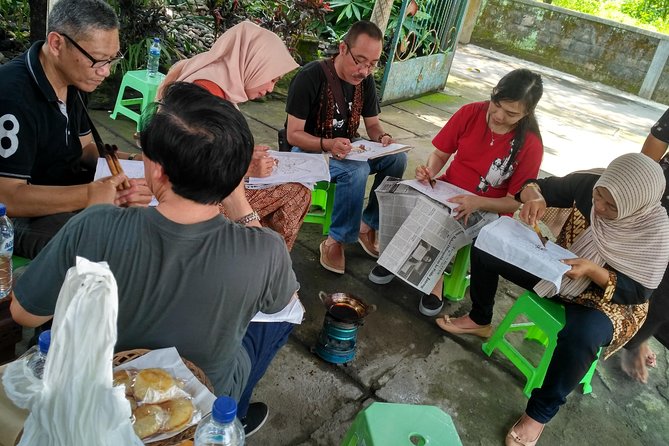
The work is not finished when you put down the brush. After coloring, the fabric is dried, soaked in a chemical solution, and then placed in water as part of the finishing process.
This final treatment is one reason the class earns its place as a full-process workshop. You see that batik is not merely painting on fabric. The wax and dye need to be handled in stages before the cloth reaches its finished form.
Timing can be important at the end. One visitor left while the piece was still wet and used newspaper to protect it in the car and hotel. I would plan for the same possibility. Ask how the cloth should be carried and dried before you leave, especially if you have a long ride or more sightseeing afterward.
The finished work is yours to take home as a souvenir. Its uneven lines may be part of the charm. You will have a small piece connected to your own time in Yogyakarta, rather than a mass-produced item picked from a shelf.
Same island, a completely different day out:
- Borobudur Sunrise from setumbu Hill , Merapi Volcano & Prambanan Full Day Tour
★ 5.0 · 1,030 reviews - Borobudur Temple Climb To The Top & Prambanan Temple – 1 day tour
★ 5.0 · 638 reviews - Menoreh Village Cycling
★ 5.0 · 611 reviews - Yogyakarta: Borobudur Top Access & Prambanan Temple Private Tour
★ 5.0 · 390 reviews
Pairing the workshop with Prambanan
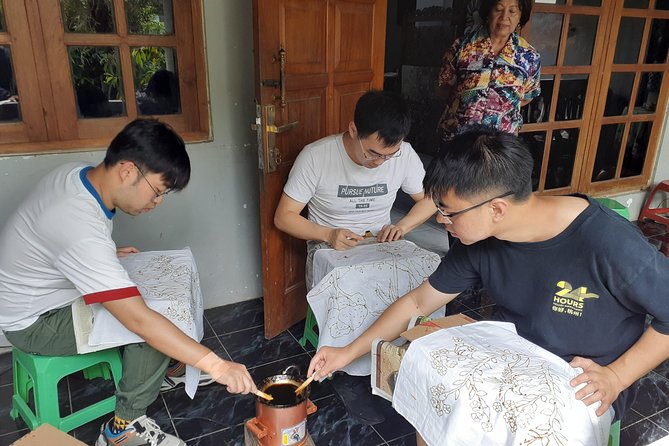
Prambanan is the obvious partner for this activity. The class is close to the temple complex, and the experience is specifically suited to a day in the Prambanan area.
The itinerary lists Prambanan Temples as the first stop. The supplied details do not specify whether temple admission, a guided temple tour, or transport between the sights is included in the $19.50 price. I would confirm that point before booking if you want a structured temple visit rather than simply combining the class with your own sightseeing plans.
This pairing works well because the two activities use different parts of your attention. At Prambanan, you spend time looking outward at monumental stone architecture. At the workshop, you slow down and work with your hands. After a temple visit, the batik class offers a quieter change of pace.
The location also makes the class a practical add-on rather than a separate cross-city excursion. If your main plan already includes Prambanan, adding a three-hour craft session can give the day more local character. If you are staying in central Yogyakarta and have no other reason to visit the area, transport becomes a larger part of the cost and time.
A second temple stop at Sojiwan
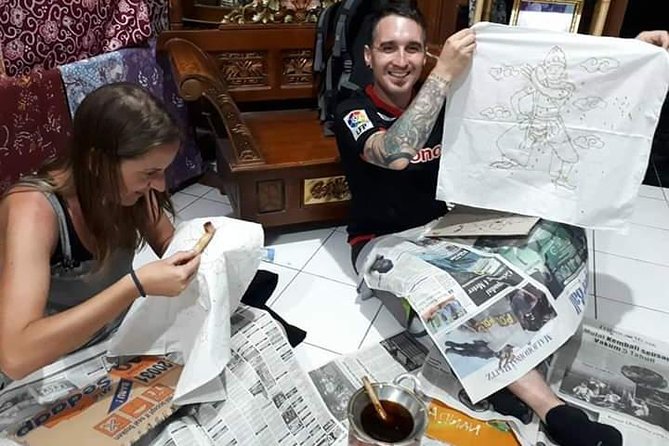
Sojiwan Temple is listed as the second stop. Its inclusion gives the outing another cultural point of interest near Prambanan, though the available information does not provide details about admission, the length of the visit, or whether a guide explains the site.
Treat Sojiwan as a possible part of the day’s temple route, and confirm the exact schedule before you go. The meeting point and end point remain at Pasar Prambanan, so you should not assume that the activity drops you at your hotel or at another part of Yogyakarta.
If you prefer a day with one major sight and one hands-on activity, you may find the listed route useful. If your priority is maximum time inside Prambanan, check how the workshop and temple stops are arranged. Three hours at the class is substantial, and the full batik process should not be squeezed into a narrow gap.
Snacks, tea, and a relaxed pace
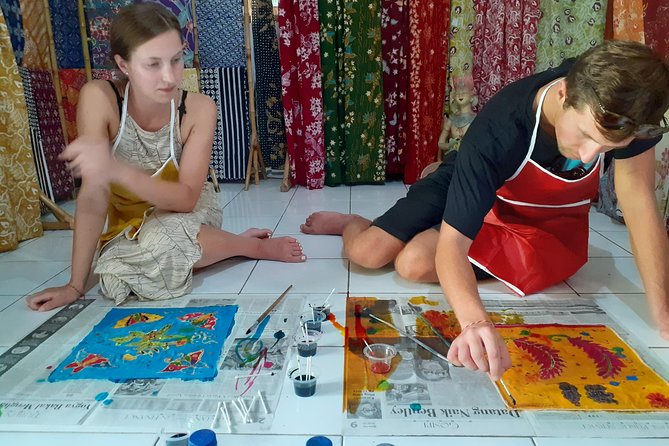
Local snacks, coffee, and tea are included while you work. This is a modest feature, but it changes the rhythm of the class. You can pause, look at the instructor’s technique, and keep working without treating the session like a formal lesson with no breathing room.
I would not book this expecting a food tour. The refreshments are part of the hospitality, not the main attraction. Their value is practical: they make a long craft session more comfortable and give you a chance to sit and talk.
The snack service also helps the experience feel connected to daily local life. You are not only receiving technical instruction, then leaving. You are spending time in a working environment with a local artist and sharing a simple break during the process.
What the $19.50 price really covers
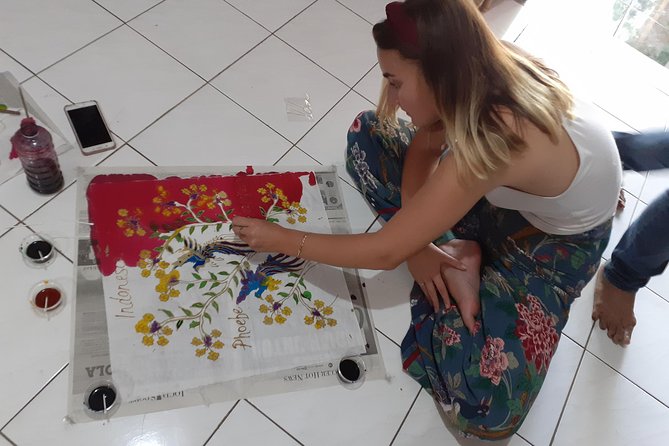
At $19.50 per person, this is a strong-value activity if you are already planning to be near Prambanan. You receive about three hours of instruction, use of the traditional tools, refreshments, and a completed handkerchief-sized batik piece to take home.
The price also covers an experience that would be difficult to reproduce on your own during a short visit. You would need fabric, wax, dye, tools, workspace, and someone to explain the order of the process. Here, the teaching and materials are organized for you.
The value is less clear if you must hire a private car solely to reach the meeting point. Transport is not stated as included, and the experience ends where it begins. For a couple or family already hiring a driver for Prambanan, the added cost makes more sense. For a solo visitor staying in central Yogyakarta, compare the transport expense with the price of the class.
The tote bag option costs extra. I like having a choice, since the handkerchief piece keeps the base price low, but you should decide what you want before starting. The larger item may take more time or require a different fee.
Who will enjoy this and who may not
I would recommend the class to you if you enjoy making things, want a souvenir with a personal connection, or are looking for an activity that works well after a temple visit. Families are a good match, especially when children are old enough to follow basic instructions and handle the coloring stage with care.
It also suits first-time visitors to batik. You do not need artistic training. The teaching is designed around the process, and the instructor helps beginners work through uneven lines and uncertain hand control.
You may prefer another activity if you want a quick stop of less than an hour. Three hours is not a minor add-on. The wax, dye, and finishing stages take time, and rushing would weaken the main reason to book.
This may also be less suitable if you need a fully detailed schedule of every temple stop and transfer. The information provided confirms the meeting point, end point, Prambanan, and Sojiwan, but not the precise order or length of each temple visit. Ask for those details if your day is tightly planned.
The maximum group size is 30 people. That is not necessarily the size of every session, but it means you should not assume a private lesson. One-on-one instruction has been part of the experience for some participants, yet the class can also accommodate a larger group. If personal attention is your main concern, request clarification before booking.
Weather, cancellation, and simple planning tips
The activity requires good weather. If poor weather causes a cancellation, you are offered another date or a full refund.
You can cancel for a full refund up to 24 hours before the start time. Changes or cancellations made less than 24 hours ahead are not accepted for a refund, and the cut-off follows local time in Indonesia.
I would keep the day flexible enough to handle a weather change. This is especially useful if you are combining the class with Prambanan and Sojiwan, since rain may affect more than one part of your plan.
A few practical reminders will make the outing smoother:
- Arrange transport to and from Pasar Prambanan, since the activity begins and ends there.
- Allow the full three hours, plus time for the temple stops if they are part of your schedule.
- Expect the batik to possibly remain wet at departure.
- Confirm the extra price for a tote bag.
- Bring your mobile ticket and keep your booking confirmation accessible.
- Ask how the finished fabric should be carried and dried.
Should you book the Batik Master Class?
I would book it if you are visiting Prambanan and want more than photographs and temple facts. The class gives you a patient introduction to a major Yogyakarta craft, lets you follow the process from wax to dye, and leaves you with something you made yourself.
The strongest reasons to go are the hands-on instruction, the unhurried three-hour format, and the low base price. Snacks, coffee, and tea are welcome extras, while the nearby temple setting makes the activity easy to fit into a Prambanan day.
I would pause only if transport from central Yogyakarta is inconvenient, your schedule is tight, or you want a guaranteed private lesson. For everyone else, especially families, couples, and first-time batik makers, this is a practical and personal way to add local craft to a temple visit.
FAQ
How long does the batik class last?
The activity lasts approximately three hours. That time covers the introduction, tracing, waxing, coloring, drying, and finishing stages.
Where does the activity begin?
It begins at Pasar Prambanan, Ps. Prambanan, Jl. Merpati No. 60, Klurak Baru, Bokoharjo, Sleman, Yogyakarta 55572, Indonesia.
Where does the activity end?
The activity ends back at the meeting point at Pasar Prambanan.
What do I make during the class?
You make a handkerchief-sized piece of batik. A tote bag is available for an additional cost.
Are snacks and drinks included?
Yes. Local snacks, coffee, and tea are provided while you work.
Is transport included?
The provided details do not state that transport is included. You should arrange your own way to and from the Pasar Prambanan meeting point.
Can I cancel for a full refund?
Yes. You can cancel at least 24 hours before the experience start time for a full refund. Cancellations made less than 24 hours ahead are not refunded.
What happens if bad weather cancels the activity?
If poor weather causes the activity to be canceled, you will be offered a different date or a full refund.
Just added around Yogyakarta
- Borobudur: Village Tour with Pottery and Tofu Making★ 5.0 · 34 reviews
- Private Borobudur Village Trip By Volkswagen Safari★ 5.0 · 3 reviews
- Chicken Church at Karangrejo Village Admission Ticket★ 4.5 · 3 reviews
- Borobudur Private Tour From Semarang Port★ 4.5 · 12 reviews
- Chicken Church Local Attraction Near Of Borobudur Temple★ 3.5 · 18 reviews
- Yogyakarta: Borobudur Temple Climb Up and Prambanan Temple Tour★ 5.0 · 53 reviews
- Borobudur Temple Combined Ticket Admissions★ 5.0 · 7 reviews
- From Yogyakarta: Borobudur &Prambanan-Bromo-Waterfall-Ijen 6 Days★ 5.0 · 9 reviews
Workshops, compared.
PRIVATE Authentic Balinese Cooking Class in Ubud at Putu’s Home
Read our review →

Learn to cook Indonesian food at Gili Cooking Classes Trawangan
Read our review →
Browse the lists this tour appears in