
Reviewed · COOKING CLASSES
Pure Bali Village Experience, Cooking & Jamu Class+VIP Transfer
The most rewarding part of this Bali day is not one big sight. It is the steady change of pace as you leave the tourist districts, walk through a mountain village, pick herbs, cook lunch, and lend a hand in a rice field. You get a practical look at daily Balinese life, not just a photo stop.
I especially like the hands-on cooking and the herb garden, where you make two kinds of jamu from plants you have just seen. I also like the small group limit of 12, plus hotel pickup in an air-conditioned vehicle. The main drawback is the early start and long day, with about 30 minutes of downhill walking and possible wet or uneven ground.
In This Review
- Key points to know
- From hotel pickup to the Batukaru foothills
- Learning rindik before the cooking starts
- Making two kinds of jamu in the garden
- Cooking a Balinese lunch at Paon Bali
- Walking the village and helping in the rice field
- Balikaru farm, animals, and stingless bees
- Entering a traditional Balinese compound
- Ending at sacred Belulang Hot Spring
- What the $89 price covers
- Who should book this village day
- Should you book Pure Bali Village Experience?
- FAQ
- What time does the tour start?
- How long does the experience last?
- Is hotel pickup and drop-off included?
- How many people can join the tour?
- Is lunch included?
- Can vegetarian dietary needs be accommodated?
- Is bathing at Belulang Hot Spring required?
Key points to know
- Jamu is a rare focus: Make and taste two traditional Indonesian herbal drinks using garden ingredients.
- Lunch is part of the lesson: Prepare nasi campur tumping, sate lilit on a bamboo grill, and lak lak dessert.
- The setting feels rural: Walk through rice terraces, village lanes, a traditional compound, and a farm.
- You can join in with local work: Try planting rice and visit animals and stingless Trigona beehives.
- The day ends at Belulang: Take an optional bath at the sacred hot spring before returning to your hotel.
- Plan for a full day: Pickup begins at 7:30 a.m., and the experience lasts about eight hours.
From hotel pickup to the Batukaru foothills
The day begins at 7:30 a.m., with pickup offered from your hotel. That door-to-door service matters in Bali, where reaching rural areas can take time and traffic can make a simple drive feel much longer.
Your transport is an air-conditioned vehicle, and the drive includes scenic stops for photographs. The route heads toward a mountain village in the Batukaru region, away from the busiest visitor centers. You are not simply being dropped at a cooking school. The drive sets up the change from resort Bali to farming country.
The tour runs for about eight hours. That gives the day room to include the cooking class, village walk, farm visit, rice planting, traditional house, and hot spring. It also means you should not book this on a day when you need to catch a flight or squeeze in another major activity.
The group can include up to 12 people. That is not a private tour, but it is small enough for the guide and chef to help with chopping, mixing, grilling, and shaping food. If you prefer a quiet, one-on-one class, this will feel more social than private. If you like learning by doing, the group format should work well.
A few more Bali trips to weigh up
- Ubud Cooking Class Bali with Balinese Chef
★ 5.0 · 1,609 reviews - PRIVATE Authentic Balinese Cooking Class in Ubud at Putu’s Home
★ 5.0 · 644 reviews - Balinese Ubud cooking school (9 Dish Cooking and Market Tour)
★ 5.0 · 540 reviews
Learning rindik before the cooking starts
On arrival, you begin with an introduction to the rindik, a traditional Balinese instrument. This is a short cultural welcome, but it gives the day a useful frame. You are introduced to something connected to local music before moving into food, farming, and village life.
The presentation is followed by a walk through an herb and spice garden with more than 40 varieties of plants. This is one of the strongest parts of the experience because it connects the ingredients to their source. Instead of seeing herbs already cleaned and arranged in bowls, you can examine the plants and learn how they fit into Balinese cooking and traditional drinks.
The garden portion also helps you understand jamu. Many visitors know Bali for rice terraces, temples, and beach resorts, but jamu is an important part of Indonesian food and wellness culture that can be easy to miss. Here, it is not treated as a bottled souvenir. You make it yourself and taste two types.
Making two kinds of jamu in the garden
At the Jamu Pavilion, your guide shows you how to prepare two jamu drinks. The class includes jamu production along with jamu and fruit tasting, and the herbs come from the garden tour.
The value here is the connection between place and flavor. You have just walked among the plants, and now you use them in a drink. You will likely notice that jamu has a stronger, more earthy character than the sweet fruit drinks common around Bali. The activity is a good fit if you enjoy food traditions, plant-based ingredients, or learning simple recipes you can remember after the trip.
The description calls jamu an ancient health drink. It is best to approach it as a traditional beverage, not as a medical treatment. The class is about cultural use, preparation, and taste. Personal drinks and other expenses are not included, so bring some cash if you want anything beyond the planned tasting and lunch.
Cooking a Balinese lunch at Paon Bali
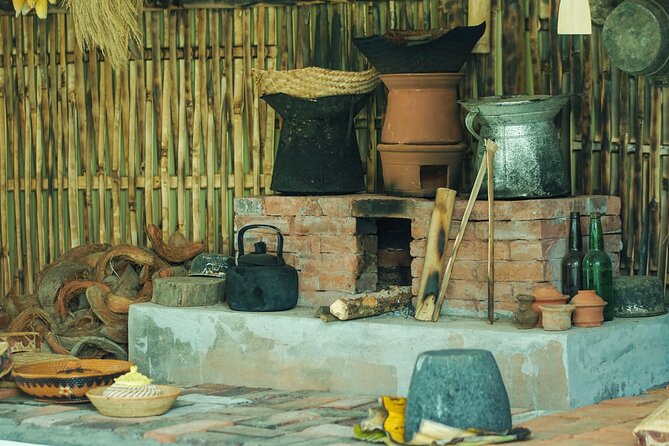
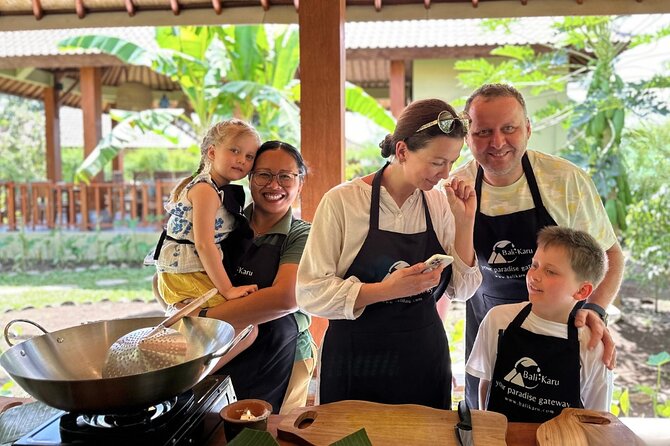
The cooking class takes place at Paon Bali, an open-air Balinese kitchen. You work with a chef and prepare an authentic meal, rather than watching a demonstration from the side.
The menu includes nasi campur tumping, dessert, and sate lilit. Nasi campur is a mixed rice meal with accompanying dishes, while sate lilit is a Balinese preparation in which seasoned meat or another mixture is shaped around a skewer. The live bamboo grill station gives the class a more local feel than a standard indoor cooking lesson.
You also learn to make lak lak, a Balinese dessert, using a traditional clay pot. This detail makes the class more than a generic Southeast Asian food session. The tools and cooking methods are part of the lesson, and the open-air setting lets you see how the food is prepared.
The class is designed for active participation. You should expect to chop, mix, shape, cook, and work alongside the other people in your group. That is why the small group size matters. A large class can turn a cooking activity into a long wait for your turn. Here, the format is set up for more direct help.
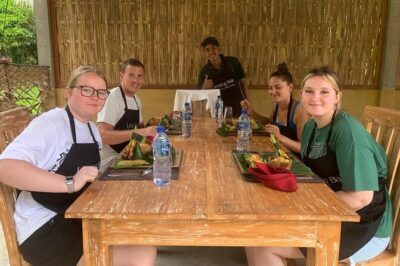
Afterward, you eat the lunch you prepared. This is a simple but important payoff. You are not just collecting recipes. You are sitting down to a meal connected to the work you have done that morning, with the village surroundings adding to the experience.
Vegetarian dietary needs can be accommodated if you provide the information when booking. Other dietary requirements should also be stated in advance. Do not assume every substitution is automatic once you arrive.
Same island, a completely different day out:
- Mount Agung Sunrise Trekking Tour
★ 5.0 · 156 reviews - Bali Pura Taman Ayun Temple, Monkey Forest & Tanah Lot Excursion
★ 4.0 · 123 reviews - Denpasar Arrival Transfer: Airport to Hotel
★ 4.5 · 105 reviews - Private Tour: Bali UNESCO World Heritage Sites
★ 5.0 · 62 reviews
Walking the village and helping in the rice field
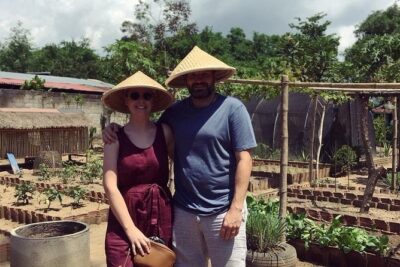
After lunch, the day shifts from kitchen work to farm work. You can help with rice planting, an activity that gives you a better sense of the labor behind Bali’s famous rice fields.
This is not a staged photo stop. The point is to try the task yourself, even if only briefly. Expect the possibility of mud, water, and awkward footing. Wear clothes and shoes that can handle outdoor work, and avoid bringing anything you would not want splashed.
A soft trek of about 30 minutes downhill is included. The walk takes you through the village and offers mountain views, rice terraces, and contact with local surroundings. The downhill direction may sound easy, but uneven village paths can be harder than expected, especially in wet weather. You will need to walk back or continue through the route in some form, so this is not ideal for anyone looking for a fully vehicle-based day.
The rural setting is the chief reward. You are given time to look around rather than being rushed from one quick attraction to another. You might see farmers at work, gardens, local homes, and the patterns of village life that are easy to miss from a car window.
Balikaru farm, animals, and stingless bees
The visit to Balikaru farm adds another useful layer. You can see farm animals and stingless Trigona beehives, with chances to feed a cow and learn about the bees.
Stingless bees are especially interesting for anyone who likes small-scale farming and local food production. The stop shows that a village experience is not only about scenery. It is also about the plants, animals, and working systems that support daily life.
The tour information also lists optional activities such as trying a traditional instrument and feeding a cow. Not every listed activity is described as a fixed, timed station, so the exact order may depend on the day and local conditions. Think of the farm portion as an opportunity to take part, not a guarantee that you will spend a set amount of time with every animal.
The same applies to rice planting. Weather, farming schedules, and ground conditions can affect what is practical. The core theme is participation in village life, but the precise details may vary.
Entering a traditional Balinese compound
The village walk includes a visit to an authentic Balinese compound. You learn about Asta Kosala architecture, a traditional design system influenced by Balinese Feng Shui.
This stop matters because a Balinese home compound is not just a collection of buildings. Its layout reflects ideas about family, space, direction, and daily life. A guide can explain those connections in a way that a quick roadside photograph cannot.
Be respectful here. You are entering a lived cultural space, not a museum display. Listen to instructions, dress modestly, and ask before taking photographs. The experience is presented as a chance to learn about local architecture and home life, so your attitude will shape how much you get from it.
The architectural visit also balances the food and farming activities. By this point, you have seen what people grow and prepare. The compound helps show how village life is organized around family and place.
Ending at sacred Belulang Hot Spring
The final stop is Belulang Hot Spring. You can choose an optional bath before heading back to your hotel.
A hot spring is a fitting end after the downhill walk and rice-field activity. Bring swimwear, a towel, and a change of clothes if you plan to bathe. The supplied details do not specify whether towels or changing facilities are provided, so it is sensible to ask the operator before departure rather than assume.
Some descriptions of the experience also refer to a purification ceremony. Purification is not listed among the standard inclusions in the main tour details, so treat it as a possible addition that needs confirmation. The included activity is the visit to Belulang and the optional bath.
The hot spring is described as sacred, which gives the stop cultural meaning beyond simply soaking in warm water. Follow local guidance on bathing, behavior, and photography. The day ends here, then your vehicle takes you back to your hotel.
What the $89 price covers
At $89 per person, this is priced as a full-day rural outing rather than a basic cooking class. The cost includes hotel pickup and drop-off, an air-conditioned vehicle, scenic stops, an English or German-speaking guide, the rindik introduction, garden tour, jamu activity, cooking class, lunch, rice planting, farm visit, village walk, traditional compound visit, and Belulang Hot Spring.
You also receive a farewell gift and a personal cooking class certificate by email after the tour. Those are pleasant extras, but the real value is the amount of time and instruction packed into the day.
The price makes the most sense if you want several experiences in one outing: food, plants, village architecture, farming, and a hot spring. If your main goal is simply to learn Balinese cooking, a shorter class may cost less and leave you more free time. If you want a rural day with transport included, the $89 fee is easier to justify.
Group discounts are available. The maximum group size is 12, which keeps the class from feeling like a large production but does not promise a private experience.
Who should book this village day
I would choose this tour if you want to understand more of Bali than its beaches and major sights. It suits couples, families, and small groups who enjoy being active and trying unfamiliar foods and customs.
It is also a good match for anyone who likes structured cultural activities. You are never left wondering what to do next: the day moves from music to plants, drinks, cooking, lunch, farming, architecture, and bathing.
Families should note that the day is long and includes a downhill walk, outdoor work, and a hot spring. Children who like animals, cooking, and hands-on tasks may have a great time, but the pace may not suit very young children who need frequent breaks.
This is less suitable if you want a slow spa day, a luxury food tour, or a fully private itinerary. You should also think twice if walking on rural paths or taking part in muddy rice planting will be difficult.
The experience requires good weather. If poor weather causes cancellation, you are offered another date or a full refund. You can cancel for a full refund up to 24 hours before the start time. Service animals are allowed.
Should you book Pure Bali Village Experience?
Book it if your ideal Bali day includes cooking your own lunch, learning to make jamu, walking through rice country, and meeting the people and places behind the food. The mix is unusually broad, and the hotel transfer removes much of the effort involved in reaching a mountain village.
I would be especially keen to book if I had already seen Bali’s major temples and wanted a more local, practical day. The strongest elements are the garden-to-jamu connection, the open-air cooking class, and the chance to try rice planting rather than only photograph it.
Skip it if you want a short activity, a guaranteed private guide, or a polished resort-style excursion. Check the walking conditions, bring suitable clothes for the farm and hot spring, and confirm any purification ceremony or special dietary needs in advance. For most people seeking a thoughtful day away from Bali’s main visitor centers, the $89 price is fair.
FAQ
What time does the tour start?
Pickup begins at 7:30 a.m.
How long does the experience last?
The experience lasts approximately eight hours.
Is hotel pickup and drop-off included?
Yes. Pickup is offered, and the experience includes hotel pickup and drop-off in an air-conditioned vehicle.
How many people can join the tour?
The group can include a maximum of 12 people.
Is lunch included?
Yes. You prepare and eat a Balinese lunch of nasi campur tumping, along with dessert made during the cooking class.
Can vegetarian dietary needs be accommodated?
Yes. Vegetarian needs can be accommodated, but you should provide dietary information in the special requirements section when booking.
Is bathing at Belulang Hot Spring required?
No. Bathing at Belulang Hot Spring is optional. You visit the hot spring at the end of the day before returning to your hotel.
More Workshops in Bali
- Ubud Silver Class Jewelry making in bali
★ 5.0 · 978 reviews - Balinese Farm Cooking Class by Pemulan Bali
★ 5.0 · 410 reviews - Learn to cook Indonesian food at Gili Cooking Classes Trawangan
★ 5.0 · 352 reviews - Balinese Cooking Class in Seminyak
★ 5.0 · 281 reviews
Just added around Bali
- Private Tour – Ubud Kintamani Tours★ 5.0 · 7 reviews
- Bali ATV Ride with Waterfall Dragon Cave and Lunch by Penidago★ 4.5 · 7 reviews
- The Three Temples of Bali Half Day Private Tour★ 4.0 · 5 reviews
- Private Departure Transfer: Hotel to Bali Airport★ 3.5 · 14 reviews
- Private Arrival Transfer: Bali Airport to Hotel★ 3.5 · 47 reviews
- Bali Mangrove Canoeing Tour★ 4.5 · 3 reviews
- Mount Agung Sunrise Trekking Private Tours★ 5.0 · 11 reviews
- Mount Batur Jeep Sunrise by 4WD with Breakfast★ 5.0 · 18 reviews
Cooking Classes, compared.
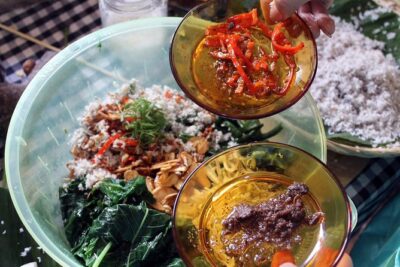
PRIVATE Authentic Balinese Cooking Class in Ubud at Putu’s Home
Read our review →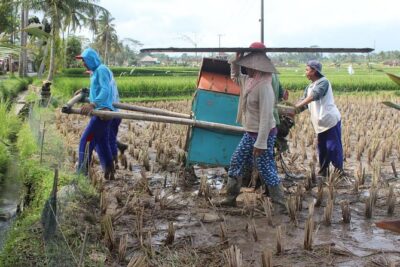
Balinese Ubud cooking school (9 Dish Cooking and Market Tour)
Read our review →
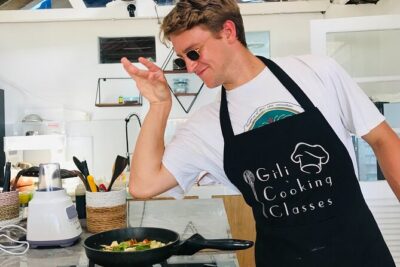
Learn to cook Indonesian food at Gili Cooking Classes Trawangan
Read our review →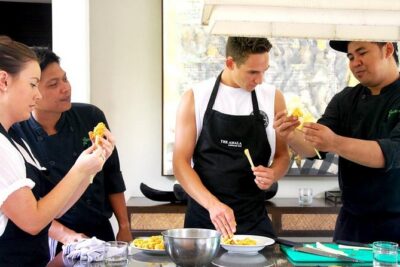
Browse the lists this tour appears in