
Reviewed · HIKING & TREKKING
Rinjani Trekking Three Days Two Night Summit Lake
Mount Rinjani gives you the kind of mountain day that stays in your head: a cold start through farmland and rainforest, a crater lake far below, and a sunrise from 3,726 meters. This is not a casual walk with a nice view at the end. It is a serious three-day climb with camping and long stretches on steep ground.
I like the route for two clear reasons. First, it combines several sides of Rinjani, from local farm fields to forest, crater rim, lake, volcano, and summit. Second, the small maximum group of 10 people should make the pace and guide support more manageable than a large commercial trek.
The catch is plain: the summit push and the descent are hard. One detailed account called the hike brutal and recommended it only for experienced trekkers. A moderate fitness level is required at minimum, but strong hiking experience will make this much more enjoyable.
In This Review
- Key details before you book
- What this Rinjani route actually asks of you
- Day one, from farmer fields to the first camp
- Day two, the crater rim and Segara Anak Lake
- Day three, the 3,726-meter summit push
- The views are varied, not repetitive
- How the $519.54 price measures up
- Fitness, pacing, and the honest difficulty warning
- Planning the start from the Gili Islands
- Weather and cancellation flexibility
- Who will enjoy this trek most
- Should you book the Rinjani three-day trek?
- FAQ
- Where does the Rinjani trek start?
- How long does the experience last?
- How high is the summit?
- Is Mount Rinjani National Park admission included?
- How difficult is the trek?
- How many people can join the group?
- What happens if bad weather cancels the trek?
Key details before you book
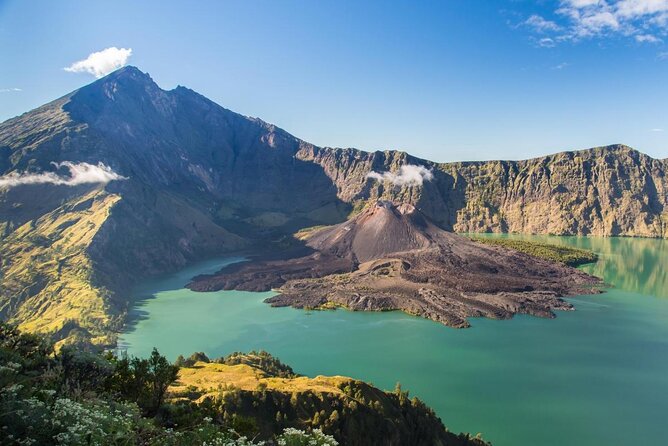
- Sunrise at 3,726 meters: The final climb begins early enough to reach Mount Rinjani’s summit for morning light.
- Segara Anak Lake: Day two includes a roughly two-hour descent from the crater rim to the lake.
- Three days of real exertion: The route includes long climbs, steep descents, camping, and a demanding summit day.
- A small group cap: No more than 10 people are scheduled for the activity.
- Start in Bangsal: The stated meeting point is in Pemenang, North Lombok, at 7:00 am, with pickup offered.
- Weather matters: Poor conditions can lead to a new date or a full refund.
What this Rinjani route actually asks of you
I would think of this as a mountain expedition rather than a sightseeing trip. The reward is a changing view at every stage, but you need to accept early starts, basic camping, and tired legs.
The schedule covers three days and two nights. That extra night matters because the route does not rush straight up and down in one punishing day. You get time to reach the crater area, spend time near Segara Anak Lake, and make the summit attempt with sunrise as the goal.
Still, the pace is not gentle. The available description calls for a two-hour descent to the lake on day two and a three-hour climb to the summit on day three. Those figures do not include every section of walking, breaks, the return to camp, or the final descent. Plan around a full physical challenge, not just the headline times.
The group limit of 10 is useful. On a mountain route, a smaller party can make it easier to keep track of everyone and adjust the pace. It does not make the trail easy, but it should help the trip feel less crowded and more personal.
A few more Lombok trips to weigh up
- 2D1N Senaru Crater Rim Trekking
★ 5.0 · 178 reviews - Rinjani trekking 2D 1N RIM
★ 5.0 · 94 reviews - 3D/2N Rinjani trekking summit,lake and hot springs.
★ 5.0 · 85 reviews
Day one, from farmer fields to the first camp
The trek begins at 7:00 am from the Bangsal meeting area. Since pickup is offered, confirm the exact pickup arrangement before the morning of departure. The stated ticket redemption point is Bangsal, 83352, Pemenang Bar., in North Lombok.
The first part crosses local farmer fields. This is a good start for anyone who likes seeing how a mountain region is used by the people who live there. You are not dropped straight into a trailhead with only trees and rocks. The route begins among working countryside before moving into thicker vegetation.
The morning timing also makes sense. The tropical rainforest is described as cooler in the early hours, and that can matter on a climb where heat quickly adds to the effort. The forest provides a different mood from the open crater areas later in the trip, with shade and a more enclosed trail.
Lunch is scheduled at base camp III at about noon. The supplied itinerary is not fully clear about the exact camp details, so I would confirm what is included in the booking before you go. Do not assume that every meal, piece of equipment, or porter service is covered unless the provider spells it out.
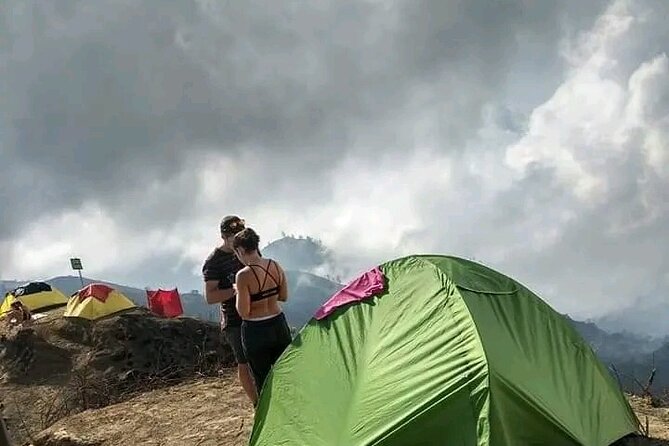
The first day also brings the first camping element. You should expect this to be a functional mountain camp, not a comfortable hotel substitute. The point is to gain height and position yourself for the next section, not to spend a relaxed afternoon.
The itinerary also refers to Rinjani’s monkeys. That adds a small wildlife note to the forest approach, but you should treat any animal sighting as a possibility rather than a scheduled event. The main attraction remains the mountain itself.
Day two, the crater rim and Segara Anak Lake
Day two takes place in Mount Rinjani National Park and is listed as an eight-hour day. You can get up early to watch the sunrise from the rim, then have breakfast while taking in the lake view.
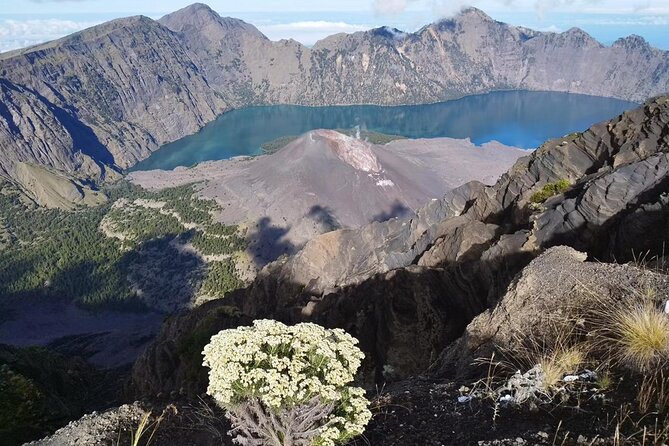
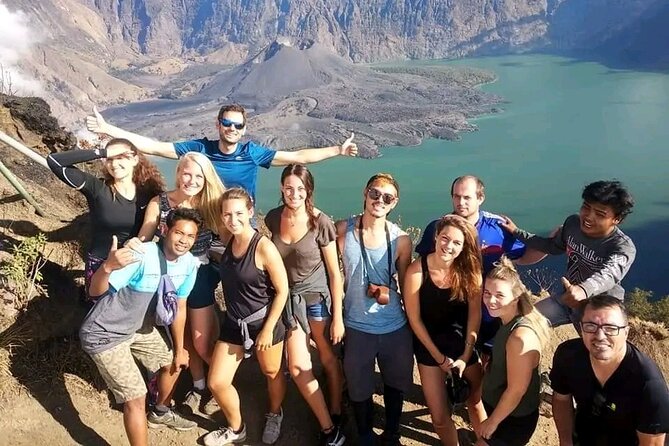
That rim is one of the strongest parts of the route. From high ground, you see the blue-green form of Segara Anak Lake inside the volcanic crater, with other volcanic shapes around it. The view gives you a sense of Rinjani as a living volcanic setting rather than just a high summit.
The route then drops for about two hours into the crater toward the lake. This descent is important to understand. Going downhill may feel easier at first, but steep descents can be rough on knees and ankles, especially after the previous day’s climb. Trekking poles, if you already use them, can be helpful, though the tour information does not state whether equipment is supplied.
Reaching the lake changes the character of the trip. You are no longer looking down from the rim. You are walking into the volcanic basin and seeing the scale of the crater from within it. The itinerary says you will enjoy the lake area, but it does not provide enough detail to confirm every activity or stop there, so ask the operator what time is available at the lake and what the day’s camp location will be.
The eight-hour estimate makes day two substantial even before you factor in breaks and photo stops. I would not schedule a busy activity for the evening after this trek. Keep your plans flexible and let the mountain day take the time it needs.
Admission to Mount Rinjani National Park is listed as included for this day. That is useful because national park access is part of the experience, not an optional extra you discover at the gate.
Day three, the 3,726-meter summit push
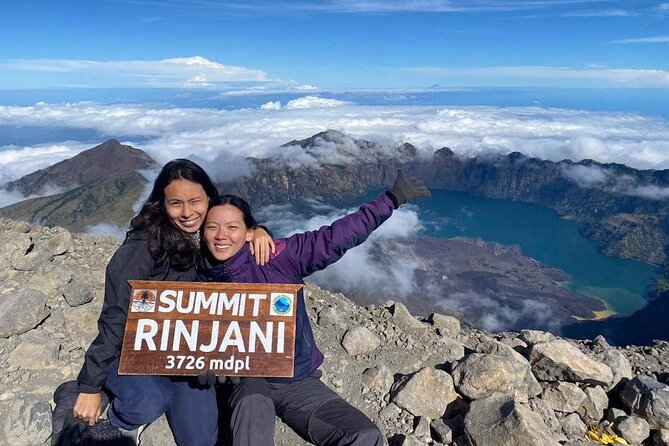
Day three is the most demanding part of the trip. The stated plan calls for a three-hour climb to the summit of Mount Rinjani, reaching 3,726 meters in time for sunrise.
This is the moment that gives the tour its strongest appeal. Morning light from the summit can reveal the crater, lake, surrounding peaks, and the island setting in one wide view. The description promises views of lakes and volcanoes, and this is where those elements come together.
The timing also means you will be walking before normal breakfast hours. You need to be ready for darkness, cold, and a hard uphill effort, but the supplied information does not specify the exact departure time from camp. Confirm that detail with Gili Recommended, since it affects sleep, clothing, and how you prepare the night before.
The summit climb is not simply three hours of steady stairs. The route description gives a time estimate, but the difficulty can change with weather, footing, altitude, and your own condition. One account described the uphill and downhill sections as brutal, which is a fair warning for anyone who mostly exercises at sea level.
After enjoying the summit, you return to camp. The itinerary places the descent to camp around late morning, approximately 10:00 am, then continues downward. Day three is listed as a 10-hour day, making it the longest and hardest section on paper.
This is where many people will feel the price of the sunrise. You do not finish at the summit. You must descend after several hours of effort, and downhill walking can be as tiring as the climb. If your knees, ankles, or feet are weak, this is the part to take seriously.
Same island, a completely different day out:
- Learn to cook Indonesian food at Gili Cooking Classes Trawangan
★ 5.0 · 352 reviews - Tetebatu Walking Tour – Rice Terraces, Waterfall & Monkey Forest
★ 5.0 · 349 reviews - Gili Island Snorkeling Trip – Gili Trawangan, Gili Meno, & Gili Air, From Lombok
★ 5.0 · 330 reviews - Snorkeling with turtle and statue in Gilis
★ 4.5 · 301 reviews
The views are varied, not repetitive
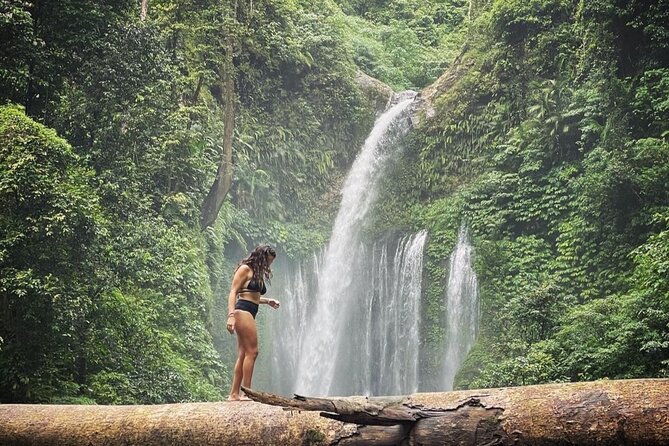
I like the route because it does not give you only one famous viewpoint. You move through farm fields, tropical rainforest, crater rim, lake, and summit terrain.
The contrast is the real pleasure. The forest feels enclosed and shaded. The rim opens the view across the volcanic crater. The lake gives you a closer look at the crater floor. The summit then puts the whole setting into one broad picture.
The scenery is a major reason to book, but it should not hide the physical cost. You need to earn these views with long hours on foot. If you want a relaxed volcano outing with short walks and vehicle access, this is the wrong product.
The route also offers a more direct connection to Lombok’s rural setting than a standard viewpoint visit. Starting among farmer fields gives the first day a local character, while the national park sections show the mountain in its protected natural setting.
How the $519.54 price measures up
At $519.54 per person, this is an expensive outdoor activity compared with a short day tour around the Gili Islands. The right comparison is not a boat trip or a beach excursion. You are paying for a three-day guided mountain program with camping, park access on at least part of the route, and a structured summit attempt.
The value depends on what is included in the final booking. The supplied information confirms the tour length, group limit, pickup availability, and national park admission for day two, but it does not list every inclusion. Before paying, ask about meals, camping gear, sleeping arrangements, transport, porter support, and any equipment rental.
I would also compare the price with the amount of direct guide support you need. A strong guide matters more on a summit route than on a simple walk. The small group cap is a positive sign, though it does not by itself prove how much personal attention you will receive.
For someone who wants a serious Rinjani experience and prefers a planned three-day route, the price may be reasonable. For someone uncertain about fitness or uncomfortable with basic camping, no price becomes good value if the trip turns into a struggle.
Fitness, pacing, and the honest difficulty warning
The official requirement is a moderate physical fitness level. I would treat that as a floor, not a target.
The detailed experience of the route points to a higher standard. You need to handle long walking days, a two-hour descent to the lake, a three-hour pre-sunrise summit climb, and a 10-hour final day. You also need enough recovery to keep going on day three.
You do not have to be an elite athlete. But you should be comfortable with sustained uphill and downhill walking before booking. If your normal activity is occasional flat walking, this will likely feel far harder than expected.
A useful sign is how your body responds to several hours on uneven ground. If you can already manage long hill walks without major knee, ankle, or foot trouble, you are a better match. If you have current physical complaints, speak honestly with the operator before departure.
A previous booking was changed from three days to two because of physical problems, and the change was handled without trouble. That is encouraging, but I would not treat it as a guaranteed option. Ask in advance what changes are possible and what costs might apply.
Planning the start from the Gili Islands
The tour is associated with the Gili Islands, but the stated meeting point is in Bangsal on Lombok. That distinction matters. You need to know how you will reach Bangsal by the 7:00 am start, or confirm exactly where the offered pickup begins.
I would not leave this until the last evening. Send the provider your location and ask for the pickup time, meeting instructions, and any transport connection you need. The listing confirms pickup is offered, but it does not give a detailed transfer schedule.
The tour is booked, on average, 28 days ahead. That suggests you should not wait until the last minute if your dates are fixed. It also gives you time to prepare physically and clarify what the price covers.
The group maximum is 10 people. If you value a quieter pace, ask whether your date is likely to be full. The cap gives a useful limit, but the actual feel of the trek depends on the final group size and the range of fitness within it.
Weather and cancellation flexibility
Rinjani is a weather-dependent mountain route. If poor weather cancels the activity, you are offered a different date or a full refund.
You can also cancel for a full refund up to 24 hours before the experience starts. Cancellations made less than 24 hours before the start time are not refunded, and late changes are not accepted. The cutoff follows local time.
That policy is fairly helpful for a demanding outdoor trip, but it does not remove the need to plan carefully. Check the forecast, keep your schedule open, and avoid arranging an important same-day flight or ferry connection after the trek.
Who will enjoy this trek most
I would recommend this experience to you if you want a serious mountain challenge and care more about the summit, lake, and crater views than comfort.
It suits:
- Hikers with experience on long uphill and downhill routes
- People who want three days rather than a rushed summit outing
- Visitors who enjoy camping and early morning starts
- Anyone attracted to a route that includes forest, farmland, crater, lake, and volcano views
- Small groups who prefer a maximum of 10 participants
I would be cautious if you are new to hiking, have current physical problems, or want a soft adventure from the Gili Islands. The moderate fitness requirement understates how demanding the full schedule may feel.
Should you book the Rinjani three-day trek?
Book it if your main goal is to see Rinjani properly, including Segara Anak Lake and sunrise from the 3,726-meter summit. The scenery is excellent, the route has real variety, and the small group limit improves the practical appeal.
Skip it if you are choosing mainly by price, dislike camping, or are hoping for an easy volcano walk. The $519.54 cost can be worthwhile for a well-supported three-day expedition, but only if you are fit enough to enjoy the hard parts.
My advice is simple: confirm pickup from the Gili Islands, ask exactly what the fee includes, and judge yourself by your recent hill-walking ability rather than by the phrase moderate fitness. If that check is reassuring, this is the kind of demanding trip that can become the highlight of your time in Lombok.
FAQ
Where does the Rinjani trek start?
The stated meeting point is Bangsal, 83352, Pemenang Bar., in North Lombok. The tour starts at 7:00 am, and pickup is offered.
How long does the experience last?
The trek lasts approximately three days and includes two nights of camping.
How high is the summit?
The summit of Mount Rinjani is listed at 3,726 meters.
Is Mount Rinjani National Park admission included?
Admission is listed as included for the Mount Rinjani National Park visit on day two. Day three is listed with no admission ticket charge.
How difficult is the trek?
A moderate physical fitness level is required. The route includes a roughly two-hour descent to Segara Anak Lake, a three-hour summit climb, and a 10-hour day three, so you should be prepared for a demanding hike.
How many people can join the group?
The activity has a maximum of 10 participants.
What happens if bad weather cancels the trek?
If poor weather causes cancellation, you are offered a different date or a full refund. You can also cancel up to 24 hours before the start for a full refund.
More 3-Day Experiences in Lombok
- 3 Days and 2 Nights Summit Via Sembalun
★ 5.0 · 91 reviews - Rinjani Trekking 3D2N Summit
★ 4.5 · 85 reviews - Rinjani Trekking 3 Days 2 Nights (Sembalun – Senaru)
★ 5.0 · 84 reviews - 3 Days Tour in Mount Rinjani Summit with Lake Hiking
★ 5.0 · 33 reviews
Just added around Lombok
- Trekking Rinjani Volcano To Crater Rim Senaru 2D-1N Private – Syam Trekker★ 5.0 · 45 reviews
- Waterfall Tour And Sasak Traditional Tour★ 5.0 · 3 reviews
- Full-Day Private Trip to South Lombok★ 5.0 · 15 reviews
- MODERATE HIKING: 2D/1N Crater Rim Senaru | Rinjani Samalas Tour★ 5.0 · 8 reviews
- Trekking Rinjani Mountain Summit 2 Days 1 Night – Em Adventure★ 5.0 · 42 reviews
- Trekking Rinjani 1 Day Trek Senaru Crater Rim★ 5.0 · 3 reviews
- Panorama Walking Tour and Culture, West Lombok★ 5.0 · 6 reviews
- Fantastic trip to Sindang Gile & Tiu Kelep Waterfall★ 4.5 · 3 reviews
Hiking & Trekking, compared.

Mount Batur Sunrise Hike and Natural Hot Spring Option
Read our review →
Mount Batur Sunrise Trekking Private All Inclusive
Read our review →
Mount Batur Sunrise Trekking (Private Tour and Breakfast at Restaurant)
Read our review →
Private Tour Mount Batur Sunrise Trekking and Natural Hot Spring
Read our review →
Private Tour : Mount Batur Sunrise Trekking With Private Guide
Read our review →
3-Day Ethical Orangutan Jungle Trek | Bukit Lawang, Sumatra
Read our review →Browse the lists this tour appears in