
Reviewed · COOKING CLASSES
Traditional Tempeh Making & Cooking Balinese Cuisine
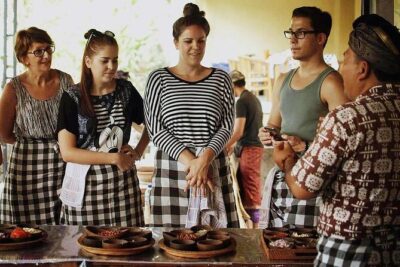
Tempeh takes center stage here. You learn how this Indonesian soy food is made from scratch, then use it in several Balinese dishes before sitting down to a seven-dish lunch in a family garden. Ayu and Ngurah lead the class, keeping it personal with a maximum of 10 people.
I like two things right away: you get a cooking lesson and a useful look at an important Indonesian food, not just a standard recipe demonstration. I also like the flexible menu. You can include chicken and tuna, or keep the meal fully plant-based, while tea, coffee, water, and a light snack are included.
The main consideration is the meeting point. The experience is marketed in the Seminyak area, but it starts at Canang Sari Homestay in North Denpasar, not central Seminyak. You will need to arrange your own way there, and the three-hour schedule begins promptly at 9:30 a.m.
In This Review
- Key points to know before booking
- Why tempeh makes this Bali cooking class different
- Arriving at Canang Sari Homestay at 9:30 a.m.
- Learning the story behind tempeh
- Making tempeh from scratch
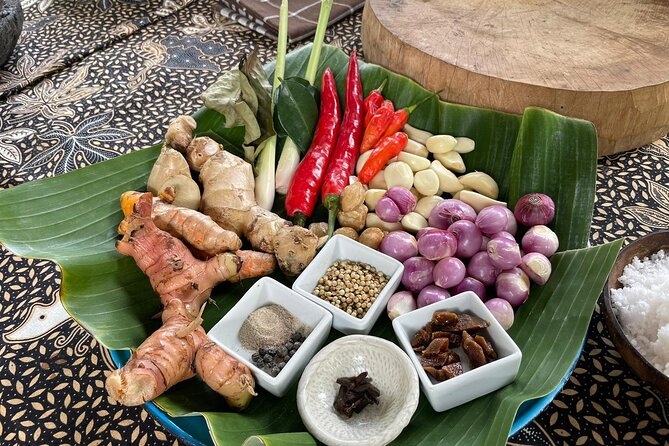
- Working with Bali’s spices and fresh ingredients
- Cooking seven dishes for lunch
- A small class with direct help from Ayu and Ngurah
- How much value do you get for $39?
- Who will enjoy this experience most?
- Practical details that can affect your morning
- My verdict on Ayu and Ngurah’s tempeh class
- FAQ
- Where does the tempeh cooking class start?
- What time does the class begin and end?
- How many people can join the class?
- Is the class suitable for vegans?
- What food and drinks are included?
- Can I cancel for a full refund?
Key points to know before booking
- Tempeh is the star ingredient: Learn the basic process behind a food made in Indonesia since at least the 1600s, then cook with it.
- Ayu and Ngurah host the class: Their teaching covers tempeh, spices, traditional recipes, and practical cooking steps.
- Seven dishes make up lunch: You prepare several tempeh dishes, sayur urab, and other Balinese recipes before eating together.
- Vegans can join comfortably: Chicken and tuna are optional, so the main class remains suitable for plant-based diners.
- The class is small: A maximum of 10 people allows more direct help than a large demonstration.
- The price is $39 per person: For three hours of instruction, ingredients, drinks, and lunch, the cost is fair if you value hands-on food experiences.
Why tempeh makes this Bali cooking class different
Many cooking classes in Bali focus on familiar dishes and a market visit. This one takes a more unusual path by making tempeh part of the lesson itself. You are not simply chopping vegetables and copying a recipe. You begin with the ingredient that gives the class its purpose.
Tempeh, also written as tempe, is an Indonesian food originally associated with Java. It is made from soybeans and is valued for protein and nutrients. The class explains its place in Indonesian food culture and shows the main stages involved in making it.
That background matters because tempeh is not just a meat substitute added for modern dietary reasons. It has long been part of everyday Indonesian cooking. Learning how it is produced gives you a better sense of why it appears in so many local meals.
The process also gives the class a practical edge. A guide provides a written tempeh-making guide, so you have something to use after you return home. You may not recreate every Balinese dish easily, since some ingredients can be hard to find, but tempeh itself is a useful skill to take away.
A few more Seminyak trips to weigh up
- Balinese Cooking Class in Seminyak
★ 5.0 · 281 reviews - Nia Balinese Cooking Class
★ 5.0 · 202 reviews - Nia Bali Seminyak Cooking Class
★ 5.0 · 127 reviews
Arriving at Canang Sari Homestay at 9:30 a.m.
The listed starting point is Canang Sari Homestay, at Gg. Kaswari No. 6, Dangin Puri Kaja, North Denpasar, Bali 80234. The activity ends at the same meeting point.
This location is the first detail I would check carefully before paying. The tour is associated with Seminyak, but the address is in Denpasar. The supplied information does not include hotel pickup or transport, so you should plan your own arrival and allow enough time to find the homestay.
The class runs from about 9:30 a.m. until 12:30 p.m. That morning timing works well if you want lunch as the main reward and still have the afternoon free. It is less convenient if you are staying far from North Denpasar or want a slow morning.
You receive confirmation when booking, and the group can contain up to 10 people. That size is small enough for direct help at the cooking station, while still giving the meal a social feel.
Learning the story behind tempeh
The opening section introduces tempeh and explains its place in Indonesian cooking. Ayu talks through its origins and its long use as an affordable, nourishing food. The information provided places tempeh’s history in the 1600s, giving you useful context before you begin preparing it.
I like this part because it connects the kitchen task to daily life. You understand why the ingredient is treated as more than a trendy vegan product. It is a local staple with a long relationship to Indonesian households.
The class is described as vegan-friendly from the beginning, but the menu can also include animal products. That gives you a choice rather than forcing one style of meal on everyone. If you eat everything, you can add chicken and tuna. If you are vegan, you can skip both and focus on the plant-based dishes.
Ayu’s teaching style is one of the strongest reasons to choose this class. She explains the steps carefully and talks about the food as you work. Ngurah also helps host the experience, creating a more personal setting than a formal culinary school.
Making tempeh from scratch
The tempeh section is the most distinctive part of the morning. You learn the basic making process rather than simply opening a packet and adding tempeh to a recipe. The exact timing and technical details can depend on the batch, but the class is designed to show the main stages clearly.
This is useful for anyone who enjoys food science, traditional cooking, or plant-based meals. Tempeh has a firm texture and a mild taste that works in many preparations. Once you understand the foundation, you can see why it adapts well to frying, seasoning, and mixing with other ingredients.
Do not expect this to be a full professional fermentation course. The experience lasts about three hours and also includes several dishes and lunch. Its aim is to introduce you to tempeh-making and help you cook with the ingredient, not provide an advanced laboratory lesson.
That limitation is not a serious problem for most people. You get the unusual experience of seeing tempeh made, along with a guide that can help you try it again at home. For a short holiday class, that is a good balance.
Same island, a completely different day out:
- Bali Full-Day Traditional Village Sightseeing Trip All Inclusive
★ 5.0 · 3,069 reviews - Experts Bali Driver : Best Bali Private Driver for Tour in Bali
★ 5.0 · 1,339 reviews - Bali Hai Sunset Dinner Cruise
★ 5.0 · 1,173 reviews - Private Arrival Transfer: Bali Airport to Hotel
★ 4.5 · 739 reviews
Working with Bali’s spices and fresh ingredients
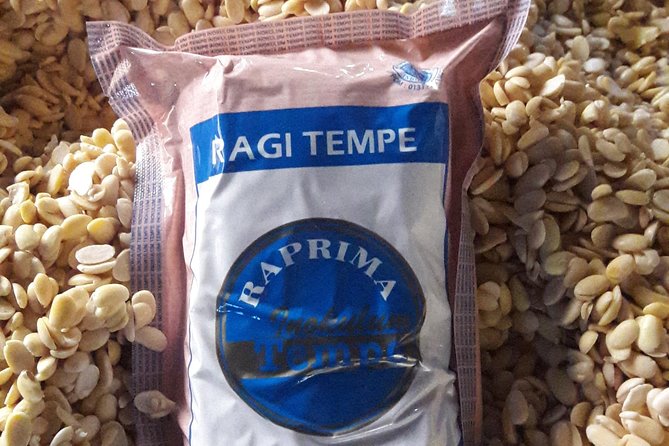
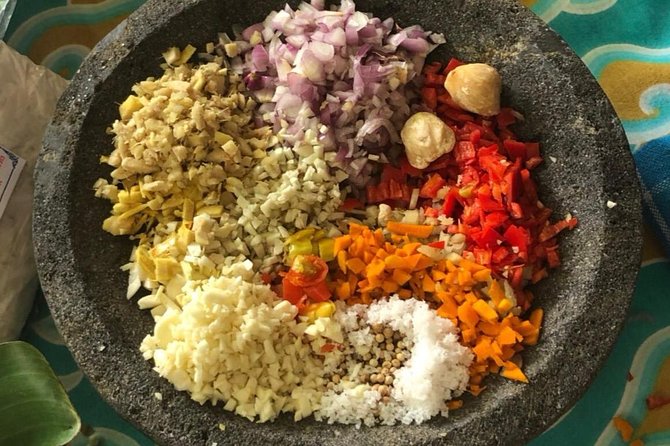
After learning about tempeh, you move into the cooking portion. The class uses fresh plant-based ingredients and Indonesian spices, with Ayu explaining how they fit into local recipes.
The appeal here is not only the final plate. Indonesian cooking depends on the way ingredients are combined, seasoned, and prepared. A dish may seem simple once it reaches the table, but the flavor comes from the spice mixture and the handling of each ingredient.
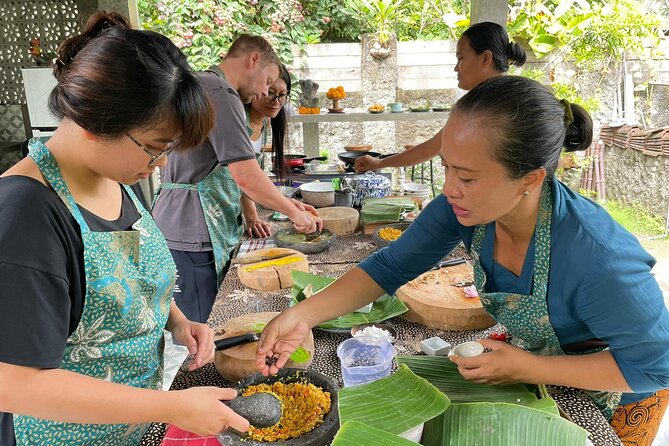
The supplied description does not promise a separate market tour, so you should book this for the cooking itself. You will work in an open-air kitchen studio rather than spending the morning shopping for produce.
That setting suits the tone of the experience. It takes place at a cozy local home, and lunch is served in the garden with a family atmosphere. You get a look at home-style cooking instead of a polished restaurant kitchen.
Cooking seven dishes for lunch
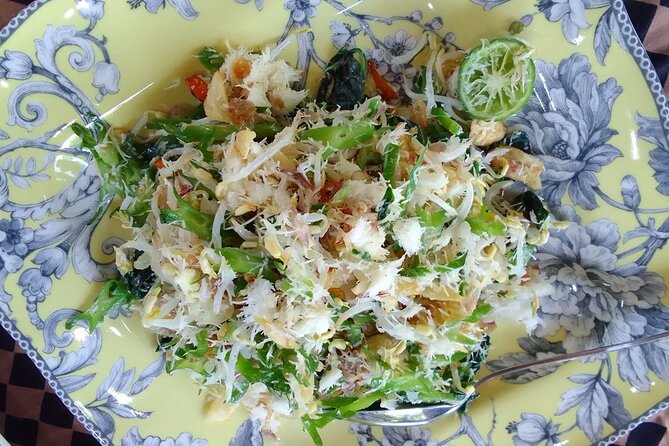
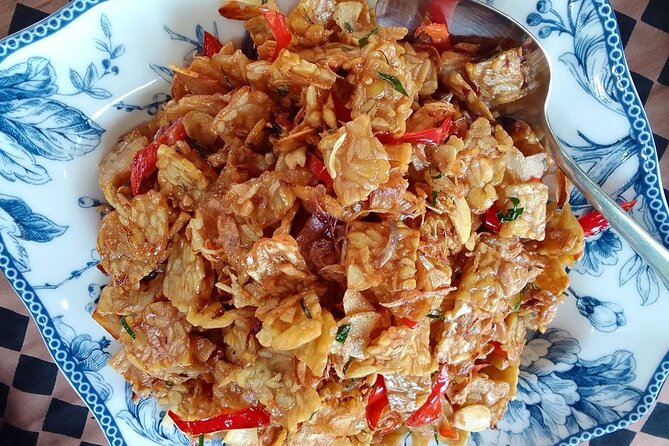
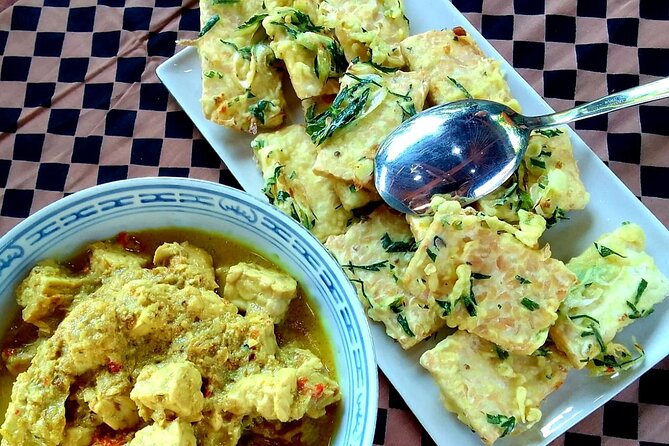
The meal includes seven Balinese Indonesian dishes. Tempeh appears in the featured preparations, while the menu also includes sayur urab and other local recipes.
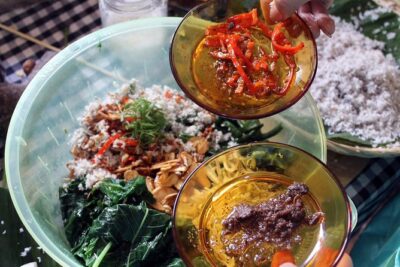
Sayur urab is a vegetable dish made with greens and beans mixed with grated grilled coconut. It gives the meal a different texture from the tempeh dishes and shows how coconut is used to add body and flavor to a vegetable plate.
Chicken and tuna can be added for people who want them. You can also leave them out, which keeps the meal vegan-friendly. This choice is important for mixed groups, since one person’s dietary needs do not have to dictate the entire menu.
The number of dishes makes the class feel generous, but it also means you should expect an active morning. You are learning tempeh, preparing several recipes, and eating lunch within roughly three hours. This is not a slow, single-dish lesson.
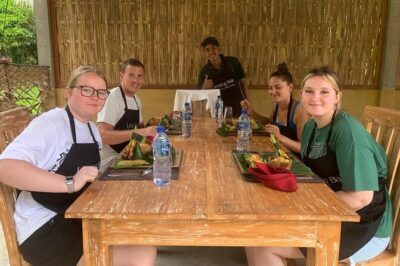
I would treat the meal as part of the teaching rather than a separate restaurant course. You get to taste the results of the work while sharing them in the garden. That communal finish is one of the experience’s strongest details.
A small class with direct help from Ayu and Ngurah
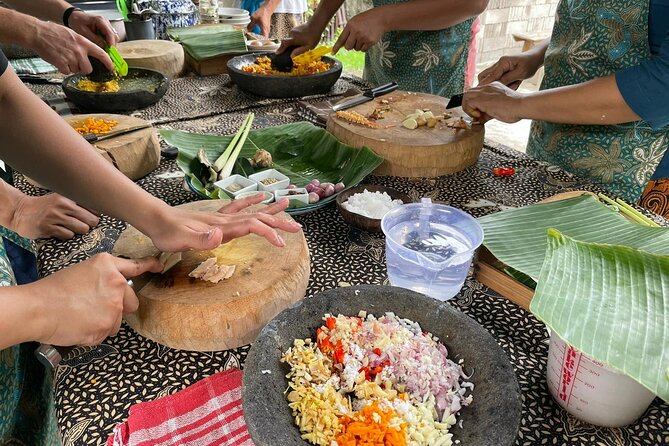
The maximum group size is 10. That matters in a hands-on class, since cooking instruction becomes frustrating when you cannot see the demonstration or ask for help.
Ayu and Ngurah provide the human side of the experience. Ayu is described as especially passionate about cooking, and her instruction covers both the recipe steps and the story of tempeh. The pair’s warm, hospitable approach fits the home setting.
You should still keep your expectations realistic. A small group does not mean private instruction unless you book the private option. The standard experience may include other people, and the group size can vary up to the stated maximum.
A private class is available upon request. If you want to ask many questions, need a slower pace, or are celebrating a special occasion, the private upgrade may be worth considering. The supplied information does not state the extra cost, so confirm that before booking.
How much value do you get for $39?
At $39 per person, this is a reasonable price for a three-hour class that includes ingredients, instruction, tempeh preparation, a seven-dish lunch, drinks, and a light snack.
The value is strongest if you want more than a meal. You are paying for a cultural explanation, cooking practice, a useful take-home guide, and time with local hosts. The experience also works well for people who want a plant-based activity without giving up traditional flavors.
It is less compelling if your only goal is to eat Balinese food cheaply. Local meals can cost much less than $39, and the class requires a morning commitment. You are paying for participation and teaching, not just the food on the table.
The small group improves the calculation. With no more than 10 people, Ayu and Ngurah can give more attention than a large commercial class. The private option may offer even more value for a couple or family that wants a tailored pace, but the price must be checked separately.
Who will enjoy this experience most?
I would recommend this class to several kinds of people:
- Vegetarians and vegans: You can skip the chicken and tuna and still take part in the main menu.
- Food-focused visitors: The class explains ingredients, preparation, and the history of tempeh.
- Hands-on learners: You do more than watch a chef work.
- Couples and small groups: The garden lunch and small class make the experience social without being huge.
- People curious about Indonesian home cooking: The setting gives you a closer look at a local household kitchen.
- Anyone seeking a morning activity: The class finishes around lunchtime, leaving the rest of the day open.
I would be more cautious if you dislike soy foods, want a large market component, or are staying a long distance from Denpasar. The class is centered on tempeh, and the meeting point deserves careful planning.
Practical details that can affect your morning
Bring an appetite for lunch, but do not expect to arrive at an empty table. A light snack is provided during the class, along with tea, coffee, and water.
The experience requires good weather. If poor weather forces a cancellation, you can receive another date or a full refund. It also requires a minimum number of bookings, so a cancellation for that reason comes with the same choice of a new date, another experience, or a refund.
For ordinary cancellations, you must cancel at least 24 hours before the start time to receive a full refund. Changes or cancellations inside that window are not accepted, and the amount paid is not refunded.
The activity has mobile ticketing, and confirmation arrives at booking. Since no transport is listed, keep the meeting address handy and confirm your route to Canang Sari Homestay before the morning of the class.
My verdict on Ayu and Ngurah’s tempeh class
I would book this if you want a food experience with a clear point of difference. The tempeh lesson gives the morning a purpose, the seven-dish lunch offers good value, and the home garden setting feels more personal than a standard restaurant meal.
The strongest reasons to go are Ayu’s careful teaching, the option to keep the meal vegan, and the chance to take home instructions for making tempeh yourself. The main drawbacks are the Denpasar meeting point, the lack of listed transport, and the fact that the class may feel busy for people who want a very slow cooking lesson.
Check the address, choose the dietary option that suits you, and consider a private booking if you want more individual attention. For most food-loving visitors, $39 is a fair price for three hours of cooking, context, and lunch with local hosts.
FAQ
Where does the tempeh cooking class start?
The class starts at Canang Sari Homestay, Gg. Kaswari No. 6, Dangin Puri Kaja, North Denpasar, Bali 80234, Indonesia.
What time does the class begin and end?
The activity starts at 9:30 a.m. and finishes at about 12:30 p.m., including lunch.
How many people can join the class?
The standard activity has a maximum of 10 people.
Is the class suitable for vegans?
Yes. Chicken and tuna are optional, so you can skip both and take part in the plant-based dishes and tempeh-making lesson.
What food and drinks are included?
The class includes a seven-dish Balinese Indonesian lunch, tea, coffee, water, and a light snack during the cooking session.
Can I cancel for a full refund?
Yes. You can receive a full refund if you cancel at least 24 hours before the experience starts. Poor-weather or minimum-booking cancellations offer a new date or a full refund.
Just added around Seminyak
- Ubud Private Tour★ 5.0 · 36 reviews
- Kuta Seminyak Scooter Lessons★ 5.0 · 40 reviews
- Bali Airport Transfers | Bali Airport Welcome pick up | Bali Airport Taxi★ 4.0 · 27 reviews
- Surf lesson | Energy surfschool krui★ 5.0 · 3 reviews
- Ubud Tubing Adventure Holy Spring Temple Private Guided Tour★ 5.0 · 49 reviews
- Wonderful Bali In 3 Days Private Tour★ 5.0 · 56 reviews
- Zero Gravity Flotation Therapy in Canggu Bali by Solace Float★ 5.0 · 36 reviews
- White Water Rafting & ATV Adventure Private & All-Inclusive Tour★ 5.0 · 21 reviews
Cooking Classes, compared.
PRIVATE Authentic Balinese Cooking Class in Ubud at Putu’s Home
Read our review →
Balinese Ubud cooking school (9 Dish Cooking and Market Tour)
Read our review →

Learn to cook Indonesian food at Gili Cooking Classes Trawangan
Read our review →
Browse the lists this tour appears in