
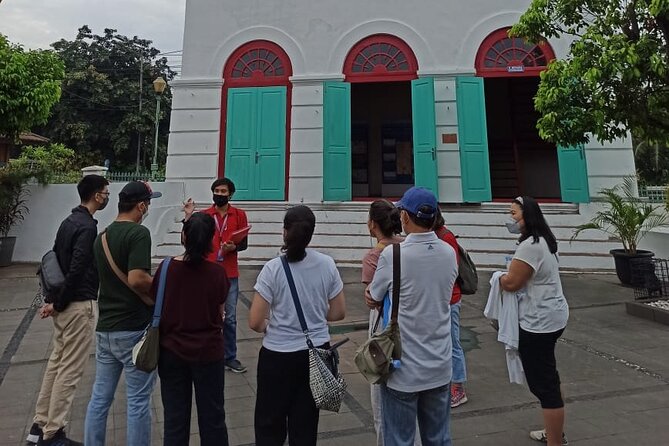
Reviewed · WALKING TOURS
Queen of the East (Old Batavia) Walking Tour
Old Batavia makes the past feel physical. On this three-hour walk, you move from a former VOC spice warehouse and Sunda Kelapa harbor views to old city walls, a nearly 400-year-old drawbridge, Toko Merah, and the grand Jakarta History Museum. The route connects scattered colonial sites on foot, so Jakarta’s past is easier to picture than it would be from a car window.
I like the private format, which gives your own group a guide and allows room for questions. I also like that entrance fees, water, a pocket map, and a batik cloth fan are included. The main drawback is the 4 to 4.5 kilometers of walking, including a stretch back from the harbor that may feel slow if there is little to see along the way.
In This Review
- Key points to know before booking
- Why Old Batavia works best on foot
- Starting at the Maritime Museum and Sunda Kelapa Harbour
- Following the old city wall near the Eastern Warehouse
- Crossing Kota Intan Bridge, nearly four centuries old
- Reading Dutch colonial planning around Toko Merah
- Spending 40 minutes at Fatahillah Museum
- What $67.66 buys you
- Heat, rain, clothing, and daily planning
- Who will get the most from this walk
- Should you book the Queen of the East walk?
- FAQ
- How long does the Queen of the East walking tour last?
- Where does the tour begin and end?
- Is this a private tour?
- Are entrance fees included?
- Does the tour operate on Mondays?
- What should I bring and wear?
Key points to know before booking
- A private walk through Old Batavia: Your group alone takes part, with a maximum of 15 people.
- A strong opening at the Maritime Museum: See a former VOC spice warehouse and look over Sunda Kelapa Harbour from the old control post.
- The Kota Intan Bridge is a quick but special stop: This nearly 400-year-old wooden drawbridge gives the route a memorable physical link to Batavia.
- Fatahillah Museum is the main indoor visit: Expect colonial-era antiques from the 17th to 19th centuries and an underground dungeon.
- Plan for heat and rain: Jakarta stays warm and humid, and the tour runs in sunny or rainy weather.
- Good value for history-focused visitors: At $67.66 per person, the price covers a private guide and entrance fees, but meals and hotel transport are extra.
Why Old Batavia works best on foot
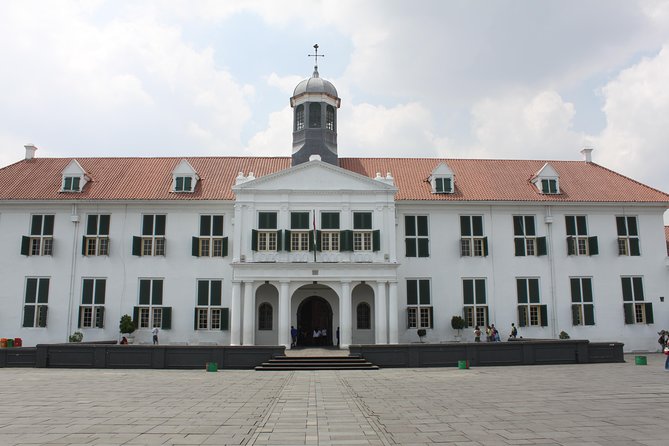
Old Batavia, now known as Kota Tua or Old Jakarta, was the Dutch East India Company’s main base in Asia. The area was once called the Queen of the East, a grand title tied to its role in trade, administration, shipping, and spice storage.
You do not see all of that story from one building. The value of this tour is the movement between places. A warehouse explains the trade system. A harbor view shows how goods arrived and departed. A fragment of city wall hints at defense. A bridge reveals how water and transport shaped the old city. The museum then gathers the pieces into a larger picture.
I find that kind of route more useful than a single museum visit. You are not only looking at old objects. You are walking through the urban plan that supported the VOC from the 17th and 18th centuries.
The private setup matters here. With an English-speaking guide assigned to your group, you can ask about details that catch your eye, slow down for photographs, or keep moving if one stop is less interesting to you. Since the group can range from one to 15 people, this is especially appealing for families, couples, and small groups who do not want a large scheduled tour.
A few more Jakarta trips to weigh up
- Jakarta Walking Tour with Public Transportation Visiting Sites
★ 5.0 · 14 reviews - The Secret Society of Batavia – Walking Tour
★ 5.0 · 4 reviews - Jakarta Private Custom Walking Tour with A Guide
★ 5.0 · 3 reviews
Starting at the Maritime Museum and Sunda Kelapa Harbour
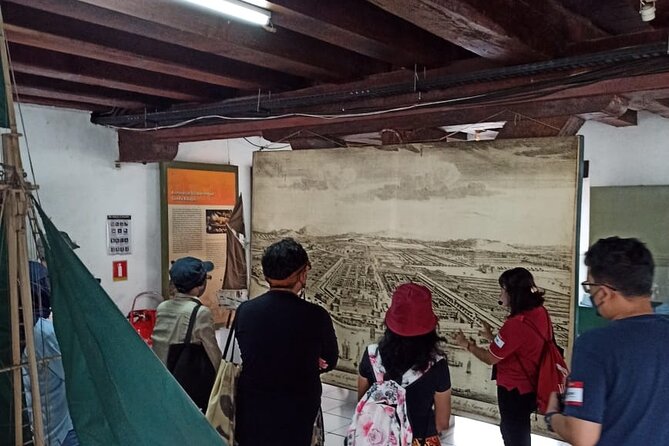
The meeting point is the Maritime Museum, also identified as Museum Bahari, at Jl. Pakin No. 2. This former VOC warehouse was used to store spices and company supplies. You meet the guide here, making the museum the historical starting point rather than a brief photo stop at the end.
The visit lasts about 50 minutes, and admission is included. That gives you time to look at the building and its maritime setting while the guide explains why this part of Batavia mattered.
One of the strongest features is the view from the old control post over Sunda Kelapa Harbour. You get a sense of the connection between the city and the water, which is important context for the rest of the walk. Batavia was not simply a collection of grand colonial buildings. Its power depended on shipping, storage, walls, bridges, and administration.
The Maritime Museum may not appeal equally to everyone. If your priority is architecture, street scenes, and photographs, 50 minutes indoors could feel like too much time. One existing assessment rated the overall experience three out of five and specifically felt the maritime stop could be shortened or removed. That is useful advice for setting expectations.
I would still keep the museum if you want the full trade story. It explains why the warehouses and harbor were here. If you prefer a faster architectural walk, ask your private guide how much time can be spent inside and how much can be kept for the streets.
Following the old city wall near the Eastern Warehouse
After the museum, the route moves toward a remaining section of Batavia’s old city wall near the Eastern Warehouse. This stop takes about 15 minutes and has no separate admission charge.
It is a short visit, but it helps you read the city as a fortified commercial base. The surviving wall is not a complete monument that tells the whole story by itself. Its importance comes from its place in the route, between the harbor and the colonial streets.
This is also where the tour’s walking format becomes clear. You are covering several kilometers, not simply stepping out of a vehicle at famous sights. That means you see the spaces between the major stops, though not every part of the walk will have a dramatic building or display.
The pace should suit most people who can walk 4 to 4.5 kilometers in warm, humid weather. Comfortable shoes are essential. The tour information says most people can participate, but it does not promise a short or cool route. If you dislike long walks in heat, this is the point to think carefully about the format.
Crossing Kota Intan Bridge, nearly four centuries old
Kota Intan Bridge is one of the route’s most distinctive details. You pass over a wooden drawbridge that is nearly 400 years old. Admission is included, and the scheduled stop lasts around 15 minutes.
This is a small site, but it gives you something the museums cannot: a direct look at old transport infrastructure. The bridge belonged to a city organized around canals, warehouses, walls, and controlled movement. It is also one of the easiest places on the route to appreciate through photographs.
Do not expect a long visit. The bridge is a focused stop, not a full attraction with a large interior program. Its value comes from its age, form, and position in the old city. A guide can help explain why a drawbridge mattered in Batavia, but the available tour details do not identify the individual guide by name.
For families, this can be one of the more approachable moments. Children may respond more quickly to an old bridge than to a case of museum objects. Adults who enjoy historic structures will likely want a little time for pictures.
Same island, a completely different day out:
- Jakarta: Volcano, Tea/Rice Fields, Hot Spring, Local Food
★ 4.9 · 515 reviews - Active Volcano, Rice Field, Hot Spring, Fruit market, Tea Plantation with Lunch
★ 5.0 · 513 reviews - Private Full-Day Guided Tour: Explore Jakarta’s Top Highlights
★ 5.0 · 338 reviews - Jakarta Half-Day Guided Tour with a Private Fun Local Host
★ 5.0 · 292 reviews
Reading Dutch colonial planning around Toko Merah
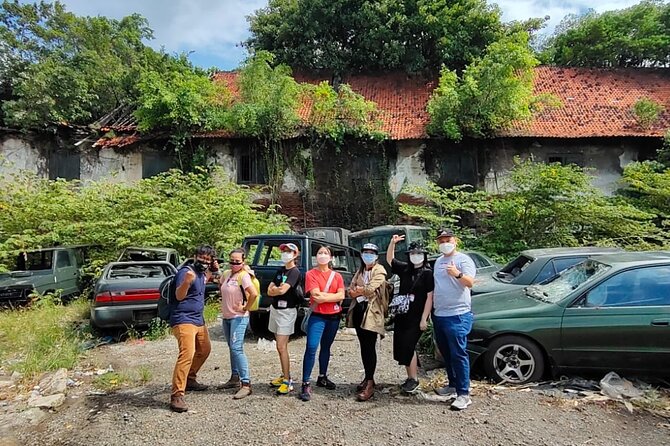
Between the bridge and the main museum, you walk through the colonial street plan and architecture of Old Batavia. The route includes a view of the former Governor General’s mansion, known as Toko Merah.
This section is less about entering one specific attraction and more about seeing how the city was arranged. Warehouses, public buildings, residences, defensive works, and water routes formed a working colonial center. The walk gives the guide a chance to connect those pieces.
Toko Merah adds a striking architectural reference point. The former mansion helps show the difference between commercial storage buildings and spaces associated with colonial administration. Since the tour description does not promise an interior visit here, treat it as an exterior sight and photography stop.
This is also the section where the walking route may feel uneven. One assessment found the long walk back from the port less rewarding because there was not always something notable to see or discuss. That does not make the route a poor choice, but it does mean you should book it for the overall sequence, not for nonstop major monuments.
Because the tour is private, you can make practical adjustments with the guide. The information does not state that a pedicab ride is included, and optional activities are excluded, so any trishaw ride would need to be arranged and paid for separately. Do not assume that substituting a ride is part of the $67.66 price.
Spending 40 minutes at Fatahillah Museum
The final major stop is the Jakarta History Museum, also called the Fatahillah Museum, at Taman Fatahillah No. 1. The visit lasts about 40 minutes, and admission is included.
The museum occupies the grand Fatahillah building and holds antiques from the 17th through 19th centuries. It also includes an underground dungeon. That combination gives the stop both the formal side of colonial administration and a reminder of the harsher systems that operated beneath it.
I see this as the tour’s best place to pull the story together. After the warehouse, harbor, wall, bridge, and colonial streets, the museum gives you objects and rooms tied to the periods you have been discussing. It is not only a final indoor stop. It is the point where the route’s separate clues become easier to understand.
The tour ends here, so plan your day around Fatahillah Square rather than expecting a return to your hotel. Hotel pickup and drop-off are not included. The meeting points are near public transportation, but you are responsible for reaching the Maritime Museum at the start and arranging your onward journey from the Jakarta History Museum.
What $67.66 buys you
At $67.66 per person, this tour is not the cheapest way to walk around Kota Tua. You are paying for a private English-speaking guide, included admissions, bottled mineral water, a pocket map, and a batik cloth fan. The private format is the key part of the price.
For one person or a couple, the cost may feel high compared with joining a larger group or walking around independently. For a family or group of friends, the value improves because the private price applies to a group of up to 15 people, with group discounts available. You also avoid paying separate entrance fees at the included sites.
The tour does not include meals, travel insurance, tips, optional activities, or hotel transport. Those exclusions are ordinary, but they matter in Jakarta because you need to plan transport to the waterfront meeting point and away from the museum at the end.
I would choose this tour if you want context without handling the route and admissions yourself. I would skip it if you mainly want a quick photo walk, dislike indoor museums, or expect every minute to feature a major attraction.
Heat, rain, clothing, and daily planning
Jakarta is warm and humid throughout the year. Wear light, comfortable clothes and shoes with enough support for 4 to 4.5 kilometers of walking.
The tour operates in both sunny and rainy conditions. Bring an umbrella, especially from October through April, when rain is a particular concern. A private tour does not turn bad weather into a comfortable day, so carry water even though mineral water is provided.
The tour does not operate on Mondays because the museums are closed. That detail can shape your Jakarta schedule, especially if you have only a short stay. The stated duration is about three hours, but allow extra time around the experience for getting to the waterfront and continuing from Fatahillah Museum.
Children from three to 12 years old share the same fare as adults, and children must be accompanied by an adult. The minimum and maximum group size is one to 15 people. This makes the tour workable for a solo visitor, though the per-person price may be easier to justify when shared by a group.
Who will get the most from this walk
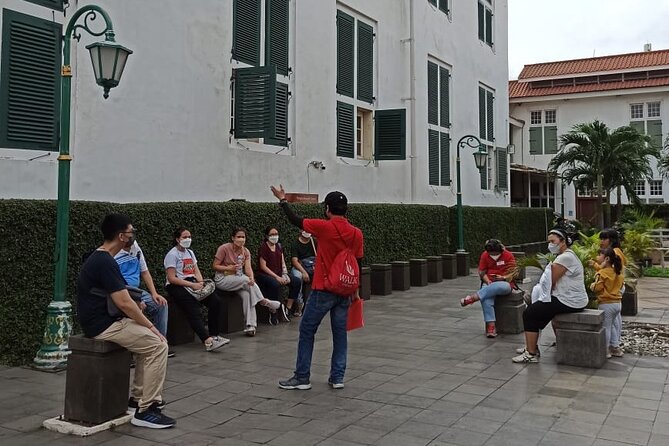
I would recommend the tour to anyone who wants a guided introduction to Old Batavia and prefers a private setting. The route suits visitors who enjoy connecting buildings, streets, and objects rather than rushing from one famous landmark to another.
It is also a good fit for families who want a clear structure. The drawbridge, harbor view, old wall, and dungeon offer different kinds of interest, while the guide can explain the colonial setting in English.
Photography-minded visitors should like the variety. You have harbor views, old masonry, a wooden bridge, colonial facades, and the large museum building. Bring protection for the weather and expect some stops to be brief.
I would be more cautious for anyone with limited walking ability or little tolerance for heat. The tour information says most people can participate, but the route is not described as accessible for every mobility level. The long outdoor stretches and rainy-weather policy are central parts of the experience.
Should you book the Queen of the East walk?
Book it if you want a private, history-focused introduction to Old Batavia and value having entrance fees and an English-speaking guide bundled into the price. The best parts are the route’s range, the old VOC warehouse, the Sunda Kelapa viewpoint, Kota Intan Bridge, and the Jakarta History Museum.
Think twice if you want a tightly packed sightseeing schedule. The maritime museum and the walk from the port may take more time than you would choose on your own, and the tour is non-refundable once booked. For a small group that can share the cost, the private format makes good sense. For a solo visitor seeking the lowest possible price, an independent visit may be better value.
FAQ
How long does the Queen of the East walking tour last?
The tour lasts approximately three hours. The walking distance is about 4 to 4.5 kilometers.
Where does the tour begin and end?
The tour begins at the Maritime Museum, Museum Bahari, on Jl. Pakin No. 2. It ends at the Jakarta History Museum in Taman Fatahillah.
Is this a private tour?
Yes. Only your group takes part. The tour accepts between one and 15 people.
Are entrance fees included?
Yes. Entrance fees for the included visits are covered in the tour price, including the Maritime Museum, Kota Intan Bridge, and Jakarta History Museum.
Does the tour operate on Mondays?
No. There is no tour on Monday because the museums are closed.
What should I bring and wear?
Wear comfortable clothing and shoes suited to 4 to 4.5 kilometers of walking. Bring an umbrella, particularly during the rainy season from October through April.
Just added around Jakarta
- The Secret Society of Batavia – Walking Tour★ 5.0 · 4 reviews
- Soekarno Hatta International Airport by Plaza Premium Lounge★ 4.0 · 46 reviews
- Volcano and Domas Crater of Hot Stony Bubble from Jakarta Lunch★ 5.0 · 23 reviews
- Jakarta Indonesian Culture in half Day★ 5.0 · 50 reviews
- Jakarta Scooter Lessons and Motorcycle Lessons★ 5.0 · 9 reviews
- Situ Gunung Waterfall & Suspension Bridge Sukabumi start Jakarta★ 4.5 · 13 reviews
- Private Tour: Half Day Jakarta Old City Tour★ 4.0 · 4 reviews
- Batik Heritage Introduction Class with Lunch & Souvenir★ 5.0 · 8 reviews
Walking Tours, compared.
Tetebatu Walking Tour – Rice Terraces, Waterfall & Monkey Forest
Read our review →
Small-Group Walking and Food Tour by Night in Yogyakarta
Read our review →
Bali Private Food Walking Tour With Locals: The 10 Tastings
Read our review →
Sidemen Trekking: A Walk from a Different Perspective
Read our review →
Ubud yoga, rice terrace walk and floating Breakfast tour
Read our review →

Ubud Countryside Tour: Campuhan Ridge Walk and Rice Terrace
Read our review →Browse the lists this tour appears in