
Reviewed · BALINESE COOKING CLASSES
PRIVATE Balinese Cooking Class in Ubud with Dewa with Transfers
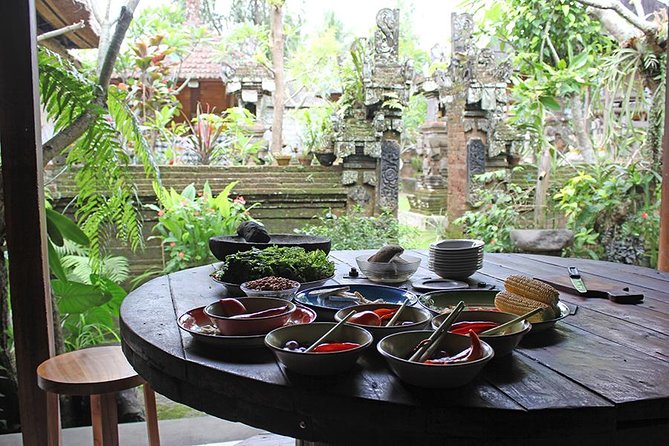
Balinese cooking makes the most sense when you see where the ingredients grow and who prepares the food. With Dewa and his family in Keliki, you walk through village gardens, learn about local customs, then cook lunch or dinner in a traditional walled compound.
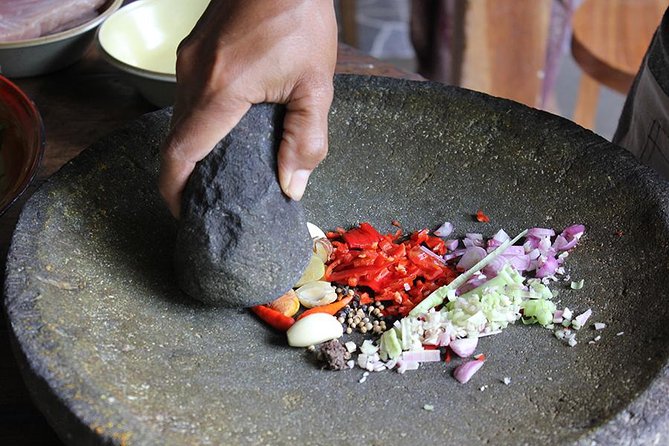
I like the direct connection between garden and plate, especially when you grind spices with a mortar and pestle and cook over a wood-fired stove. I also like the small-group setup: this is a private activity, so your party gets the family’s attention rather than a place in a large demonstration.
The main consideration is that this is not a formal culinary school. You come for a home visit, cultural conversation, and hands-on cooking. If you want knife skills, timed instruction, or restaurant-style technique, this may feel loose. If you want a personal look at Balinese life, it fits well.
In This Review
- Key points to know before booking
- A village welcome north of Ubud
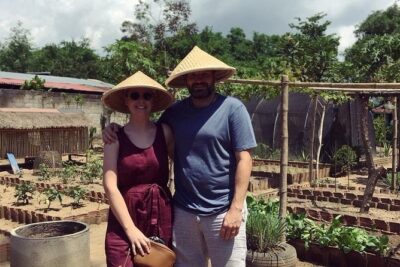
- Walking through Keliki’s gardens and village paths
- Inside a traditional Balinese family compound
- Grinding spice pastes and cooking over fire
- The meal is the real finish line
- What the four-hour schedule really includes
- Who will get the most from this experience
- Practical details that affect your decision
- Should you book Dewa’s Balinese cooking visit?
- FAQ
- Where does the Balinese cooking experience take place?
- Is hotel pickup included?
- What happens if I stay outside Ubud?
- How long does the experience last?
- Is this a private activity?
- Who hosts the cooking experience?
- What food will I learn to cook?
- Is a vegetarian meal available?
- Is this a professional cooking class?
- What is included with the meal?
- Can I cancel for a full refund?
Key points to know before booking
- Dewa’s family home: Cook and eat in a traditional Balinese compound arranged around a central courtyard.
- Garden-to-table cooking: See galangal, cacao, nutmeg, herbs, fruit, and other ingredients before using them in your meal.
- Several dishes in one visit: Recipes may include pepes ikan, bumbu kuning, bregedel, salads, mains, and dessert.
- Private Ubud transfers: Pickup and return are included from hotels and vacation rentals within the Ubud area.
- Culture comes with the meal: Expect discussion of Balinese religion, farming, family life, medicine, and village traditions.
- Plan for a village walk: Wear comfortable shoes, since part of the experience takes place outdoors on village streets and paths.
A village welcome north of Ubud
The experience begins with pickup from your Ubud hotel or vacation rental, followed by a private drive toward Keliki, in the foothills north of town. The ride is part of the change in pace. Ubud’s busy center gives way to rice fields, village roads, and greener surroundings.
The listed meeting point is Rumah Makan Jero Nini on Jalan Arjuna in Keliki. If you stay outside the Ubud region, transport is not included, and you meet Dewa directly at his home. That boundary matters, so check your accommodation before assuming the transfer covers you.
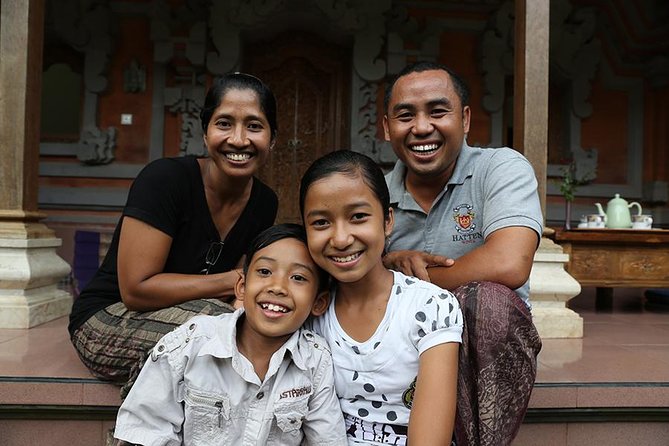
On arrival, Dewa may greet you himself. If he is unavailable, an equally welcoming family member hosts with Dewa’s wife, Jero. The experience remains a family visit rather than a tour led from a commercial kitchen.
I appreciate this start because it gives you a sense of place before anyone hands you a recipe. You are not simply dropped at a cooking studio, handed ingredients, and sent home with a certificate. You enter the setting where the food is part of daily family life.
More Balinese Cooking Classes in Ubud
- Ubud Cooking Class Bali with Balinese Chef
★ 5.0 · 1,609 reviews - PRIVATE Authentic Balinese Cooking Class in Ubud at Putu’s Home
★ 5.0 · 644 reviews - Balinese Farm Cooking Class by Pemulan Bali
★ 5.0 · 410 reviews
Walking through Keliki’s gardens and village paths
Before cooking, Dewa leads you through the local area and garden spaces. This walk helps explain why Balinese food depends so heavily on fresh aromatics, spice pastes, coconut, leaves, and produce gathered close to home.
You may see or learn about ingredients such as galangal, cacao, nutmeg, lemongrass, bananas, herbs, and other tropical plants. Dewa also discusses medicinal uses, farming practices, and the relationship between food, health, and tradition.
Several people who have taken the experience describe the village walk as one of its strongest parts. That makes sense. Balinese cooking can look complicated when you only see a finished plate, but a garden tour gives you a clearer idea of the raw materials and the work behind each dish.
The walk also covers Balinese beliefs and social customs. Dewa is known for explaining the influence of Hinduism, Buddhism, and animism, along with the way local people think about balance, family, nature, and spiritual life. You do not need to share those beliefs to find the conversation useful. It gives the cooking a cultural setting that a standard recipe lesson often lacks.
Wear comfortable shoes. The route can include village streets, gardens, forested paths, and rice-field areas, according to the activity details and firsthand accounts. The exact route may vary, and the walking portion is not just a short stroll from car to kitchen.
Inside a traditional Balinese family compound
Dewa’s home is a traditional family compound with several open pavilions around a central courtyard. You get a glimpse of how extended family life fits together, rather than seeing a staged replica built only for visitors.
The setting is simple and open. Cooking takes place in a family kitchen, with Dewa’s wife Jero helping teach the dishes. You may also meet other family members or community members during the visit.
This is where the activity becomes more personal than a regular food tour. The family is sharing its home, cooking habits, and daily setting with you. That requires a little cultural awareness on your part. You are entering a real household, so be attentive, respectful, and ready for a style of hospitality that may feel less polished than a restaurant class.
The reward is a better sense of how food works in an ordinary Balinese setting. The class is not built around fancy equipment or professional presentation. Instead, it shows how traditional tools and local ingredients produce a full meal.
Grinding spice pastes and cooking over fire
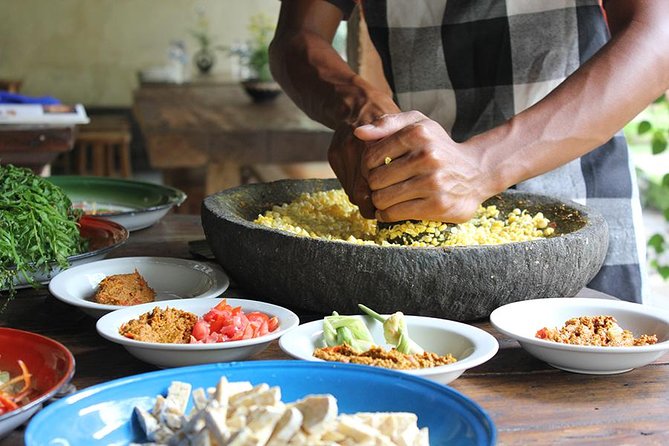
The hands-on cooking typically includes several traditional Balinese dishes. Possible recipes include pepes ikan, tuna grilled in banana leaves; bumbu kuning, chicken cooked with fresh turmeric and coconut milk; and bregedel, hand-ground corn fritters.
The menu can vary, and the supplied information indicates that groups may prepare five, six, or even seven dishes. The range can include a salad, several main dishes, fritters, and dessert. You should think of it as a broad home meal rather than one tightly fixed menu.
You take part in the preparation. That can mean chopping vegetables, grinding spices, mixing pastes, wrapping fish in banana leaves, and helping cook the dishes over a wood-fired stove. The mortar and pestle are not decorative props. They show how texture and flavor are built in traditional Balinese cooking.
I like this format because it links effort to taste. You see the herbs, crush the spices, watch the food cook, then sit down to eat what your group helped make. It is a basic idea, but it makes the meal more memorable.
The instruction is intended for ordinary home cooks, not trained professionals. Dewa and Jero explain the recipes step by step, but the pace may feel relaxed. You may need to ask questions or take your own notes if you want to reproduce everything precisely.
A handmade or locally produced recipe notebook is provided, and you can use it to record the dishes. This is a useful touch. A cooking experience has more value when you can make at least some of the food again at home.
Same island, a completely different day out:
- All-Inclusive Ubud Private Tour
★ 5.0 · 14,344 reviews - Best of Ubud Full-Day Tour with Jungle Swing
★ 5.0 · 8,571 reviews - Ubud: Monkey Forest, Jungle Swing, Rice Terrace, and Water Temple
★ 5.0 · 7,160 reviews - Best of Ubud 1-Day Private Tour
★ 5.0 · 4,451 reviews
The meal is the real finish line
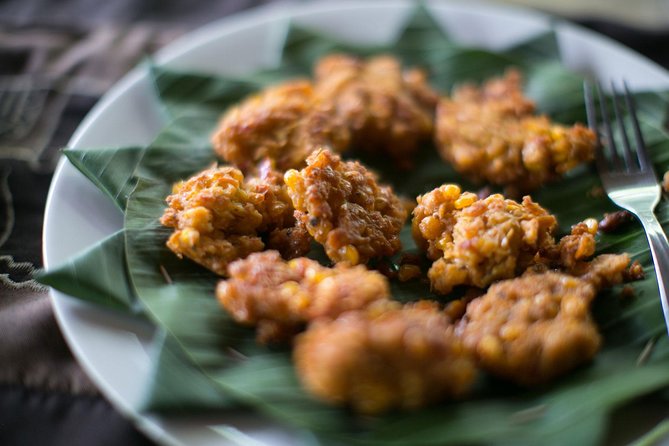
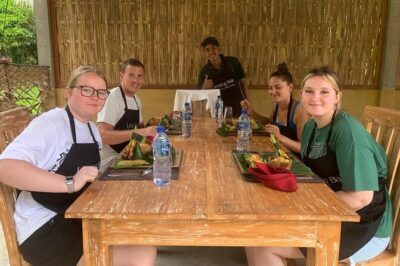
After the cooking, you sit down to eat the meal in the family compound. Local beer and water are included, and the meal is the fruit of your work.
The food is home-style rather than heavily adjusted for international tastes. One useful point from the experience description is that Balinese cooking here emphasizes local ingredients, health, and traditional preparation rather than adding lots of salt. The result may differ from the bold, heavily seasoned dishes served in some restaurants, but that is part of the point.
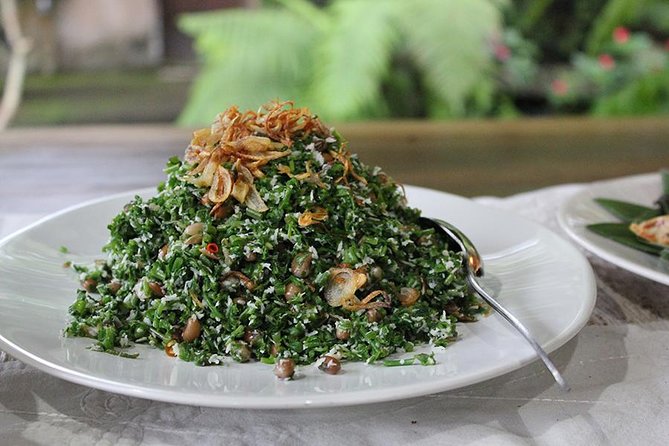
You can expect fresh herbs, spice pastes, coconut, banana leaves, and produce from nearby gardens to shape the meal. The exact balance of fish, chicken, vegetables, fritters, and other dishes depends on the day’s menu.
I would set aside time to eat slowly. The meal is not just a final sample before the vehicle returns. It is when you talk with Dewa and his family, ask about the village, and appreciate the setting.
Several people describe the food as among the best of their time in Bali, but the larger value is the connection between the meal and the family that prepared it. You have seen the compound, handled the ingredients, and learned why certain plants matter. That gives the lunch or dinner more meaning than a restaurant meal ordered from a menu.
What the four-hour schedule really includes
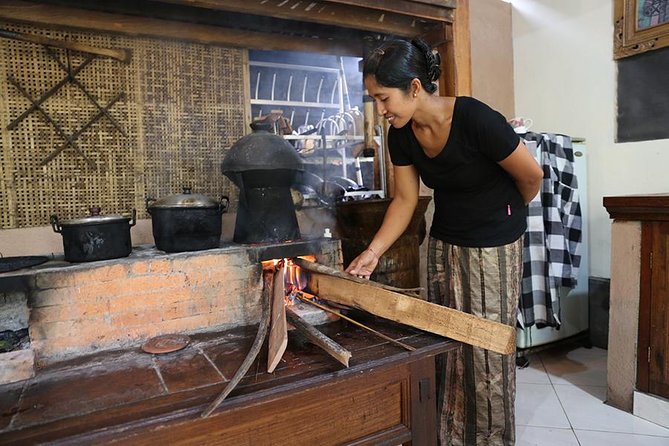
The advertised duration is about four hours, though the experience may feel longer if you include the drive from central Ubud. The core visit generally follows this pattern:
- Pickup and drive from Ubud to Keliki
- Village, garden, and local culture walk
- Introduction to the family compound
- Hands-on preparation of multiple Balinese dishes
- Shared meal with beer and water
- Return transfer to Ubud
The timing may shift based on traffic, the walking route, and how much conversation takes place. The activity ends back at the meeting point in the stated details, while the transfer arrangement provides round-trip service for eligible Ubud accommodations.
Because this is a private activity, you do not have to match the pace of a large group. That works well for couples, families, and small groups with different cooking abilities. It also lets you spend more time on questions about ingredients, religion, farming, or family life.
The tradeoff is price. At $69 per person, this costs more than a basic group cooking demonstration, especially for a solo visitor. But the fee includes private transport from Ubud, a garden and village visit, several dishes, the meal, drinks, and a family-led cultural experience. For two or more people, the private format makes the cost easier to justify, particularly if you would otherwise pay separately for a taxi, food tour, and cooking class.
Who will get the most from this experience
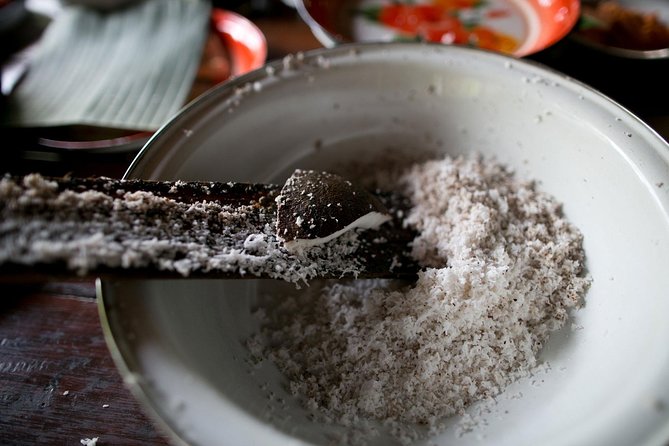
I would choose this for you if food is a way to understand a place, not just something to photograph. It suits people who want local conversation, traditional tools, village scenery, and a meal connected to the family that prepared it.
It is also a good choice if you want a quieter alternative to Ubud’s busiest attractions. The setting outside central Ubud gives you a look at village life and farming practices without turning the visit into a large sightseeing circuit.
Vegetarians can request a meat-free meal, but you must say so when booking. The supplied details do not list other dietary arrangements, so explain any needs in advance rather than waiting until pickup.
Families may enjoy the private format, provided children are comfortable with outdoor walking and hands-on kitchen work. Couples and small groups benefit from the chance to ask questions without competing with a busload of other participants.
You may want a different activity if you are mainly interested in advanced cooking technique, professional chef training, precise recipe measurements, or a polished kitchen classroom. This visit is about home cooking and culture first, with instruction built into the day.
Practical details that affect your decision
The activity is offered by Traveling Spoon and is available as a mobile-ticket experience. Confirmation is sent within 48 hours of booking, subject to availability, so do not leave it until the last minute if your Ubud schedule is tight. It is commonly booked well in advance, with an average booking lead time of about 36 days.
Pickup is offered only from hotels and vacation rentals in Ubud. Outside that region, you arrange your own way to Keliki and meet the host there. The activity is private, and only your group participates.
Service animals are allowed, and the meeting point is near public transportation. Still, the walk through gardens and village paths means comfortable footwear is sensible.
Free cancellation is available if you cancel at least 24 hours before the local start time. Cancellations or changes made inside that window are not accepted for a refund.
Should you book Dewa’s Balinese cooking visit?
Book it if you want an authentic family welcome, not a formal cooking school. The strongest parts are Dewa’s village and garden explanations, the open family compound, the use of traditional tools, and the chance to eat a meal you helped prepare.
The experience is especially good for a first visit to Ubud because it connects food with Balinese religion, farming, medicine, and family life. The private transfer also removes much of the usual transport hassle.
Skip it if your priority is a fast class with fixed recipes and technical culinary instruction. For everyone else, the combination of private transport, local setting, multiple dishes, and generous hosting makes $69 a fair price for a four-hour cultural visit with dinner or lunch included.
FAQ
Where does the Balinese cooking experience take place?
It takes place at Dewa’s traditional family compound in Keliki, in the foothills north of Ubud. The listed meeting point is Rumah Makan Jero Nini on Jalan Arjuna, Keliki, Tegallalang, Gianyar, Bali.
Is hotel pickup included?
Round-trip transfers are included from hotels and vacation rentals within the Ubud region. Pickup and drop-off outside Ubud are not included.
What happens if I stay outside Ubud?
You must travel to Dewa’s home in Keliki independently and meet him there. The included transportation applies only to Ubud accommodations.
How long does the experience last?
The activity lasts approximately four hours, not including any variable traffic time connected with transportation from Ubud.
Is this a private activity?
Yes. Only your group participates, rather than joining a larger shared class.
Who hosts the cooking experience?
Dewa hosts when available, together with his wife Jero. If Dewa cannot host, an equally lovely family member hosts with Jero.
What food will I learn to cook?
Possible dishes include pepes ikan, bumbu kuning, and bregedel. The meal may include five to seven dishes, such as salads, main courses, fritters, and dessert, but the exact menu can vary.
Is a vegetarian meal available?
Yes. A vegetarian option is available if you request it when booking.
Is this a professional cooking class?
No. It is a visit to an authentic local home where Dewa and his family share Balinese cooking and culture. The class is hands-on but is not presented as professional chef training.
What is included with the meal?
Local beer and water are included. You also receive round-trip Ubud transfers, the garden tour, the cooking class, and the cultural experience.
Can I cancel for a full refund?
Yes, if you cancel at least 24 hours before the experience’s local start time. Cancellations or changes made less than 24 hours in advance are not refunded or accepted.
More Workshops in Ubud
- Ubud Silver Class Jewelry making in bali
★ 5.0 · 978 reviews - Canggu Scooter Lessons
★ 5.0 · 195 reviews - Crafting Heritage Batik Painting Workshops
★ 5.0 · 164 reviews - Ubud Bali Silver Jewelry Class
★ 5.0 · 163 reviews
More Cooking Classes in Ubud
- Balinese Ubud cooking school (9 Dish Cooking and Market Tour)
★ 5.0 · 540 reviews - Balinese Authentic Cooking Class in Ubud
★ 5.0 · 239 reviews - Balinese Cooking class with traditional morning market visit
★ 5.0 · 161 reviews - Jambangan Bali Cooking Class
★ 5.0 · 142 reviews
Just added around Ubud
- Bali Airport Pick-up to Ubud (Arrival Transfer)★ 5.0 · 4 reviews
- Bali Airport: One-Way Private Transfer To/From Hotel★ 5.0 · 25 reviews
- Munduk Car Hire with English Speaking Driver★ 5.0 · 14 reviews
- Bali Airport – Arrival Transfer★ 5.0 · 5 reviews
- Bali ATV Quad Bike and White Water Rafting – All Inclusive★ 5.0 · 7 reviews
- Bali ATV Ride Ubud Jungle Track★ 4.5 · 5 reviews
- Bali All Inclusive : Tlaga Singha Infinity Pool & Atv Adventure★ 5.0 · 21 reviews
- Bali ATV Ride with Jungle Swing and Rice Terrace Tour★ 5.0 · 50 reviews
Balinese Cooking Classes, compared.
PRIVATE Authentic Balinese Cooking Class in Ubud at Putu’s Home
Read our review →
Balinese Cooking class with traditional morning market visit
Read our review →Browse the lists this tour appears in