
Reviewed · BALINESE COOKING CLASSES
Balinese Cooking class with traditional morning market visit
The most rewarding part of this Ubud experience happens before the cooking begins. You visit a local morning market, taste unfamiliar fruit, learn about herbs and spices, and help choose the ingredients that will later land on your plate. At the village workshop, local cooks such as Wayan, Dewa, and Putu turn that shopping trip into a hands-on lesson.
I like the small-group limit of eight, since it gives you room to chop, stir, ask questions, and work directly with the instructor. I also like the offering lesson, where you make a traditional canang and gain a little insight into Balinese daily life. The one drawback is the early market visit and long six-hour schedule, which may feel like a lot if you only want a quick cooking demonstration.
In This Review
- Key points to know before booking
- Starting at a real Ubud morning market
- A welcome in Laplapan village
- Making a canang before cooking
- Cooking several Balinese dishes by hand
- What makes the cooking worth learning
- Transport, timing, and the $35 value
- Who will enjoy this class most
- Practical details that affect your day
- Is this Ubud cooking class worth booking?
- FAQ
- How long does the Balinese cooking class last?
- Is hotel pickup included?
- How many people can join the class?
- What food will I cook?
- Are vegetarian options available?
- What is included in the $35 price?
Key points to know before booking
- The morning market comes first: You see and taste local produce before cooking with it.
- You make a Balinese offering: The canang lesson adds cultural context beyond the food.
- Several dishes are prepared: Past menus have included starters, main courses, dessert, and as many as nine dishes.
- Local instructors lead the class: Wayan, Dewa, Putu, and other staff guide the cooking and answer questions.
- Hotel pickup is included: Air-conditioned transport connects your hotel with the market and Laplapan village.
- The $35 price covers the core day: Equipment, transport, class fees, and taxes are included, while personal spending is extra.
Starting at a real Ubud morning market
Your day begins with hotel pickup in an air-conditioned vehicle. Pickup has worked for people staying as far away as Sanur, though the exact pickup time depends on your hotel and the morning route. Give yourself a free morning rather than scheduling another activity tightly afterward.
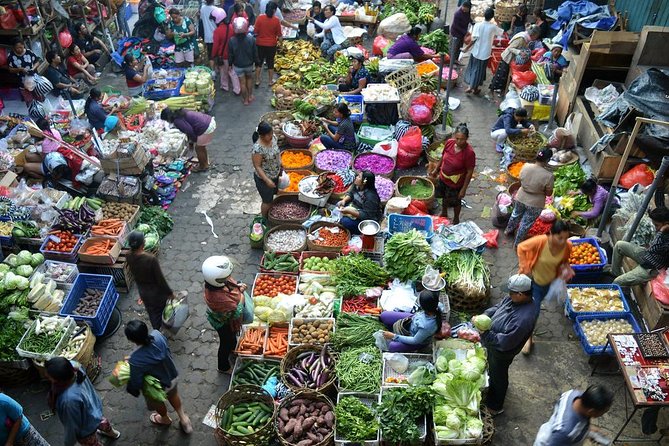
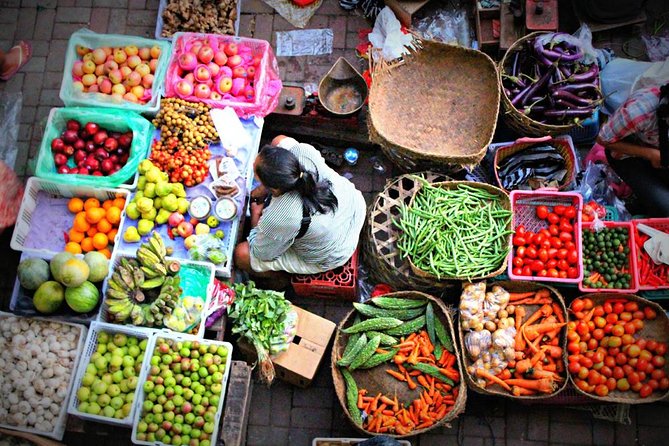
The market visit is not just a quick stop for photographs. Your guide helps identify the fruits, vegetables, herbs, meats, and spices used in Balinese cooking. You might smell or taste something unfamiliar, and the guide can explain what it is and how it is used. That small bit of context makes the later cooking much easier to understand.
I especially like the market as a first step because it shows you the ingredients in their everyday setting. A cooking class can sometimes feel like a staged performance, with everything already measured and waiting. Here, you first see the raw materials and choose what will go into the meal.
Keep your expectations sensible. The market portion is brief compared with the cooking lesson, so it is not a full food tour. It gives you a useful introduction to local produce and a glimpse of daily commerce, rather than hours of detailed shopping.
Several people found the fruit tasting a pleasant surprise, and the guides sometimes picked up local sweets for later with coffee. These small touches help the visit feel personal. If you enjoy food but do not know your turmeric from your galangal, this is the point where the class earns its keep.
More Balinese Cooking Classes in Ubud
- Ubud Cooking Class Bali with Balinese Chef
★ 5.0 · 1,609 reviews - PRIVATE Authentic Balinese Cooking Class in Ubud at Putu’s Home
★ 5.0 · 644 reviews - Balinese Farm Cooking Class by Pemulan Bali
★ 5.0 · 410 reviews
A welcome in Laplapan village
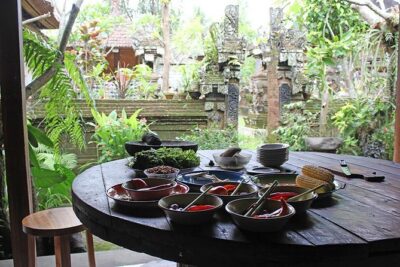
After the market, you continue to the traditional village of Laplapan. The setting is described as a peaceful jungle area, with cooking taking place in a clean and attractive local home or workshop. The change from market streets to a quieter village kitchen gives the day a natural rhythm.
On arrival, you receive a warm welcome, along with a drink and snack before the work begins. The setting matters here. You are not simply sitting in a classroom under fluorescent lights, copying instructions from a printed sheet. You are cooking in a village environment tied to the local community.
The available information does not specify the exact kitchen design or every dish on each date, so you should expect the menu to vary. That is normal for a class based on seasonal market ingredients. The important point is that the cooking area has been described as clean, well organized, and suitable for hands-on work.
The group limit is eight people. That is small enough for direct help, though your exact experience will also depend on the number of people booked that day. One solo participant received nearly private instruction, while family groups and mixed-age groups also took part successfully.
Making a canang before cooking
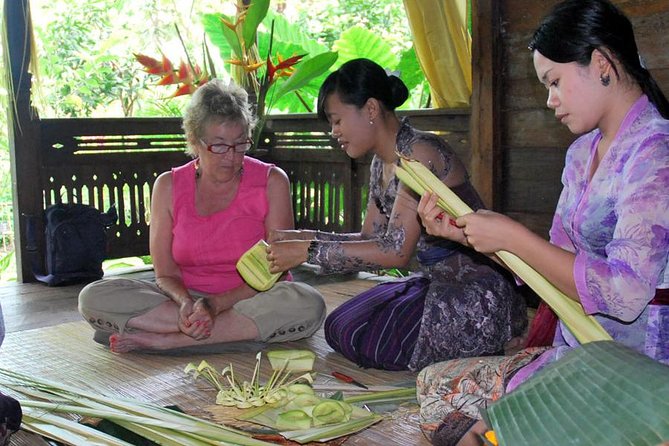
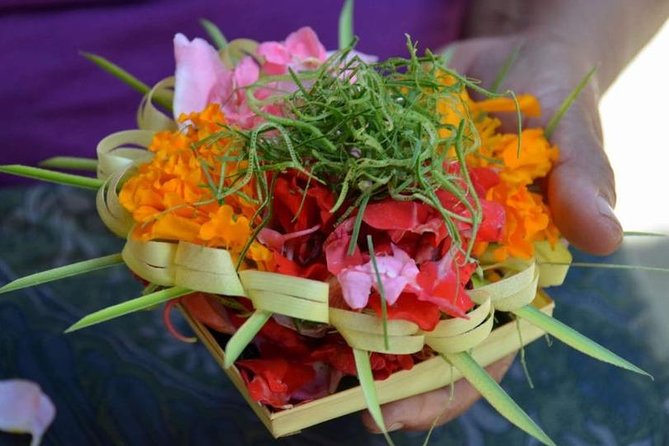
Before the food preparation, you learn how to make a canang, the small offering basket used in Balinese Hindu practice. You are shown the basket and the materials, then make one yourself with guidance from the host.
This is one of the best parts of the schedule because it connects the kitchen to the wider culture. Food in Bali is not only about flavor and technique. Offerings are part of ordinary religious and family life, and learning to assemble one gives you a modest, respectful way to understand that tradition.
The lesson is practical rather than academic. You will not become an expert in Balinese religion in one morning, but you will understand more about why these small offerings appear around homes, temples, shops, and streets. It also gives you something tactile to do before the burners are lit.
Families with children have enjoyed this activity, and younger participants were able to join in. It is a slower, quieter counterpoint to the market and cooking. If your main goal is strictly culinary, it adds time. If you want food and culture together, it is a real strength.
Cooking several Balinese dishes by hand
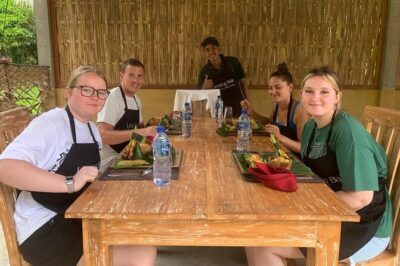
The central part of the day is a guided cooking class with a local chef. You prepare starters, main courses, and an authentic dessert, then sit down to eat everything as a shared meal. Some sessions have covered five courses, while one reported class prepared nine dishes, so the exact menu is not fixed in the details provided.
The class is hands-on. You will work with the ingredients, learn preparation methods, and receive help as you go. The instructors explain traditional techniques and answer questions rather than simply cooking in front of you.
Some advance preparation is done to keep the class moving. That is sensible. If every onion, spice, and garnish were prepared from scratch by each person, the six-hour schedule could become tedious. Pre-prepared elements allow you to focus on the key methods without spending the whole day on repetitive chopping.
You should still expect real participation. One solo student prepared and cooked every dish with patient, unhurried help. In group sessions, the work is shared, so you may not personally handle every single item from start to finish. If that matters to you, ask the instructor early how the tasks will be divided.
The staff are praised for being friendly, funny, and easy to follow. That matters in a cooking class, where a rushed or unclear instructor can spoil the mood. Here, the teaching style seems relaxed and social, with plenty of chances to interact with other cooks.
Vegetarian options are available. Dietary requirements have also been accommodated, but you should tell the operator in advance rather than waiting until the class starts. The supplied details do not confirm every possible allergy or dietary restriction, so ask before booking if your needs are complex.
Same island, a completely different day out:
- All-Inclusive Ubud Private Tour
★ 5.0 · 14,344 reviews - Best of Ubud Full-Day Tour with Jungle Swing
★ 5.0 · 8,571 reviews - Ubud: Monkey Forest, Jungle Swing, Rice Terrace, and Water Temple
★ 5.0 · 7,160 reviews - Best of Ubud 1-Day Private Tour
★ 5.0 · 4,451 reviews
What makes the cooking worth learning
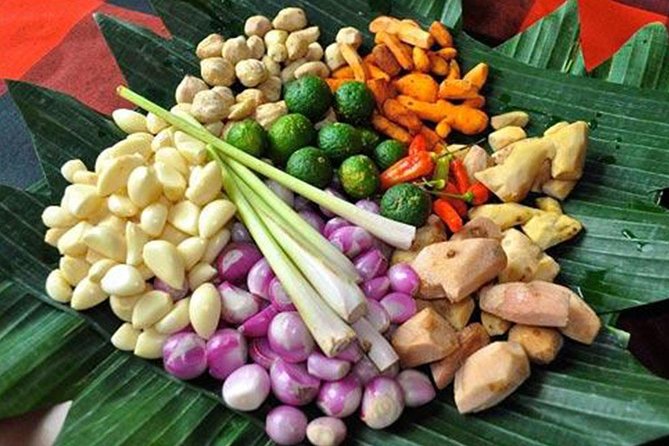
Balinese cooking often depends on the balance of spice, herbs, aromatics, and fresh produce. You learn not only what goes into a dish, but also how the ingredients are prepared and combined. That makes the lesson more useful at home than a class where you merely watch a chef finish a meal.
The recipes are provided to take home. This changes the value of the class. You are not paying only for lunch and a pleasant morning. You leave with methods and written guidance that can help you recreate at least some of the dishes later.
The meal is also part of the lesson. Once the cooking ends, you sit down and taste the results with the group. The food is served as a proper shared meal rather than handed over as a series of samples.
Expect plenty of food. Several people described preparing and eating a large number of dishes, with attractive presentation as well as good flavor. Still, the exact quantity and menu can change, so do not assume that every booking includes the same nine-dish spread.
Transport, timing, and the $35 value
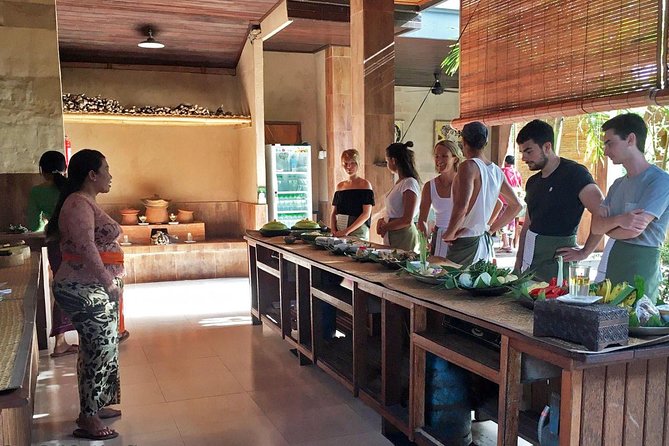
At $35 per person, this is a strong value if you use the full package. The price includes hotel pickup, air-conditioned transport, the market visit, cooking equipment, the cooking class, taxes, and the meal you prepare. Personal expenses are not included.
A comparable day assembled on your own would require transport to the market and village, a meal, ingredients, instruction, and equipment. The included vehicle is especially useful if you are staying outside central Ubud or do not want to arrange several rides.
The six-hour duration is another reason the cost works. You get a market visit, cultural activity, cooking instruction, and lunch in one outing. But the length cuts both ways. If you want a short two-hour class, this is not the right format. The day is designed for people who enjoy the process, not just the final plate.
Group discounts are offered, though the supplied details do not state the discount amount. The maximum group size is eight, which keeps the class more personal than a large demonstration. A family or group of friends can also benefit from the shared format, especially when each person takes a different kitchen task.
The 99 percent recommendation rate and 5 out of 5 score from 161 ratings point to unusually consistent satisfaction. The strongest praise centers on the hosts, the amount of food prepared, the market visit, and the cultural lesson. No experience suits everyone, but those repeated strengths are relevant when judging the price.
Who will enjoy this class most
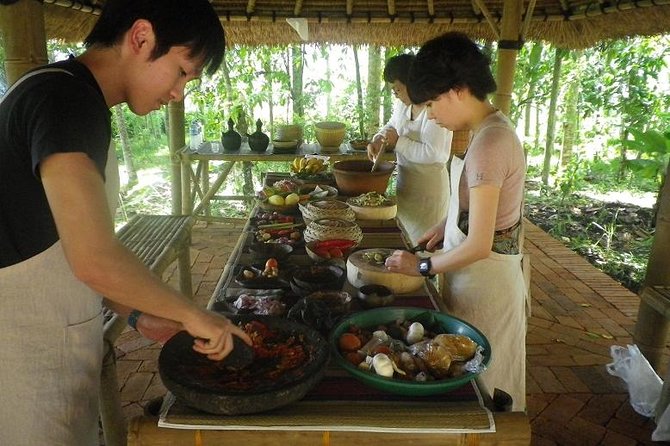
I would choose this for a food-focused visitor who wants more than restaurant meals. You get to see ingredients at market level, learn how they are used, and then eat the results. It is also a good introduction to Bali if you have just arrived, since the class combines food, village life, religion, and local hospitality.
It suits solo participants well. The small format gives you a social activity without requiring a private booking, and the cooking tasks create an easy way to meet others. Couples and families can also take part, with children as young as six reported enjoying the activity.
You do not need advanced cooking skills. The teaching is designed for participation, and the instructor provides help throughout. Experienced home cooks may enjoy the traditional methods and ingredient explanations, though the pace may feel gentle if you already know Balinese food well.
This is less suitable if you dislike early starts, market smells, group activities, or eating food prepared with ingredients you do not recognize. It may also be a poor fit for a very strict diet unless the operator confirms that the menu can be adjusted.
Practical details that affect your day
Confirmation is provided when you book, and mobile tickets are supported. Pickup is offered from your hotel, but you should confirm the meeting point and timing carefully, especially if you are staying outside Ubud.
The experience takes place in Bali local time. Free cancellation is available if you cancel at least 24 hours before the start time. Cancellations or changes made inside that window are not refunded or accepted.
Wear comfortable clothes that you do not mind using in a kitchen. The supplied details do not state a specific dress code, so practical clothing is the safest choice. Bring money only if you want to cover personal expenses, since the main class costs are included.
Do not plan a demanding afternoon immediately afterward. Six hours is approximate, and transport time can vary by hotel location and traffic. The class itself is the main event, so give it enough space.
Is this Ubud cooking class worth booking?
Yes, if you want a full morning that combines food with everyday Balinese culture. The market visit gives the dishes a clear starting point, the canang lesson adds meaning beyond the kitchen, and the local instructors make the class feel personal rather than mechanical.
The $35 price is particularly good when you value included transport and a substantial meal. Book it if you enjoy hands-on activities, want recipes to use at home, or are traveling with family and would like one shared cultural outing.
Skip it if you want a very short class, a fixed menu guaranteed in advance, or a private chef lesson. For everyone else, this is a practical, generous way to spend part of a Ubud morning, with enough food and local contact to make the day memorable.
FAQ
How long does the Balinese cooking class last?
The activity lasts approximately six hours. It includes hotel pickup, the morning market visit, the trip to Laplapan village, the offering lesson, cooking instruction, and the final meal.
Is hotel pickup included?
Yes. Pickup is offered from your hotel, and air-conditioned transport to the market and cooking workshop is included.
How many people can join the class?
The activity has a maximum of eight travelers.
What food will I cook?
You will prepare Balinese starters, main courses, and an authentic dessert. The exact menu can vary, with past sessions covering five courses or as many as nine dishes.
Are vegetarian options available?
Yes. Vegetarian options are available, and dietary requirements have been accommodated. Tell the operator about your needs before the class.
What is included in the $35 price?
The price includes cooking equipment, the air-conditioned vehicle, cooking class fees, and taxes. Personal expenses are not included.
More Markets in Ubud
- PRIVATE Ubud Market Tour & Balinese Cooking Class with Putu
★ 5.0 · 125 reviews - Ubud Cooking Class with Optional Market Visit Pickup Included
★ 5.0 · 70 reviews - Balinese Cooking Class with Traditional Market Tour
★ 5.0 · 66 reviews - Active Volcano, Rice Field, Hot Spring, Fruit market, Tea Plantation with Lunch
★ 5.0 · 513 reviews
More Cooking Classes in Ubud
- Balinese Ubud cooking school (9 Dish Cooking and Market Tour)
★ 5.0 · 540 reviews - Balinese Authentic Cooking Class in Ubud
★ 5.0 · 239 reviews - PRIVATE Balinese Cooking Class in Ubud with Dewa with Transfers
★ 5.0 · 213 reviews - Jambangan Bali Cooking Class
★ 5.0 · 142 reviews
Just added around Ubud
- Bali Airport Pick-up to Ubud (Arrival Transfer)★ 5.0 · 4 reviews
- Bali Airport: One-Way Private Transfer To/From Hotel★ 5.0 · 25 reviews
- Munduk Car Hire with English Speaking Driver★ 5.0 · 14 reviews
- Bali Airport – Arrival Transfer★ 5.0 · 5 reviews
- Bali ATV Quad Bike and White Water Rafting – All Inclusive★ 5.0 · 7 reviews
- Bali ATV Ride Ubud Jungle Track★ 4.5 · 5 reviews
- Bali All Inclusive : Tlaga Singha Infinity Pool & Atv Adventure★ 5.0 · 21 reviews
- Bali ATV Ride with Jungle Swing and Rice Terrace Tour★ 5.0 · 50 reviews
Balinese Cooking Classes, compared.
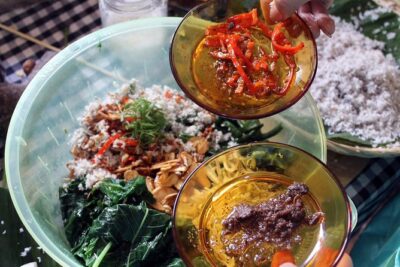
PRIVATE Authentic Balinese Cooking Class in Ubud at Putu’s Home
Read our review →
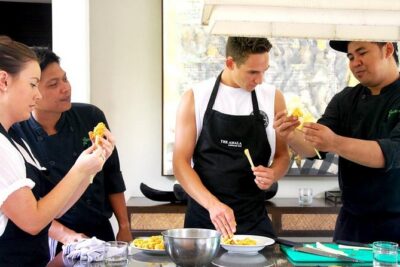
PRIVATE Balinese Cooking Class in Ubud with Dewa with Transfers
Read our review →Browse the lists this tour appears in