
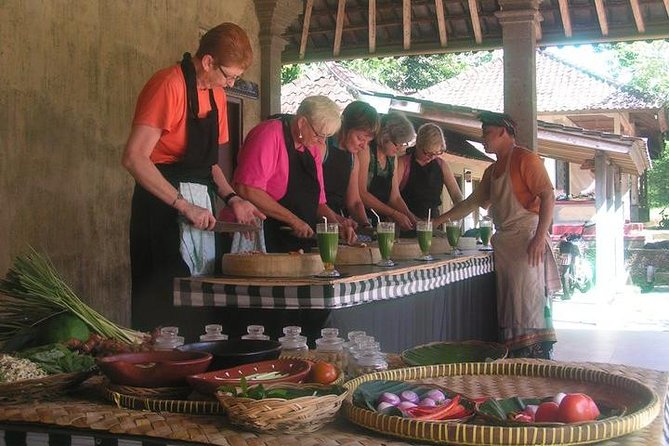
Reviewed · BALINESE COOKING CLASSES
Bali Cooking Class with Culture Experience
The best part of this Ubud cooking class happens before the cooking begins. You visit a local morning market with your Family Host, inspect fresh herbs and spices, and learn how these ingredients fit into Balinese home cooking. Then you move to a family compound, where Dewa welcomes you with coffee or tea and crisp banana fritters before the class starts.
I like the market visit, because it gives the meal a real sense of place instead of treating Balinese food as a list of recipes. I also like the family setting, where cooking comes with stories about home shrines, family life, and local customs. The main consideration is the early start: you need to meet at 7:30 am, and the six-hour experience takes up most of your morning and afternoon.
In This Review
- Key points to know before booking
- Why the market visit makes the class better
- Arriving at the family compound
- What you cook during the six-hour experience
- Lunch is the real test of the class
- The cultural side goes beyond food
- Is $62 a fair price?
- Timing, group size, and practical planning
- Who will enjoy this class most?
- Should you book the Lobong Bali Cooking Class?
- FAQ
- Where does the cooking class take place?
- What time does the experience start?
- How long does the class last?
- Is hotel pickup available?
- How many people can join the class?
- What food and drinks are included before the class?
- Can I cancel for a refund?
Key points to know before booking
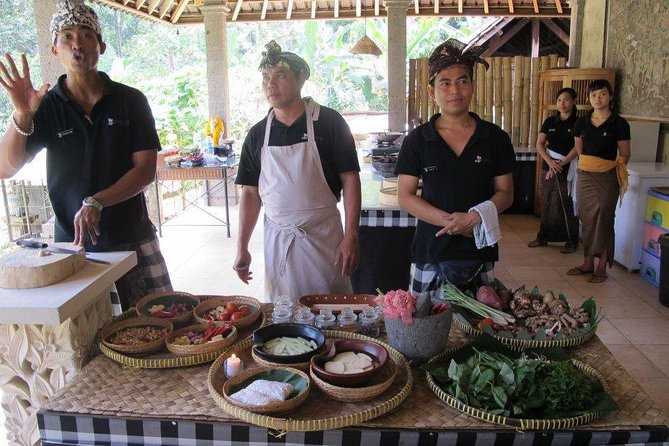
- A market visit comes first: Shop for the herbs, spices, fruits, and vegetables used in your class.
- Dewa hosts the cooking session: Expect a welcoming start with a hot drink, mineral water, and fresh banana fritters.
- You cook a full meal: The menu includes an appetizer, several main dishes, side dishes, and dessert.
- The setting is a Balinese family compound: The class adds cultural context through conversation about family life and home shrines.
- Lunch is made by you: After cooking, you sit down to eat the meal prepared during the class.
- You take home recipes: An illustrated booklet includes directions, photos, tips, and room for notes.
Why the market visit makes the class better
Many cooking classes begin with ingredients already measured and waiting on the counter. That is convenient, but it can make the food feel detached from daily life. Here, the morning begins at a local market, where your Family Host buys and explains the produce used later in the pavilion.
You can expect to see fresh herbs, spices, fruits, and vegetables, with explanations of how they are used in Balinese cooking. The market is not presented as a separate sightseeing stop. It is part of the lesson. You see the raw ingredients before they are chopped, seasoned, and turned into lunch.
That matters if you want to cook the food again at home. You learn what ingredients look like in their natural form and hear why they belong in the menu. You may also have the chance to try fruit that is hard to find in the United States, adding a small but memorable taste to the morning.
The market portion also gives you a useful introduction to Balinese food without asking you to sit through a long lecture. You walk, look, smell, and ask questions. If you are curious about herbs and spices, this will likely be one of the most useful parts of the day.
The trade-off is timing. The meeting time is 7:30 am, so this is not a slow, late-morning activity. The early hour is useful for seeing a typical morning market, but you should plan around it if you have a late night in Ubud or another morning commitment.
More Balinese Cooking Classes in Ubud
- Ubud Cooking Class Bali with Balinese Chef
★ 5.0 · 1,609 reviews - PRIVATE Authentic Balinese Cooking Class in Ubud at Putu’s Home
★ 5.0 · 644 reviews - Balinese Farm Cooking Class by Pemulan Bali
★ 5.0 · 410 reviews
Arriving at the family compound
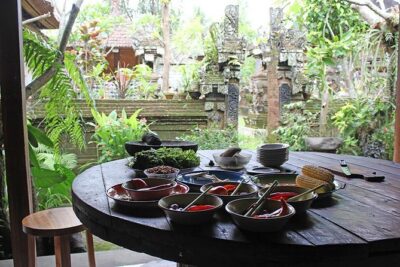
After the market, the experience moves into a Balinese family home and cooking pavilion. This change of setting is important. You are not simply entering a commercial kitchen. You are being welcomed into a place where the hosts can talk about family life, home shrines, and Balinese culture alongside the food.
Dewa greets you with a hot cup of coffee or tea, mineral water, and his freshly made Pisang Goreng, or crispy banana fritters. This light breakfast snack helps bridge the gap between the early market visit and the longer cooking session.
I especially like this pause before the lesson. It gives you time to settle in, enjoy a small bite, and learn how the household works. The hosts also use this time to prepare the cooking pavilion and make sure everything is ready.
The family setting is one of the strongest reasons to choose this class. A professional kitchen can teach technique well, but a home setting gives the food a wider meaning. You hear about the customs and spaces that shape everyday Balinese life, rather than focusing only on what goes into the cooking pot.
The experience may suit you best if you enjoy conversation and cultural context. If you want a fast demonstration followed by a quick meal, the family introduction may feel slower than expected. That is not a flaw, but it is worth knowing what kind of day you are booking.
What you cook during the six-hour experience
The class teaches a complete Balinese meal rather than one isolated dish. The menu includes an appetizer, a variety of traditional main dishes, accompanying side dishes, and dessert.
The exact dishes are not listed in the tour details, so you should not book this expecting a particular recipe unless the operator confirms the day’s menu. What is clear is the range: you prepare several parts of a meal, then eat them together at lunch.
That format gives you more useful practice than making a single signature dish. You can see how Balinese cooking balances different textures and flavors across a table. You also learn that a home meal is not only about the main dish. The side dishes and dessert matter too.
The class is led by a professional chef, and the setting is designed for hands-on learning. You should expect to take part in preparation rather than simply watch a cooking show. The pace also gives you time to follow the steps and make notes in the supplied booklet.
The booklet includes the menu, recipes, directions, photos, and tips, with space for your personal notes. That is a practical touch. Recipes are much easier to use at home when they include images and small reminders about method, not just a list of ingredients.
You may need to adapt some ingredients when cooking outside Bali. The class can show you what the local produce looks and tastes like, but the availability of the same herbs, fruits, and spices will vary at home. The booklet still gives you a useful starting point, and the market visit helps you recognize the ingredients when you find them.
Lunch is the real test of the class
The final meal is made from the food you prepared. You finish with your freshly made dessert and leave having cooked a full Balinese lunch.
I like this approach because it connects every part of the morning. The market explains the ingredients. The host explains the setting and customs. The chef explains the preparation. Lunch lets you judge the result for yourself.
The meal is also where the class delivers its clearest value. You are not paying only for a plate of food. You receive the meal, the instruction, the market visit, the cultural conversation, the family welcome, and the recipes to use later.
One particularly meaningful detail is the ritual of gratitude mentioned in the experience feedback. It adds a respectful cultural note to the meal and helps show that food in Bali can be tied to customs and gratitude, not just convenience.
The lunch may be a highlight if you enjoy healthy, fresh cooking and want to eat food you helped prepare. Just remember that a cooking class is an active experience. You will spend much of the day learning and preparing, not simply sitting at a restaurant.
Same island, a completely different day out:
- All-Inclusive Ubud Private Tour
★ 5.0 · 14,344 reviews - Best of Ubud Full-Day Tour with Jungle Swing
★ 5.0 · 8,571 reviews - Ubud: Monkey Forest, Jungle Swing, Rice Terrace, and Water Temple
★ 5.0 · 7,160 reviews - Best of Ubud 1-Day Private Tour
★ 5.0 · 4,451 reviews
The cultural side goes beyond food
The class provides a look at Balinese life through ordinary details: the family compound, home shrines, hospitality, and the way food is prepared and shared.
This is useful for visitors who want more than a market walk or a restaurant meal. You get a practical connection between culture and daily routine. The conversation about family life helps explain why the cooking takes place in a home setting and why the meal has several parts.
The hosts are described as warm and professional, and the class is organized so that the cultural talk, food preparation, and meal fit into one clear experience. That structure should help you get a lot from the six-hour schedule without feeling lost.
Still, cultural information can vary with the group. A maximum of 12 people keeps the class relatively small, but it is not a private lesson. If the group reaches its limit, personal attention may be shared among several cooks. Small-group size is a good compromise for price, though guests seeking one-on-one instruction may prefer a private class if that option is available.
Is $62 a fair price?
At $62, this is not the cheapest way to eat in Ubud. It is also not priced like a simple restaurant lunch. The useful question is what you receive for the fee.
The experience lasts about six hours and includes central Ubud hotel pickup, a local market visit, a hot drink, banana fritters, professional instruction, a full lunch, cultural conversation, and a recipe booklet. When you add those parts together, the price looks reasonable for a half-day food and culture experience.
The strongest value comes from the hands-on format. You are learning skills you can use later, rather than buying one meal that ends when you leave the table. The booklet improves that value because it gives you a way to recreate the dishes for family and friends.
Pickup also matters. Transport from central Ubud hotels reduces the need to arrange a taxi early in the morning. The details specify central Ubud hotels, so you should confirm pickup coverage if you are staying farther away.
The class is especially good value if you care about local ingredients, want to cook after returning home, and prefer a personal family setting to a polished restaurant demonstration. It is less compelling if you are mainly looking for a cheap meal or a short activity between other plans.
Timing, group size, and practical planning
The start time is 7:30 am, and the activity lasts approximately six hours. You should leave enough room in your schedule for the market, welcome, cooking, lunch, and the final part of the class.
Pickup is offered, and the experience is near public transportation. The group can include up to 12 people. Mobile tickets are accepted, which makes the booking details easy to keep on your phone.
The booking confirmation is sent within 48 hours, subject to availability. Since the class requires a minimum number of participants, it can be canceled if that minimum is not reached. In that case, you are offered another date or experience, or a full refund.
Cancellation is free if you cancel at least 24 hours before the local start time. Cancellations or changes made less than 24 hours before the start are not refunded or accepted. Keep that deadline in mind when arranging your Ubud schedule.
You should also be ready for a full morning and afternoon of participation. The details do not specify dietary arrangements, exact dishes, or accessibility features, so ask Lobong Culinary Experience before booking if you have food restrictions or mobility needs.
Who will enjoy this class most?
I would recommend this experience to several types of visitors:
- Food-focused visitors who want to understand Balinese ingredients instead of only tasting finished dishes.
- First-time visitors to Ubud who want a gentle introduction to local markets, family customs, and cooking.
- Home cooks who value recipes, photos, and practical instruction they can use after the trip.
- Couples and small groups looking for a shared activity that ends with lunch.
- Culturally curious visitors who enjoy hearing about family life and home shrines in a personal setting.
Families may also appreciate the hands-on structure, though the supplied details do not specify a minimum age or special arrangements for children. Ask before booking if young children will join you.
This may not be your best fit if you dislike early starts, want a private lesson, or prefer an activity with little food preparation. The class is built around participation, conversation, and time in a home setting.
Should you book the Lobong Bali Cooking Class?
Yes, if you want a cooking class that feels connected to Ubud rather than staged as a stand-alone food demonstration. The morning market, family compound, banana fritters, full meal, and recipe booklet create a well-rounded experience.
I would book it for the chance to see ingredients before cooking them and to learn in a Balinese home environment. I would also value the six-hour length, since it allows room for cultural conversation and a complete lunch instead of rushing through one recipe.
Before paying, confirm your pickup location, the menu for your date, and any dietary needs. If the 7:30 am start works for you and you enjoy hands-on learning, $62 is a sensible price for the amount included. If you want a short, low-effort food stop, choose something simpler.
FAQ
Where does the cooking class take place?
The experience begins at a local market and continues at a Balinese family compound and cooking pavilion in the Ubud area. The listed stop is Lobong Bali Cooking Class.
What time does the experience start?
The stated start time is 7:30 am.
How long does the class last?
The experience lasts approximately six hours.
Is hotel pickup available?
Pickup is offered from central Ubud hotels. Confirm the exact pickup arrangements if you are staying outside central Ubud.
How many people can join the class?
The activity has a maximum group size of 12 travelers.
What food and drinks are included before the class?
You are welcomed with coffee or tea, mineral water, and Pisang Goreng, which are fresh crispy banana fritters.
Can I cancel for a refund?
Yes. You can receive a full refund if you cancel at least 24 hours before the local start time. Cancellations or changes made less than 24 hours before the start are not accepted or refunded.
More Workshops in Ubud
- Ubud Silver Class Jewelry making in bali
★ 5.0 · 978 reviews - Canggu Scooter Lessons
★ 5.0 · 195 reviews - Crafting Heritage Batik Painting Workshops
★ 5.0 · 164 reviews - Ubud Bali Silver Jewelry Class
★ 5.0 · 163 reviews
More Cooking Classes in Ubud
- Balinese Ubud cooking school (9 Dish Cooking and Market Tour)
★ 5.0 · 540 reviews - Balinese Authentic Cooking Class in Ubud
★ 5.0 · 239 reviews - PRIVATE Balinese Cooking Class in Ubud with Dewa with Transfers
★ 5.0 · 213 reviews - Balinese Cooking class with traditional morning market visit
★ 5.0 · 161 reviews
Just added around Ubud
- Bali Airport Pick-up to Ubud (Arrival Transfer)★ 5.0 · 4 reviews
- Bali Airport: One-Way Private Transfer To/From Hotel★ 5.0 · 25 reviews
- Munduk Car Hire with English Speaking Driver★ 5.0 · 14 reviews
- Bali Airport – Arrival Transfer★ 5.0 · 5 reviews
- Bali ATV Quad Bike and White Water Rafting – All Inclusive★ 5.0 · 7 reviews
- Bali ATV Ride Ubud Jungle Track★ 4.5 · 5 reviews
- Combo Bali ATV Ride with Ayung River Rafting All Inclusive★ 4.5 · 12 reviews
- Bali All Inclusive : Tlaga Singha Infinity Pool & Atv Adventure★ 5.0 · 21 reviews
Balinese Cooking Classes, compared.
PRIVATE Authentic Balinese Cooking Class in Ubud at Putu’s Home
Read our review →
PRIVATE Balinese Cooking Class in Ubud with Dewa with Transfers
Read our review →Browse the lists this tour appears in