
Reviewed · BALINESE COOKING CLASSES
Jambangan Bali Cooking Class
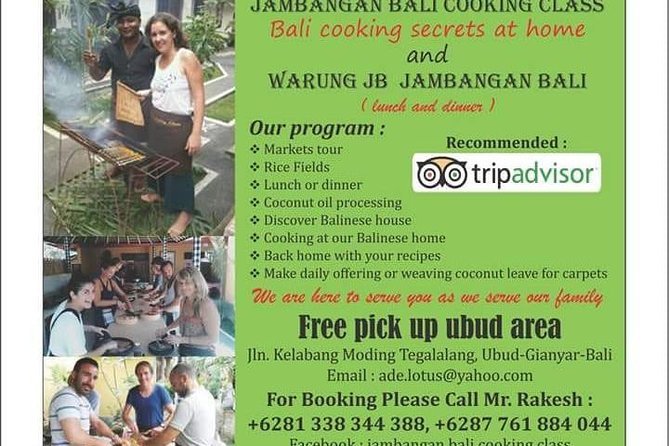
Jambangan Bali Cooking Class takes you beyond the restaurant table. You begin with local ingredients, then follow them into a Balinese family home, where an open kitchen, household offerings, coconut oil making, and bamboo music become part of the day. I like the market visit because it gives meaning to every spice you later chop. I also like the warm family setting and the chance to cook several dishes rather than watch a short demonstration.
The main thing to consider is timing. A morning class is the best choice if visiting the traditional market matters to you. For an afternoon or evening class, the market may be closed, and the program can shift to a coffee and tea plantation visit instead.
In This Review
- Key points at a glance
- From the market in Tegallalang to the family kitchen
- Inside a Balinese home
- Cooking eight dishes and eating what you make
- Coconut oil, offerings, and bamboo music
- Morning, afternoon, or evening: choosing the right class
- How much value do you get for $34?
- What the experience does especially well
- Small drawbacks to keep in mind
- Who should book Jambangan Bali Cooking Class?
- FAQ
- Where does the Jambangan Bali Cooking Class start?
- Where does the activity finish?
- How long does the cooking class last?
- How much does the experience cost?
- Is lunch included?
- Can I choose between lunch and dinner?
- Is the market visit included in every class?
- Is the class taught in English?
- How many people can join the activity?
- Can I cancel for a full refund?
Key points at a glance

- Market first, kitchen second: Morning participants select herbs, spices, meat, and vegetables before cooking with them.
- A real family setting: The class takes place in a Balinese home with an open kitchen and garden dining area.
- More than cooking: You can learn about household offerings, coconut oil processing, rice farming, and rindik bamboo music.
- Several dishes in one class: The recipes are prepared by you, and copies are provided so you can repeat them at home.
- Lunch or dinner options: The approximate five-hour experience can be booked around either meal.
- Good value at $34: The price covers the cooking experience and lunch, with a small group capped at 15 people.
From the market in Tegallalang to the family kitchen
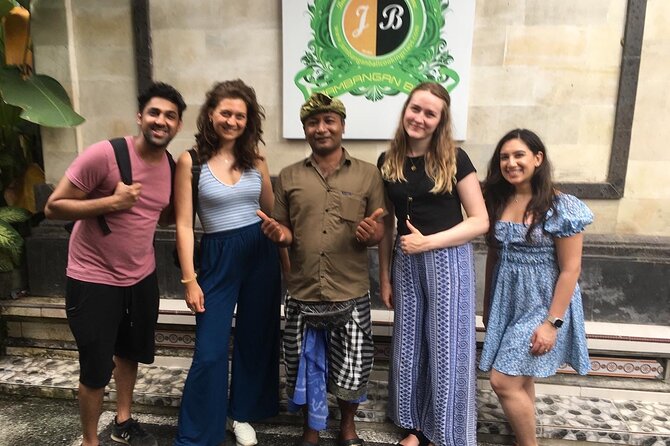
The meeting point is Warung JB Jambangan Bali on Jl. Kelabang Moding No. 713, in the Kelabang Moding area of Tegallalang, north of Ubud. The activity returns here at the end. Public transportation is nearby, though the information provided does not promise hotel pickup, so check your booking details carefully rather than assuming a transfer is included.
A morning start brings the most complete version of the experience. You visit a traditional market and select the ingredients that will become your meal. This is not just a shopping stop. It helps you see the difference between the packaged Balinese food served at many restaurants and the fresh herbs, spices, vegetables, and cuts of meat used in a home kitchen.
Your host can explain the ingredients as you go. That matters because Balinese cooking often depends on combinations rather than one dominant flavor. Fresh aromatics, spices, and vegetables work together, and seeing them in their original form gives you a better sense of how the food is built.
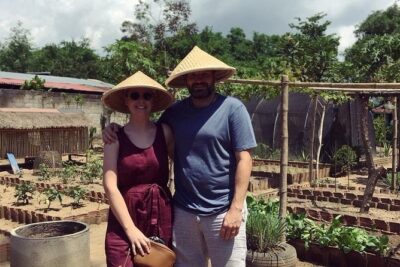
After the market, the route includes a look at rice farming and the daily work of rice farmers. The stop is simple, but it adds useful context. Rice is not merely a side dish in Bali. Seeing the fields before preparing a meal makes the food feel connected to the work and customs of the island.
The exact order may vary. The description says the day starts early, while the booking also offers lunch or dinner choices. If the market is a priority, choose the morning class and confirm the start time before paying.
More Balinese Cooking Classes in Ubud
- Ubud Cooking Class Bali with Balinese Chef
★ 5.0 · 1,609 reviews - PRIVATE Authentic Balinese Cooking Class in Ubud at Putu’s Home
★ 5.0 · 644 reviews - Balinese Farm Cooking Class by Pemulan Bali
★ 5.0 · 410 reviews
Inside a Balinese home
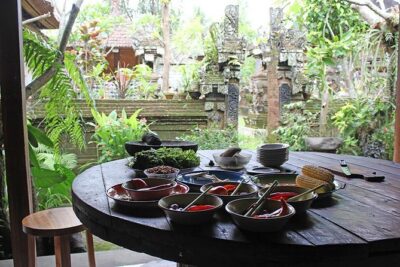
The cooking class takes place in a family home with a traditional Balinese setting and an open kitchen. This is the heart of the experience. You are not placed in a restaurant classroom designed only for tourists. Instead, the cooking is linked to the household and the people who live there.
Hosts named in the experience include Wayan, Made, and Putu. The classes are conducted in English by Balinese chefs who can explain both the food and the culture. The tone is informal and personal. You may see parts of daily family life that a standard restaurant meal would never show you.
That family setting is especially useful for anyone curious about how a Balinese home works. The activity can include a look around the house, along with traditional activities such as making a simple Hindu offering. You can also witness a household daily offering, a short ritual that helps explain how religion fits into ordinary life.
The offering activity is not a staged dance show or a large temple ceremony. It is a small domestic practice. That is precisely why it has value. You see a custom in the setting where it belongs, and you can ask questions without needing to interpret a formal performance from a distance.
The class is family-friendly, but keep in mind that the format is hands-on. Children will need to take part safely around cooking equipment and remain attentive during explanations. The maximum group size is 15 people, so the atmosphere should be more personal than a large cooking demonstration, though it may not feel private if the class fills.
Cooking eight dishes and eating what you make
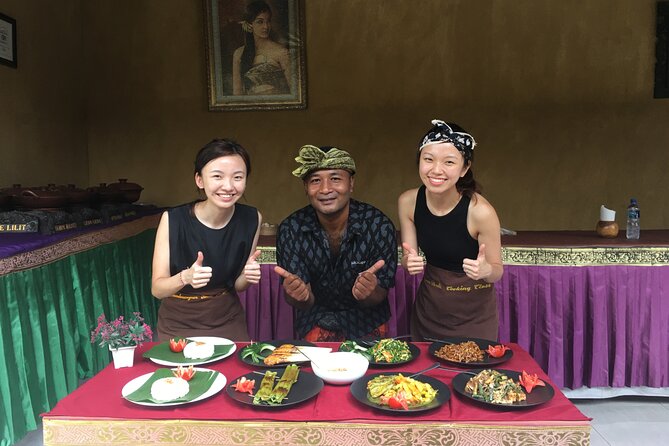
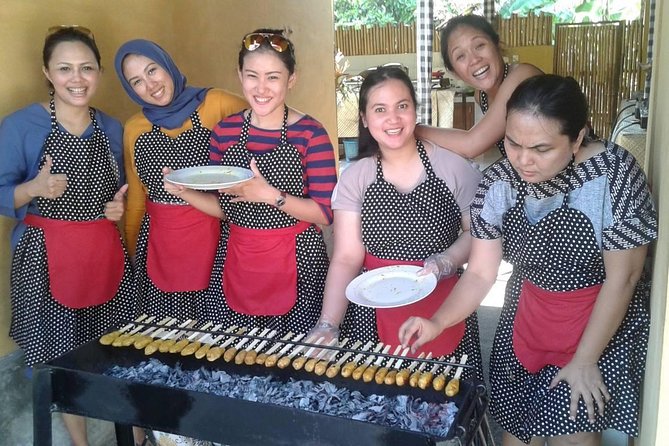
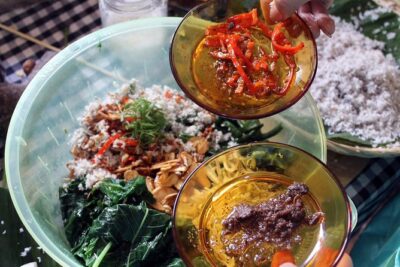
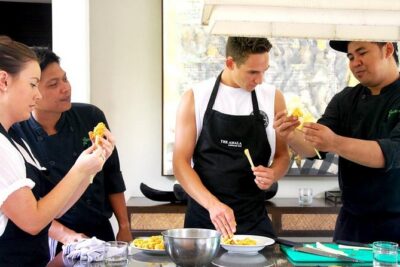
The strongest part of the class is the cooking itself. You prepare the recipes rather than simply watching a chef work. One account describes making eight dishes, and the supplied information confirms that the recipes are made by participants and eaten afterward.
That format gives you useful kitchen skills. You can see how ingredients are handled, how the dishes are assembled, and how separate preparations come together as a meal. It also makes the final lunch more satisfying because you know the work behind every plate.
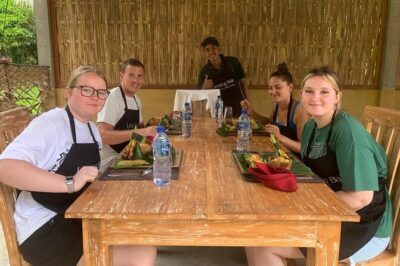
The food is served in the garden after cooking. Lunch is included in the $34 price, while alcohol is not. If you choose a dinner session, confirm exactly what meal is included and how the timing affects the market visit.
Recipe copies are provided so you can try the dishes at home. This is one of the best practical touches. A cooking class can be a pleasant holiday memory, but written recipes give you a way to keep using what you learned after returning home.
The class can also handle some dietary needs, based on the experience of a participant with a chicken allergy. The hosts prepared alternatives so that person could cook and eat without difficulty. Still, you should state allergies or dietary restrictions when booking. The available information does not promise a set vegetarian, vegan, gluten-free, or halal menu.
The recipes may change depending on the class menu and available ingredients. That is normal for a market-based cooking lesson, but you should not book expecting a fixed restaurant menu unless the provider confirms one.
Coconut oil, offerings, and bamboo music
Cooking is only one part of the visit. At the family home, you may see traditional coconut oil processing. This is a useful addition because it shows how a familiar kitchen ingredient can be produced through local methods rather than arriving in a bottle from a supermarket.
You can also learn to make a simple offering. The activity gives you a brief, practical introduction to a daily Hindu custom without turning the visit into a lecture. Take part respectfully, follow the host’s instructions, and remember that the offering has religious meaning beyond its appearance.
Another possible activity is playing rindik, Balinese music made from bamboo. A short music lesson adds variety after the cooking and gives children an easy way to participate. It also reminds you that Balinese culture is not limited to temples, ceremonies, or performances. Food, music, family routines, and religious practice all sit close together.
The precise mix of extra activities depends on the day and the schedule. Treat them as part of the cultural visit, not as guaranteed separate shows with fixed performance times.
Same island, a completely different day out:
- All-Inclusive Ubud Private Tour
★ 5.0 · 14,344 reviews - Best of Ubud Full-Day Tour with Jungle Swing
★ 5.0 · 8,571 reviews - Ubud: Monkey Forest, Jungle Swing, Rice Terrace, and Water Temple
★ 5.0 · 7,160 reviews - Best of Ubud 1-Day Private Tour
★ 5.0 · 4,451 reviews
Morning, afternoon, or evening: choosing the right class
Timing is the most important booking decision.
A morning class is best for the full route. You can visit the traditional market while it is operating, see rice farmers at work, and then continue to the home for cooking and lunch. If fresh ingredients and local shopping are central to your interest, this is the option I would choose.
An afternoon class can offer a slower start, but it may not include the market. One afternoon experience included a rice field visit and a coffee plantation stop, with samples of coffee and tea. This can be a pleasant substitute, but it is not the same as selecting ingredients in a traditional market.
The evening option has the clearest limitation. A German-language account notes that the market was closed in the evening, so the group visited a small plantation and sampled tea, coffee, and luwak coffee instead. The cooking and home visit still made the evening worthwhile, but the missing market reduced the value for someone who had booked specifically for that part.
The safest approach is simple: choose morning for the market, afternoon for a later start with possible plantation time, and evening only if the home cooking and cultural activities matter more to you than market shopping.
How much value do you get for $34?
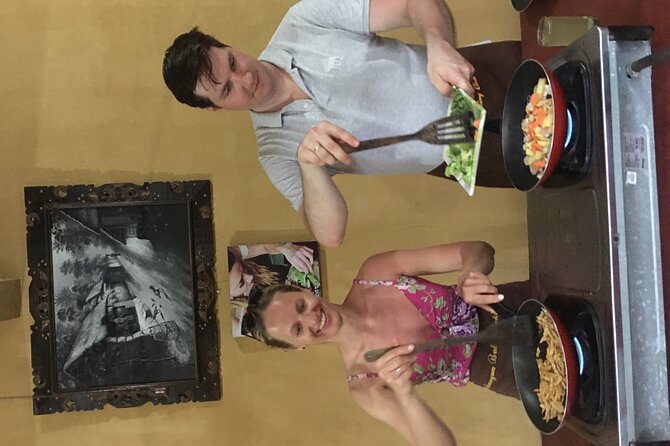
At $34, this is a strong value if the advertised five-hour format runs close to schedule. The price includes lunch and covers several connected activities: ingredient shopping, a look at rice farming, a home visit, hands-on cooking, cultural demonstrations, and garden dining.
You are also paying for access. A restaurant lets you taste Balinese food. This class lets you handle the ingredients, ask questions in an English-language setting, and see how food fits into household life. That extra context is what makes the experience worth more than an ordinary meal.
The value is less certain if you mainly want a market tour. Evening guests may miss the market, and alcohol is not included. Optional plantation visits appear in some afternoon and evening experiences, but they should not be treated as a guaranteed part of every departure.
A maximum of 15 people keeps the price moderate while limiting the size of the group. If the class is full, you may have less individual time with the chef. The family-home setting still gives it a personal character, but this is not a private lesson unless your booking says so.
What the experience does especially well
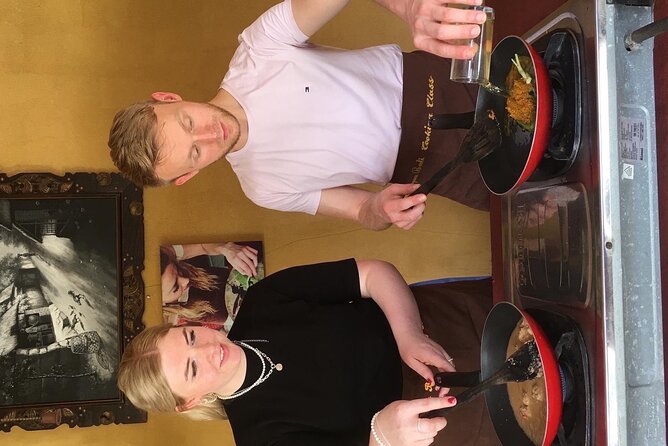
The hosts are the main strength. Wayan is described as warm, humorous, and clear in his explanations. Made and Putu are also named as class leaders, and the teaching style is conversational in English. That helps you ask about ingredients, cooking methods, and customs as the day unfolds.
The food receives consistent praise, but the larger success is the combination of food and culture. You cook a substantial set of dishes, then sit down to eat them in a garden. You also receive recipes, which turns a pleasant outing into something you can use later.
The family welcome is another important feature. You can tour the home, learn about family life, and take part in ordinary activities rather than moving from one polished tourist stop to another. For many people, that will be the most memorable part of the day.
The class also works well for mixed groups. Food lovers get practical instruction. Families get an activity with several changes of pace. Couples get a relaxed cultural outing with a shared meal. Even guests who are not confident cooks can follow along because the point is participation, not professional technique.
Small drawbacks to keep in mind
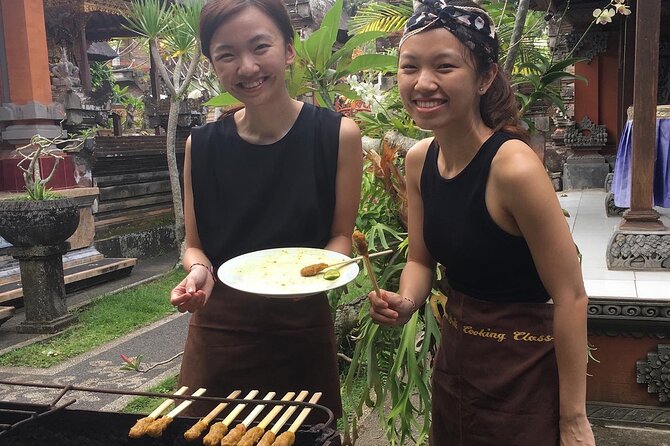
The market schedule is the biggest weakness. The broad description connects the class with a traditional market, but an evening departure cannot reliably include it. If that stop is important, do not choose based only on the title. Select a morning session and verify the plan.
The experience is also outside central Ubud, at the Tegallalang meeting point. The location is clear, but transport arrangements may require planning. The information says the area is near public transportation, yet it does not specify a hotel transfer for every booking.
The five-hour duration is approximate. Cooking several dishes, visiting the market, and taking part in cultural activities can make the day feel full. That is good if you want a substantial experience, but less suitable if you are trying to fit in several other Ubud attractions on the same day.
Finally, this is a home-based cultural activity, not a luxury culinary school. You should expect a practical setting, shared instruction, and local family hospitality rather than polished restaurant service. For me, that is part of the appeal, but it will not suit someone seeking formal chef training or a highly controlled menu.
Who should book Jambangan Bali Cooking Class?
I would book this if you want food to be your route into Balinese culture. The market, rice fields, home kitchen, offerings, coconut oil, music, and shared meal make the day broader than a standard cooking lesson.
It is a particularly good choice for families and first-time visitors to Bali. You get an introduction to ingredients, religion, household life, and local food in one outing. The recipe copies also give you something useful to take home.
Choose another activity if you need a guaranteed evening market visit, a private class, a fixed menu, or a hotel pickup clearly included in the price. For everyone else, choose a morning departure, share your dietary needs in advance, and allow the full five hours. At $34, the mix of instruction, food, and personal contact makes this one of the more useful cultural activities near Ubud.
FAQ
Where does the Jambangan Bali Cooking Class start?
The meeting point is Warung JB Jambangan Bali, Jl. Kelabang Moding No. 713, Kelabang Moding, Tegallalang, Kecamatan Ubud, Gianyar, Bali 80571, Indonesia.
Where does the activity finish?
The activity ends back at the meeting point.
How long does the cooking class last?
The experience lasts approximately five hours.
How much does the experience cost?
The listed price is $34.
Is lunch included?
Yes. Lunch is included. Alcohol is not included.
Can I choose between lunch and dinner?
Yes. The experience offers a choice between a lunch class and a dinner class.
Is the market visit included in every class?
The market visit is part of the morning plan. An evening class may not include it because the market can be closed. A plantation visit with coffee and tea samples may be offered instead.
Is the class taught in English?
Yes. The classes are conducted in English by Balinese chefs who can discuss Balinese food and culture.
How many people can join the activity?
The maximum group size is 15 people.
Can I cancel for a full refund?
Yes, if you cancel at least 24 hours before the local start time. Cancellations made less than 24 hours in advance are not refunded, and changes within 24 hours are not accepted. If poor weather cancels the experience, you can receive a different date or a full refund.
More Workshops in Ubud
- Ubud Silver Class Jewelry making in bali
★ 5.0 · 978 reviews - Canggu Scooter Lessons
★ 5.0 · 195 reviews - Crafting Heritage Batik Painting Workshops
★ 5.0 · 164 reviews - Ubud Bali Silver Jewelry Class
★ 5.0 · 163 reviews
More Cooking Classes in Ubud
- Balinese Ubud cooking school (9 Dish Cooking and Market Tour)
★ 5.0 · 540 reviews - Balinese Authentic Cooking Class in Ubud
★ 5.0 · 239 reviews - PRIVATE Balinese Cooking Class in Ubud with Dewa with Transfers
★ 5.0 · 213 reviews - Balinese Cooking class with traditional morning market visit
★ 5.0 · 161 reviews
Just added around Ubud
- Bali Airport Pick-up to Ubud (Arrival Transfer)★ 5.0 · 4 reviews
- Bali Airport – Arrival Transfer★ 5.0 · 5 reviews
- Bali Airport: One-Way Private Transfer To/From Hotel★ 5.0 · 25 reviews
- Munduk Car Hire with English Speaking Driver★ 5.0 · 14 reviews
- Bali ATV Quad Bike and White Water Rafting – All Inclusive★ 5.0 · 7 reviews
- Bali ATV Ride Ubud Jungle Track★ 4.5 · 5 reviews
- Bali All Inclusive : Tlaga Singha Infinity Pool & Atv Adventure★ 5.0 · 21 reviews
- Bali ATV Ride with Jungle Swing and Rice Terrace Tour★ 5.0 · 50 reviews
Balinese Cooking Classes, compared.
PRIVATE Authentic Balinese Cooking Class in Ubud at Putu’s Home
Read our review →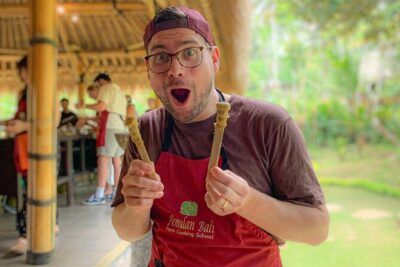
PRIVATE Balinese Cooking Class in Ubud with Dewa with Transfers
Read our review →Browse the lists this tour appears in